
Vandaag of morgen in huis

Kwaliteit gegarandeerd

Welkomstaanbiedingen ontgrendelen: GRATIS bezorging | Tot 80% korting | Gratis 30 dagen JoyPlus-proefperiode
Download de app
A dish rack may seem simple, but you’ll soon notice if you choose the wrong one. It might not fit beside the sink, the drip tray could stay full of water, or plates might knock against each other. Terms such as “large capacity” are not very helpful without dimensions and details of the layout.
So, pay particular attention to these three common pitfalls:
The right dish rack should suit your household, the worktop space you have available and your everyday washing-up. Here are the main things to check.
First, measure the space beside your sink. Remember to allow for the tap, any splashback and the route the water will take to drain away.
Key dimensions include:
A compact plastic dish rack is often a good choice for students, single-person households or small kitchens. Families may find a larger model or a 2-tier dish rack more useful.
A stainless steel dish rack has a metal frame and is often suitable for frequent everyday use. Check that the product is actually described as stainless steel, rather than simply having a metal finish. The drip tray may be made from a different material, such as PP plastic.
A plastic dish rack is usually lightweight and easy to move. That makes it practical for a student room, caravan or camping kitchen. Check the plastic parts regularly for cracks, especially if you move the rack often.
A metal dish rack with a plastic drip tray combines a sturdy frame with an easy-to-clean collection tray. However, the materials alone don’t tell you how stable it is: the design, feet and maximum load are important too.
A draining rack with a drip tray helps keep your worktop dry, but only if you empty the tray regularly. Some models have a drainage plug or a rotating water outlet. Check whether the outlet can be positioned over the sink or another drain.
Also check:
A dish-drying rack is no substitute for cleaning. Wash the drip tray regularly with mild washing-up liquid and dry the parts thoroughly before putting them back.
The following options are based on specific product details, such as dimensions, capacity, material and drainage. Always check the current product page and available specifications before buying.
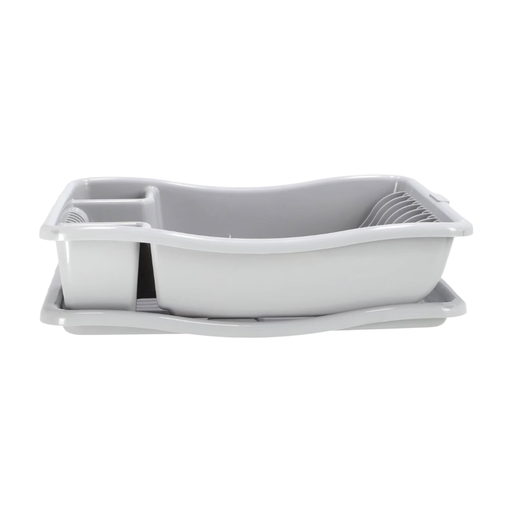
Why it suits this household: This plastic dish rack measures approximately 38 × 29 × 8.5 cm and is suitable for households looking for a straightforward rack that doesn’t need assembling. According to the product information, it holds up to 12 plates and has two cutlery compartments.
The dimensions and capacity are clearly stated. The included drip tray collects water, so you don’t have to rely on an open rack on your worktop.
Plastic construction, two cutlery compartments, space for up to 12 plates and a separate drip tray.

Why it suits this household: This stainless steel dish rack measures approximately 42 × 29 × 12.7 cm. It has a removable PP drip tray and sections for plates, bowls, cups and cutlery.
The product information specifies the material, dimensions and removable drip tray. This makes it easier to assess the maintenance involved and the space available before you buy.
Metal frame, removable PP drip tray, no assembly required and a water outlet that can be rotated, according to the product description.
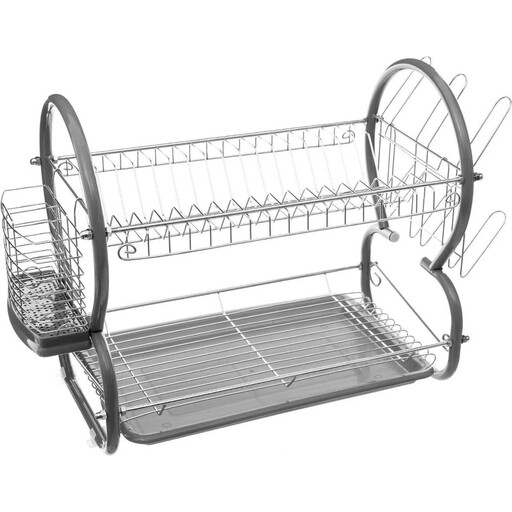
Why it suits this household: This 2-tier draining rack measures approximately 44 × 24 × 38 cm and, according to the product specifications, holds 17 plates, as well as bowls, mugs, glasses and cutlery. It is designed for indoor use and needs to be assembled.
The higher layout makes good use of vertical space, while the maximum load of 1.3 kg makes it clear that you can’t stack heavy dishes without limit.
Two tiers, a separate cutlery basket, glass holders and a stated maximum load of 1.3 kg.
We’ve put together a complete, up-to-date list of products that meet these strict selection criteria and the applicable European safety regulations.
Empty the drip tray regularly and rinse it with warm water and mild washing-up liquid. Remove any loose cutlery holders or other parts if the product information says this is possible. Dry the rack thoroughly to help prevent limescale and moisture build-up.
Measure the available space beside your sink and allow a few extra centimetres for drainage and ease of use. A rack measuring around 38 × 29 cm may be enough for a small household. Families may benefit from a wider model or a 2-tier design, as long as there’s enough clearance above it.
A drip tray is useful if the rack can’t drain directly into the sink. Check whether the tray is easy to remove or has a drainage plug. A drip tray can still hold water if you don’t empty it regularly, so the right choice depends on where you’ll place the rack and what drainage is available.
