
Vandaag of morgen in huis

Kwaliteit gegarandeerd

Welkomstaanbiedingen ontgrendelen: GRATIS bezorging | Tot 80% korting | Gratis 30 dagen JoyPlus-proefperiode
Download de app
A dish rack may seem simple, but you’ll soon notice if you’ve chosen the wrong one. It may take up too much space, leave water on the worktop or not have enough room for glasses and cutlery. For students, households, campers and keen cooks, size, drainage, stability and maintenance are especially important.
A product title may state that a rack holds a large number of plates or dishes, but that doesn’t always tell you how practical the layout is. For example, a rack with plenty of vertical space may not work well with wide mugs or large plates. So check more than just the number of items it holds:
A 2-tier dish rack offers more storage in a smaller footprint, but it may not be suitable if there’s limited space above your worktop.
A dish rack with a drip tray catches water, but the tray needs to be emptied and cleaned regularly. If water is left standing, the worktop can still get wet and limescale may build up. A dish rack with a drainage plug, or one that sits directly over the sink, can help prevent this.
When choosing a drip tray, check its slope, the raised edge around it and whether it can be removed completely. An integrated drain is only practical if the water can actually flow into the sink.
A plastic dish rack is usually lightweight and easy to clean. It’s handy for a small kitchen, student accommodation or camping, but check it regularly for cracks and warping. A metal dish rack may feel sturdier, but check the finish and keep it dry if you’re not going to use it for a while.
A combination of metal and plastic can be practical: the frame provides stability, while the plastic parts are easy to wipe clean. Wooden or bamboo parts need more attention. Wipe them dry and don’t leave them standing in water for long periods.
Measure the available space beside your sink before ordering a kitchen draining rack. Remember to allow for the handles, tap and any kitchen cupboards.
The following dimensions are often worth considering for a worktop:
A worktop dish rack should sit securely on a flat surface. A model that rests partly over the sink saves worktop space, but needs to fit the width of the sink properly.
Choose between a removable drip tray, a drainage plug or direct drainage into the sink. Also check whether the tray and cutlery holder are easy to remove. Open designs are generally easier to rinse than models with lots of narrow corners.
Use lukewarm water and a mild cleaning product on plastic and metal. Dry metal parts to help prevent water marks and residue. Always follow the manufacturer’s care instructions.
A tall dish rack needs a low centre of gravity to stop it wobbling. Put heavy plates on the bottom and lighter glasses higher up. Don’t exceed the stated load capacity. Some products don’t list one; if that’s the case, use the rack carefully and avoid overloading it.
Also check whether assembly is required. A self-assembly dish drainer can be practical, but make sure all the joints are secure before you use it.
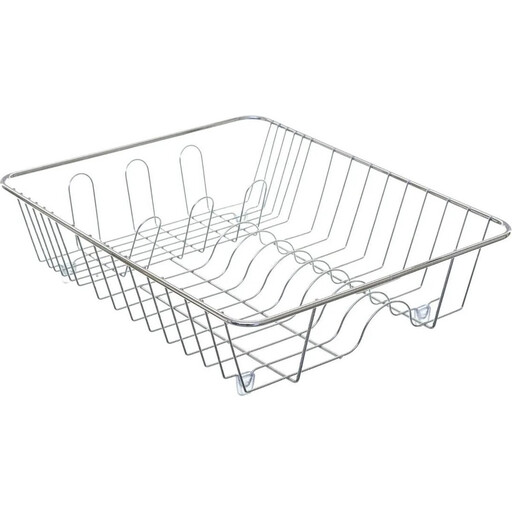
Why it suits this user: This compact model is suitable for everyday use, a smaller kitchen or camping. According to the product details, it holds 10 plates and 6 glasses and comes with a cutlery basket.
At 39 x 33,5 x 10,5 cm, its dimensions make it easy to see how much space you’ll need. The raised edge is designed to help prevent leaks; just make sure you place the rack on a flat, stable surface.
Steel frame, ABS plastic, separate cutlery basket and no special installation required.

Why it suits this user: This extendable dish rack is designed for anyone who wants to keep the space beside the sink clear. According to the product description, it extends from 29 to 44 cm and can also be used as a colander.
According to the product details, water drains straight into the sink. Measure the internal width of your sink beforehand and check that the rack rests securely on both edges.
304 stainless steel, adjustable length and a fine mesh surface for drainage.
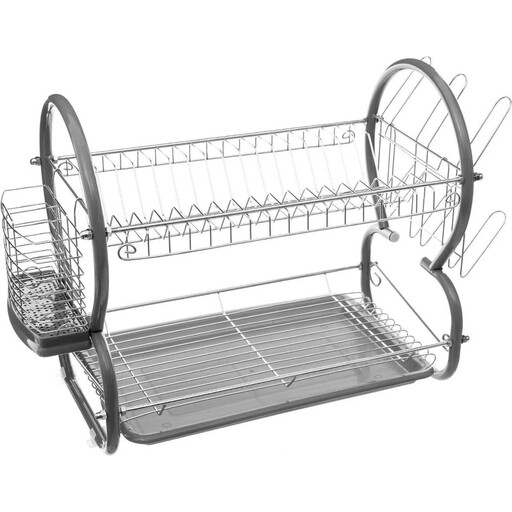
Why it suits this user: The 2-tier design is suitable for households that want to dry different types of dishes at the same time. According to the product details, it has room for 17 plates, bowls, mugs, glasses and cutlery.
The separate cutlery basket, glass holders and drip tray make it easy to check how everything fits. At 44 x 24 x 38 cm, this model does need enough vertical space on your worktop.
2-tier design, separate glass holders, cutlery basket and plastic drip tray; assembly required.
We’ve put together a complete, up-to-date list of products that meet these strict selection criteria and the applicable European safety regulations.
Empty the drip tray regularly and rinse cutlery holders if food remains in them. Don’t use abrasive cleaners on plastic or coated metal parts. If you have a metal rack, check the joints and coating from time to time. A damaged part can affect its stability.
Leave enough space between plates and put heavier items on the bottom. This keeps the dish drainer’s centre of gravity low and helps your dishes air-dry more evenly.
Yes, especially if the rack sits beside the sink and there’s no direct drainage. The drip tray catches the water, but it needs to be emptied and cleaned regularly. Check that it’s easy to remove.
Measure the available length, width and height on your worktop. Also allow for the space you’ll need to load the rack. A compact model may be enough for a small household; a larger household will often benefit from a 2-tier dish rack or one with extra glass holders.
Don’t leave water on metal parts for long periods. Clean the rack with a mild cleaning product and dry it afterwards. Check the coating and joints regularly. If you have an extendable model, make sure both ends rest securely on the sink.
