
Vandaag of morgen in huis

Kwaliteit gegarandeerd

Welkomstaanbiedingen ontgrendelen: GRATIS bezorging | Tot 80% korting | Gratis 30 dagen JoyPlus-proefperiode
Download de app
A dish rack with a washing-up brush combines two essential parts of doing the washing-up: cleaning and drying. It sounds simple, but the wrong choice can create extra work. A rack that’s too small, a drip tray that holds water or a brush that’s difficult to dry can soon end up unused in a kitchen cupboard.
This buying guide covers the key dimensions, materials and features to consider. That way, you can find a solution to suit your household, worktop and washing-up routine.
A 2-tier dish rack makes use of vertical space, but it still takes up room on your worktop. Measure the available width and depth first. Remember to leave space around the rack so you can easily place plates and pans in it.
Don’t just look at the overall dimensions. Check that the tiers are high enough for mugs, bowls or cooking utensils too. A rack might look roomy but prove impractical if large plates touch the top tier.
A dish rack with a drip tray catches water dripping from crockery and cutlery. But that doesn’t necessarily mean the water drains away into the sink by itself. Some models require you to empty and clean the tray regularly.
A flat tray or one that’s difficult to remove can hold water. Check that the tray is easy to access and that its material can be rinsed by hand without any fuss.
A good-looking brush isn’t always practical. Consider:
A stiff brush can be useful for stuck-on food, but it isn’t suitable for every surface. For delicate materials, use a softer brush or a pan sponge designed for that type of surface.
For a small kitchen, a space-saving dish rack with a vertical layout is often a practical choice. A model around 40 cm wide may suit an average worktop, but always check the exact product dimensions. Also consider the available space for:
If you regularly cook for several people, a two-tier rack will be more useful than a compact dish drainer with just a cutlery compartment.
A drip tray should be large enough to catch dripping water. Check whether the product description says it’s made from plastic, metal or a combination of the two. Plastic is usually lightweight and easy to move, while a metal construction can offer a different look and feel.
Empty the drip tray regularly. Rinse the corners and edges too, to help prevent residue from building up. Let both the rack and tray dry completely if you won’t be using them for a while.
A kitchen cleaning brush with a plastic handle is lightweight and easy to rinse. Bamboo has a different look and needs extra care to dry properly. According to the product information for some models, the bristles are made from polypropylene, nylon or PET. These materials differ in stiffness and feel.
Check the length too. A short handle often gives you more direct control when cleaning pans, while a longer one keeps your hands further from the water and washing-up liquid. Only use a brush on surfaces it’s suitable for, and rinse it thoroughly after every wash.
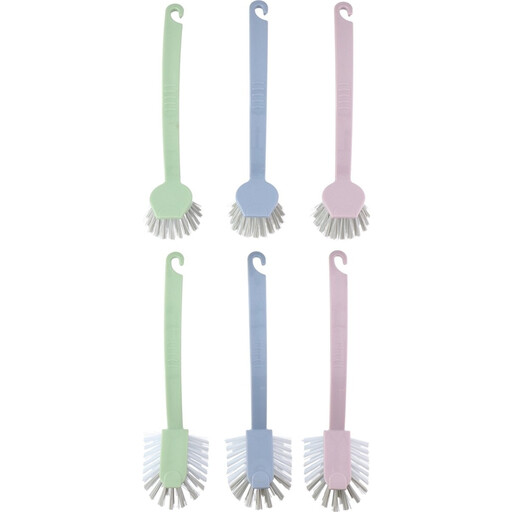
Why it suits this need: This individual washing-up brush is an accessible choice if you want to add a simple brush to your daily washing-up routine. The plastic model is 28 cm long according to the product details and comes as a single item.
The specifications list the material, dimensions and number of items. This lets you check in advance whether the length and handle will suit your sink.
Plastic construction, handy size and one brush per pack.
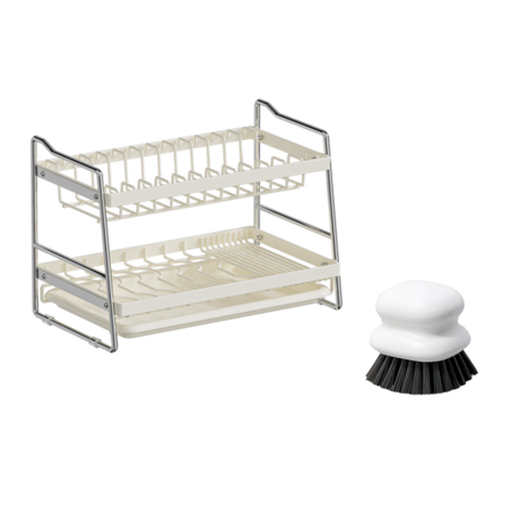
Why it suits this need: This set combines a 2-tier dish rack with a drip tray and a short cleaning brush. It’s a good fit for households that like to make washing, drying and putting away part of one regular kitchen routine.
The product description lists the dimensions as 40 × 23,6 × 28,7 cm and mentions the integrated drip tray. You can compare these with your available worktop space before buying.
Two tiers, a drip tray and an included brush in one set; white composite plastic according to the product information.
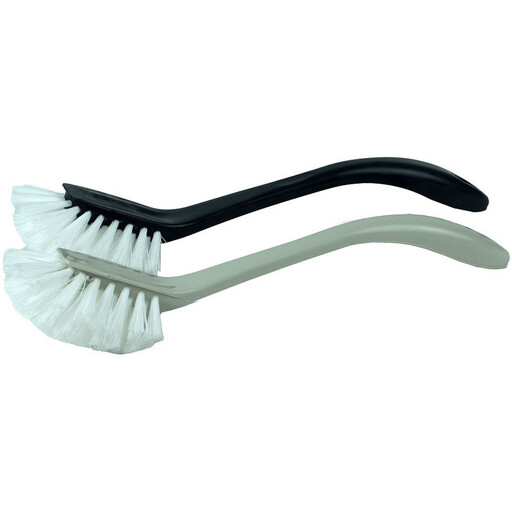
Why it suits this need: This model is designed for plates, pans, pots and kitchen surfaces. The instructions recommend rinsing the brush after use and leaving it to dry somewhere dry and well ventilated.
The product information describes the handle, bristles and care instructions. This makes it clearer how to clean and store the brush after frequent use.
Ergonomic handle, plastic construction and suitability for several types of kitchenware according to the product description.
We’ve put together a complete, up-to-date list of products that meet these strict selection criteria and the applicable European safety regulations.
In a small kitchen, it helps to leave only crockery that still needs to dry in the rack. This keeps your worktop tidy and makes better use of the space available.
It can be, especially if you choose a narrow or 2-tier model. Measure the space beside your sink first and compare it with the stated product dimensions. A vertical layout can give you more drying space without making the rack wider.
How long it lasts depends on how often you use it, the type of dirt and the material. Rinse the brush after every wash, remove food from the bristles and let it dry. Replace it when the bristles become misshapen, come loose or no longer clean effectively.
A manual dish rack doesn’t use electricity. Water use depends on how you wash and rinse your dishes. A drip tray only catches dripping water, so you’ll need to empty and clean it yourself.
