
Vandaag of morgen in huis

Kwaliteit gegarandeerd

Welkomstaanbiedingen ontgrendelen: GRATIS bezorging | Tot 80% korting | Gratis 30 dagen JoyPlus-proefperiode
Download de app
A dish drying rack might seem straightforward, but the wrong choice can quickly become a source of frustration. A rack that doesn't fit next to your sink, leaves water pooling on your worktop, or offers too little space for glasses and cutlery just takes up room without making washing-up any easier.
In this buying guide from the Joybuy Product Recommendation Officer, you'll discover what to look out for. Our selection is based on verifiable data such as dimensions, materials, layout and how water is drained away.
A product photo can make a rack look compact, when in reality it's over 40 cm wide. So don't just measure the available length – also check the depth and height. Remember to leave room for the tap, kitchen cupboards and for opening a window or door.
For small flats or student kitchens, a dish drying rack for the sink can be more practical than a worktop model. An expandable version uses the space above the sink bowl and lets water drain straight into the sink.
A dish drying rack with a drip tray catches water, but that doesn't automatically mean your worktop stays dry. A flat tray needs emptying regularly. Also check whether the drip tray is removable and whether there's a drainage opening or a swivel water outlet.
With a model that has no drip tray, water may end up on your worktop. That can be inconvenient for daily use, especially when the rack sits next to the sink.
A tall or wide dish rack can hold plenty of crockery, but narrow plate holders aren't always suitable for deep plates or bowls. Also pay attention to the position of a cutlery holder. Cutlery that's packed too closely together won't dry evenly and is harder to pick out.
So don't just look at the number of plates. Check whether there are separate compartments for plates, bowls, glasses, mugs and kitchen utensils.
Measure the spot where the dish rack will go and compare those dimensions with the product specifications. A rack measuring 42 × 29 × 12.7 cm needs a different setup than a two-tier model of 40 × 23.6 × 28.7 cm.
A space-saving dish drying rack with two levels makes the most of vertical space. That can be handy for families who wash several plates and glasses at once. Just check that the top tier isn't too low for large bowls or pans.
Many models are made from steel, plastic or a combination of both. A stainless steel dish drying rack made from 304-grade steel is mentioned in the product information for certain Maxcook models. According to the product description, this material is intended for use in a damp kitchen and is resistant to rust. That's a manufacturer specification, not a guarantee that the rack will never discolour or become damaged.
Plastic is generally lightweight and easy to clean. With plastic, pay attention to the sturdiness of the base and the stability when the rack is partially loaded. For metal models, a protective coating and non-slip feet are relevant details to help protect your worktop and crockery from scratches.
Good water drainage makes daily use much easier. Check whether:
Empty a drip tray regularly and dry parts when there's a build-up of limescale or standing water. Use a mild cleaning agent and follow the manufacturer's maintenance instructions.
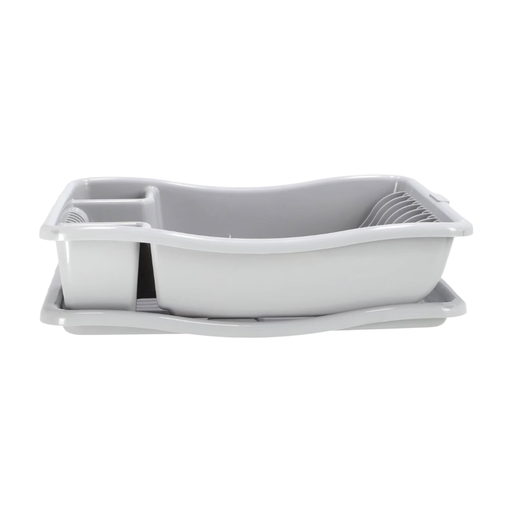
Why this fits the profile: This plastic model has a manageable size and is suitable for households looking for a simple dish rack for everyday use.
The included drip tray catches water and the dimensions are clearly stated, so you can check beforehand whether it will fit on your worktop.
Plastic construction, space for up to 12 plates according to the product information and two cutlery compartments.

Why this fits the profile: The single tier and fixed size of 42 × 29 × 12.7 cm suit anyone wanting a sturdy metal rack with clear compartmentalisation.
The removable PP drip tray prevents you from having to rely solely on an open worktop surface for drying and can be cleaned separately.
Stainless steel body according to the product description, no assembly required and separate zones for crockery and cutlery.
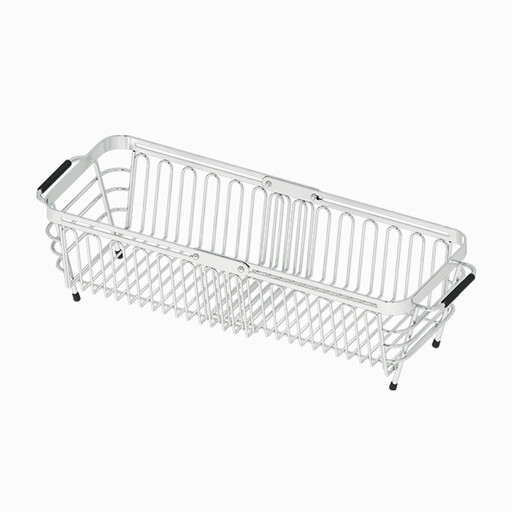
Why this fits the profile: The expandable length from 29 to 44 cm is designed for use over the sink and can also be used as a colander.
According to the product description, water drains directly into the sink bowl, so a separate drip tray on the worktop isn't needed.
Adjustable length, 304 stainless steel according to the product data and a mesh base for water drainage.
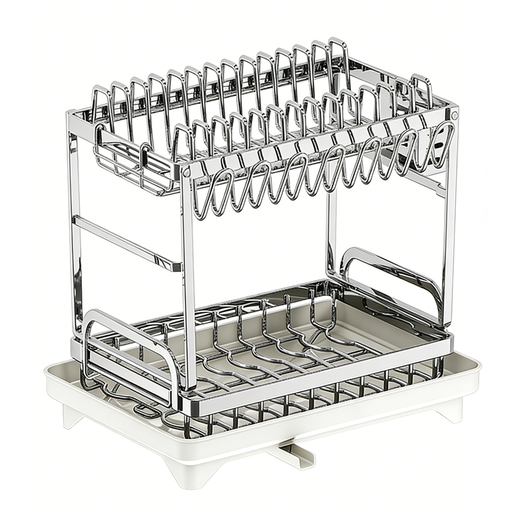
Why this fits the profile: The two-tier layout offers vertical storage for households that dry several types of crockery at the same time.
The product information mentions a base drain and a removable drainage tube. When positioning it, check that the tube points correctly towards the sink.
Two tiers, dimensions of 42 × 32 × 30 cm and compartments for different types of tableware.
We've put together a full, up-to-date list of products that fully meet these strict selection criteria and comply with current European safety regulations.
First, measure the available space and compare it with the external dimensions of the product. For a small worktop, a compact single-tier model may be sufficient. A family might be better off with a two-tier plate drying rack, as long as there's enough vertical space under the kitchen cupboards.
Yes, when you don't have drainage above the sink. A drip tray catches excess water, but it needs emptying and cleaning regularly. A rack with a drainage opening or water outlet may be more suitable if your worktop sits directly next to the sink.
Remove the crockery and cutlery, take out the drip tray and wash the loose parts with warm water and a mild cleaning agent. Check corners, feet and cutlery holders for limescale or soap residue. Let everything dry thoroughly before refilling the rack. Don't use an abrasive scouring pad on plastic or coated metal parts.
