
Vandaag of morgen in huis

Kwaliteit gegarandeerd

Welkomstaanbiedingen ontgrendelen: GRATIS bezorging | Tot 80% korting | Gratis 30 dagen JoyPlus-proefperiode
Download de app
A dish drying rack might seem straightforward, but getting the wrong size or a poorly designed water drainage system can quickly become frustrating. A rack that doesn't fit next to your sink, wobbles, or lets water run onto the worktop soon becomes a hindrance rather than a help.
For students, families, small households and campers, there are three main pitfalls to watch out for:
Measure the available space before you buy a dish drying rack. Note the area:
A compact dish drying rack is handy in a studio or student kitchen. For a family, a model with a larger surface area or two tiers may be more practical. Also consider the shape of your sink when choosing a rack that sits over it. An adjustable dish drying rack must fit within the dimensions of your sink. With telescopic models, the range of adjustment is more important than the size shown in the product photo.
A dish drying rack with a drip tray catches the water that runs off plates and glasses. Check whether the tray is removable and how you empty it. Some models have a drainage opening or a swivel spout that can be directed towards the sink.
With a rack that has no drip tray, the water must run directly into the sink. This is especially practical when the rack sits over the sink. A flat worktop model without a drainage solution, on the other hand, can quickly cause water rings.
Clean the drip tray and the rack regularly with mild washing-up liquid. Allow the parts to dry thoroughly before putting them back. This prevents dirt and moisture from building up in hard-to-reach corners.
A stainless steel dish drying rack is generally suitable for a damp kitchen. For products made from 304 stainless steel, the product information will state that the material is designed to resist rust and daily contact with water. Always check the full product specifications though; a coating or plastic component may have different care requirements.
A plastic dish drying rack is often lightweight and easy to move. That can be useful for caravans, student rooms or temporary use. Look at the layout:
A kitchen organiser with clear compartments is especially helpful when you want to dry several types of crockery at once after each wash.
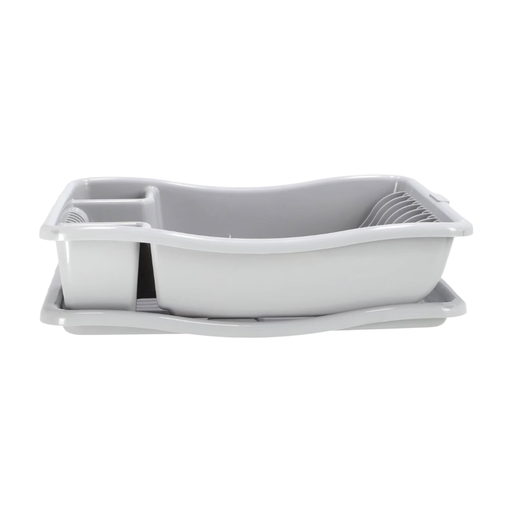
Why it fits the profile: This compact plastic dish drying rack has space for up to 12 plates and two integrated cutlery compartments. The included drip tray is suitable for everyday use on a smaller worktop.
The dimensions are clearly stated and the drip tray catches run-off water. This means you don't have to rely solely on a product photo.
Plastic construction, space for up to 12 plates, two cutlery compartments and an included drip tray.
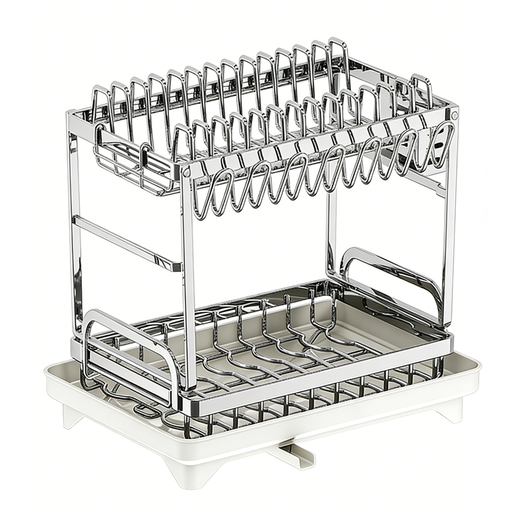
Why it fits the profile: The two tiers offer extra space for households that regularly dry several plates, bowls and cutlery at the same time. The combination of stainless steel and PP is suitable for a permanent spot on the worktop.
The product description mentions a divided two-tier design, a drainage pipe and care instructions. When assembling, make sure the pipe is directed towards the sink.
Dimensions of 42 × 32 × 30 cm, two tiers, compartment layout and a built-in drainage pipe according to the product information.

Why it fits the profile: This adjustable dish drying rack sits over the sink and makes use of otherwise unused space. It can also be used as a colander for fruit and vegetables, making it suitable for small kitchens and intensive daily use.
According to the description, water runs directly into the sink. Just measure the internal dimensions first: the length is adjustable from 29 to 44 cm.
304 stainless steel, telescopic length of 29–44 cm and a design for draining, washing and straining.
We've put together a full, up-to-date list of products that fully meet these strict selection criteria and comply with current European safety regulations.
Always place your dish drying rack on a flat, stable surface. Don't put heavy pans or large plates on a narrow top tier, and never exceed the stated capacity. A rack that sits over the sink must be well supported on both sides; check that it's still stable after moving it.
Empty a drip tray regularly and clean the seams, cutlery compartments and drainage openings. Use a soft sponge and mild cleaning agent on stainless steel. Abrasive products can damage the finish. Check plastic parts for cracks and metal parts for peeling coating or rust spots.
Yes, as long as the dimensions match the available space. A compact model next to the sink requires less installation than a rack over the sink, but it does take up worktop space. A telescopic model can keep that space free.
Choose a dish drying rack with a drip tray, drainage opening or spout that directs water to the sink. Place the rack level and check that the drip tray sits completely under the drying area. Empty the tray before it becomes full.
The lifespan depends on the material, load, moisture and maintenance. A stainless steel model can be suitable for long-term daily use, while plastic is mainly lightweight and easy to move. Check the rack regularly and replace it if you notice cracks, instability or damaged parts.
