
Vandaag of morgen in huis

Kwaliteit gegarandeerd

Welkomstaanbiedingen ontgrendelen: GRATIS bezorging | Tot 80% korting | Gratis 30 dagen JoyPlus-proefperiode
Download de app
A dish-drying rack may seem like a simple kitchen accessory, but choosing the wrong one can quickly leave you with a wet worktop, wobbly plates or too little room for glasses and cutlery. This applies to households, students, campers and anyone with a small kitchen.
When comparing options, look beyond colour and shape. Size, drainage, layout and the supporting structure all play a major part in how well a dish rack works day to day.
A worktop dish rack needs to fit beside the sink while leaving you room to work. So check the length, width and height. A 2-tier dish rack can hold plenty of crockery without taking up much worktop space, but it may not fit beneath a kitchen cupboard.
Measure the available space first. Also check that the handles, feet and any protruding glass holders will fit within the edges of your worktop.
A dish rack with a drip tray protects your worktop from water, but only if you empty and clean the tray regularly. Some models drain through a plug, while others collect water in a removable plastic tray.
So check:
A plate rack with narrow slots is handy for flat plates, but less suitable for deep or large bowls. A cutlery holder keeps forks and knives off the drip tray, while separate hooks provide space for cups.
Check the stated capacity, too. “Holds several plates” tells you less than a specific figure, such as up to 12 plates or space for 17 pieces of crockery and kitchen utensils. Bear in mind that large mugs and pans often take up more room than the product description suggests.
A plastic dish rack around 38 to 39 cm long may be enough for a single-person household or student. A family or household that washes up several times a day may be better off with a wider model or a 2-tier dish rack.
As well as the external dimensions, check the internal layout. For example, a rack measuring 44 cm wide may include a separate cutlery holder, glass holder and multiple levels, but this could leave less room for large pans.
A plastic dish rack is generally lightweight and easy to move. This makes it practical for students, caravans and campsites. Check that the product information says the material is suitable for everyday kitchen use, and that the rack stands securely.
A metal dish rack or stainless-steel model can offer a sturdy design. If you choose coated or chrome-plated steel, check for damage, as signs of moisture can become visible over time. Stainless steel does not mean you can ignore limescale or standing water: regular cleaning and drying are still a good idea.
Combinations of steel and polypropylene can balance a metal supporting structure with a lightweight, removable drip tray or cutlery holder.
A good dish rack should stand securely on a flat surface. Check that the feet provide enough support and that the rack will not tip over when more plates are placed on one side. Always follow the stated maximum load and avoid overloading it.
An extendable dish rack that sits in or over the sink can save worktop space. If you choose one, measure the internal width of your sink. According to the product information, the Maxcook model below adjusts from 29 to 44 cm and is designed to sit over the sink.
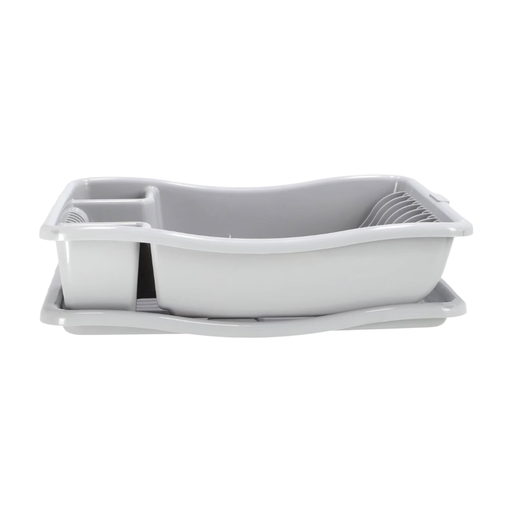
Why it suits this type of user: This plastic dish rack has a compact footprint, holds up to 12 plates and includes two built-in cutlery compartments. The drip tray supplied makes it practical for a small worktop.
The stated external dimensions and separate drip tray make it easier to check in advance whether the rack will fit on your worktop and where the water will go.
Compact size, plastic construction, two cutlery compartments and a drip tray, according to the product description.

Why it suits this type of user: According to the product information, this extendable dish rack is made from 304 stainless steel and can be placed over the sink. It is a good option if you want to keep your worktop clear.
The adjustable length of 29 to 44 cm lets you adapt the rack to your sink. Be sure to check the exact internal width first.
304 stainless steel, adjustable length and drainage straight into the sink, according to the product specifications.
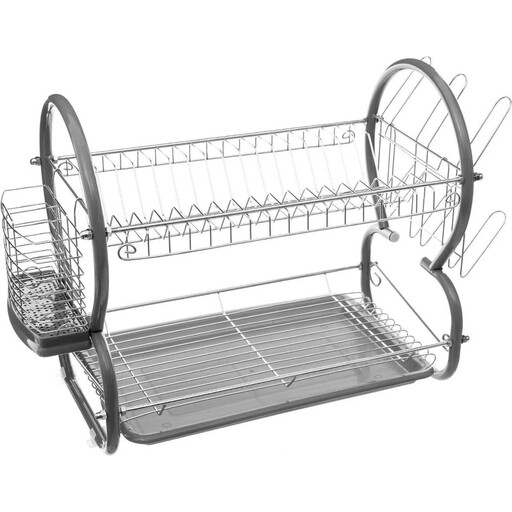
Why it suits this type of user: According to the product information, this 2-tier dish rack makes use of vertical space and can hold plates, bowls, mugs, glasses and cutlery. It is suitable for households that need to drain several types of crockery at once.
The separate cutlery basket and glass holders keep loose crockery off the drip tray. As the rack is tall, check that it will fit beneath your wall cupboards.
Two levels, separate holders and dimensions of 44 x 24 x 38 cm; stated maximum load: 1,3 kg.
Empty the drip tray or drain regularly, and rinse the parts with lukewarm water and a mild cleaning product. Dry metal parts if limescale starts to build up. Place the rack on a flat surface and distribute heavy plates evenly.
For camping, a lightweight plastic dish rack is often easier to take with you. For everyday use in a small kitchen, a drainage plug, extendable design or vertical layout may matter more than a decorative finish.
We’ve put together a full, up-to-date list of products that meet these strict selection criteria and the applicable European safety regulations.
First, measure the available length and depth beside the sink. Around 38 to 39 cm may be enough for a small household. If you are considering a tall or 2-tier model, check the distance to your wall cupboards as well.
Plastic is lightweight and easy to move. Metal or stainless steel can provide a sturdier supporting structure. The right choice depends on the capacity you need, the weight of your crockery and how you plan to clean the rack.
Choose a dish rack with a drip tray or drainage plug, or one that sits over the sink. Make sure it is stable and empty the drip tray regularly. Before buying, check that the drainage system suits the place where you plan to use the rack.
