
Vandaag of morgen in huis

Kwaliteit gegarandeerd

Welkomstaanbiedingen ontgrendelen: GRATIS bezorging | Tot 80% korting | Gratis 30 dagen JoyPlus-proefperiode
Download de app
A dish drying rack might seem simple, but you'll soon notice if you've made the wrong choice. The rack takes up too much space, water sits on the worktop, or plates don't fit properly between the holders. Particularly in British kitchens with a narrow worktop, it's important to look beyond just the price and colour.
The following three pitfalls are common:
Measure the space next to the sink before ordering a dish rack. Leave a few centimetres free all around so you can clean the rack and still use the sink comfortably.
For a small kitchen, a compact dish drying rack with a single tier is often practical. A taller model makes better use of vertical space. In that case, pay attention to the height and check that cupboard doors or windows won't be blocked. A rack around 40 to 43 centimetres wide offers room for everyday crockery, but can still take up a lot of space on a narrow worktop.
A good dish drying rack keeps plates, bowls, glasses and cutlery separate. A cutlery holder prevents forks and knives from getting left among the crockery. Separate holders or hooks are useful for glasses, as they are less likely to tip over.
Check the product information for:
A metal dish drying rack often has an open construction with good air circulation. A plastic dish drying rack is usually lightweight and easy to lift off. The choice therefore depends on the available space and the way you wash up.
Steel or stainless steel can provide a sturdy base. However, check whether the product description actually mentions rust resistance; a metal finish alone is no guarantee against corrosion. According to the product information for some models, rust-resistant properties are part of the design, but this remains a manufacturer's specification.
Plastic is lightweight and often easy to clean. Look for a flat base, sufficiently wide support points and a rim that keeps water contained. Always place any dish drying rack on a stable, level surface and do not exceed the recommended capacity.
A drip tray protects the worktop from drips, but needs regular emptying and cleaning. A drain plug or drain hose can channel water directly into the sink. In that case, also measure the distance to the sink and check that the drainage does not kink.
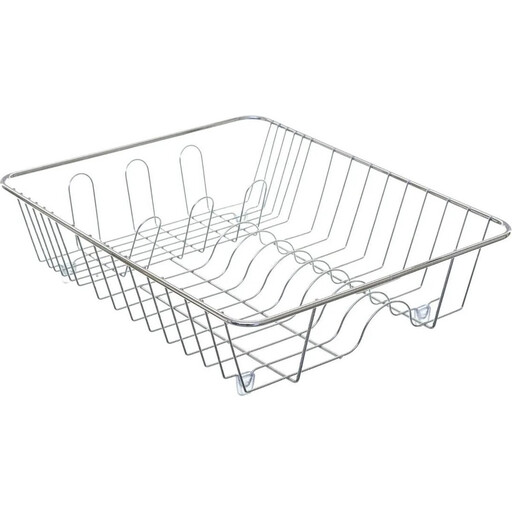
Why this fits the profile: This single-tier model is suitable if you want a straightforward dish rack for everyday use or a smaller kitchen. The dimensions are 39 x 33.5 x 10.5 cm.
The low construction takes up less vertical space and the raised rim is designed to limit leakage at the side. The capacity is clearly stated: room for 10 plates and 6 glasses.
Steel rack with ABS plastic, black finish and an included cutlery basket. According to the product information, no assembly is required.
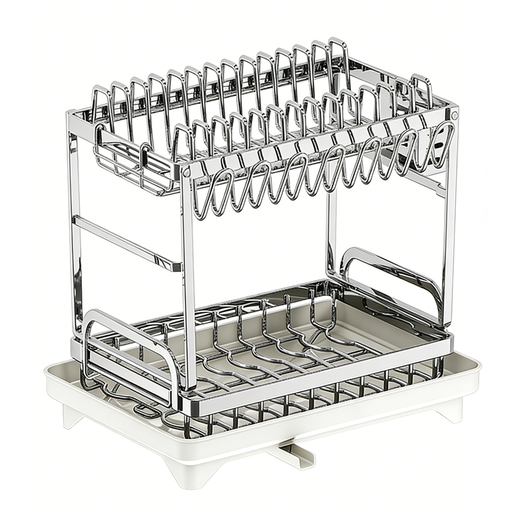
Why this fits the profile: The two tiers are designed for households that need to dry lots of plates, bowls and kitchen utensils at once without only expanding the worktop space.
The layout works with separate compartments and a drain hose at the bottom. This means you don't have to rely solely on a loose drip tray; the hose must be positioned correctly towards the sink.
Stainless steel and polypropylene according to the product specification, size 42 x 32 x 30 cm and a two-tier construction.
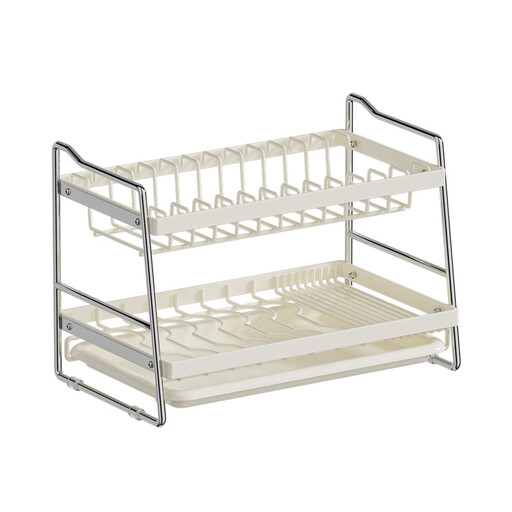
Why this fits the profile: This freestanding 2-tier model is intended for those who want to organise different types of crockery, glasses and kitchen tools at the same time.
The integrated drainboards channel water to a drain or collection point. The construction requires assembly, so you should check beforehand that all parts are securely fastened.
Dimensions of approximately 40 x 23.6 x 28.7 cm, two tiers and a freestanding design for placement next to the sink.
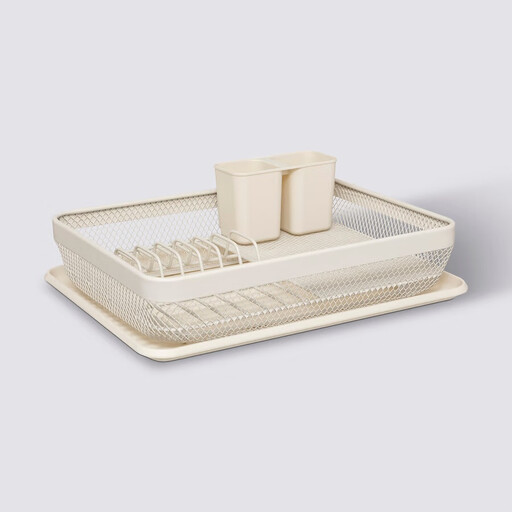
Why this fits the profile: The single-tier layout suits a flat, student room or household that mainly dries plates, glasses and cutlery from one meal.
At 43 x 31.3 x 12.8 cm, the model is lower than many two-tier racks. The stated room for 6 glasses and an additional cutlery holder makes the layout easy to assess.
Steel dish drying rack with polypropylene drip tray and cutlery holder. According to the product information, the model is intended for indoor use.
We've put together a full, up-to-date list of products that fully meet these strict selection criteria and comply with current European safety regulations.
First, remove all crockery and cutlery. Rinse the rack with warm water and a mild washing-up liquid. Clean a drip tray regularly, as standing water can cause dirt and limescale build-up. On metal parts, do not use harsh products or abrasive sponges if the finish could be damaged. Dry the rack thoroughly after cleaning.
The lifespan depends on the material, load, moisture and maintenance. Do not place heavy pans on a rack designed for plates and glasses. Check regularly for rust, cracks, warping or loose connections. Replace the product when the stability or hygiene is no longer reliable.
That depends on your worktop and sink. A drip tray is useful when the rack cannot drain directly over the sink. If you have limited space or a fixed drainage route, a model with a drain plug or drainboard may be more practical. Compare not only the price, but also the dimensions, cleaning and the way water is drained away.
