
Vandaag of morgen in huis

Kwaliteit gegarandeerd

Welkomstaanbiedingen ontgrendelen: GRATIS bezorging | Tot 80% korting | Gratis 30 dagen JoyPlus-proefperiode
Download de app
A dish drying rack with a drip tray can help keep the area around your sink more organised, but not every model works well in a British kitchen. A rack that’s too small, wobbles or doesn’t drain water properly will quickly get in the way. Marketing terms like “large capacity” don’t mean much when the dimensions and layout are missing.
For households, families and cooking enthusiasts, three things really matter: does the rack fit on your worktop, does it stay stable, and can you logically arrange crockery, pans and cutlery to dry? Below, you’ll find out what to look for and which options suit different usage scenarios.
A 2-tier drying rack makes use of height, but it still takes up space on the worktop. So don’t just check the product dimensions – also measure the free space next to the tap, wall or kitchen cabinets.
The Maxcook model from the cleaning set measures approximately 40 × 23.6 × 28.7 cm according to the product description. That gives you a concrete starting point. Measure your own worktop and leave enough room to empty the rack easily.
A drying rack with a drip tray stops water from going directly onto the worktop. But this only works well if the tray is emptied and cleaned regularly. Look out for:
The product information for the Maxcook set mentions an integrated drip tray that collects water and keeps the worktop drier. This is a claim from the product description; how well it works in practice depends on placement, loading and maintenance.
A crockery drying rack needs to hold more than just a few plates. Look at the layout for plates, bowls, glasses, cutlery and kitchen utensils. A separate cutlery basket or dedicated zone stops everything from being piled on top of each other and drying slowly.
For heavy pans, a standard drying rack isn’t always suitable. So check whether the manufacturer explicitly mentions pans and don’t exceed any stated weight capacity. If that information is missing, use the rack mainly for crockery and lighter kitchen utensils.
A 2-tier drying rack offers extra drying capacity without taking up the same width as a long, single-tier rack. The height does need to fit underneath wall cabinets. Measure:
A compact model is handy in a flat or smaller kitchen. In a large household, a wider rack can be more practical, as long as it doesn’t block your workspace.
The reference set from Maxcook uses composite plastic with a white finish, according to the product information. Plastic is lightweight and easy to wipe down, but check that the material is sturdy enough for your daily load.
With metal racks, the finish is important. A powder coating or rust-resistant steel type can make maintenance easier, but avoid prolonged contact with standing water. Dry the rack and drip tray regularly. Don’t use harsh cleaning agents if the product information doesn’t recommend them.
A kitchen dish rack must sit level and shouldn’t tip over when you take a plate from the top tier. Place it on a stable, flat surface. Clean the drip tray at least a couple of times a week with daily use. This prevents visible water marks and food particles.
An additional dish brush for stubborn residue is practical when you often work with pans, oven dishes or cookware. Choose a brush with a handle that feels comfortable to hold and use appropriate pressure for the material of the pan.
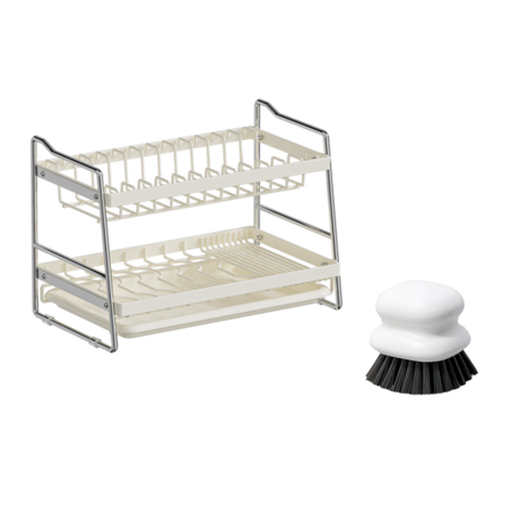
Why This Fits Their Persona: This set combines a 2-tier drying rack with a drip tray and a short cleaning brush. That’s practical for beginners who want to round out their basic kit in one purchase.
The product description gives specific dimensions and an integrated drip tray, rather than just a general capacity claim.
Approximately 40 × 23.6 × 28.7 cm; includes a drying rack, drip tray and cleaning brush.
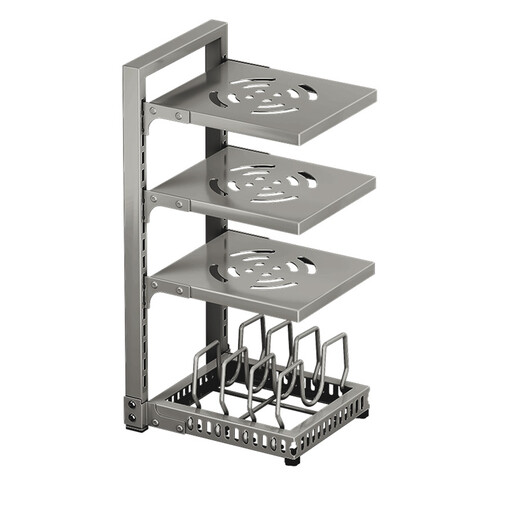
Why This Fits Their Persona: This isn’t a drying rack, but a complement for anyone who wants to pair a 2-tier drying rack with tidy storage of pans and lids inside a cupboard.
The rack layout is designed for vertical storage. That means you don’t have to keep pans on the worktop or in a stack.
Powder-coated carbon steel; four tiers; dimensions according to product information approximately 23 × 28 × 53 cm.
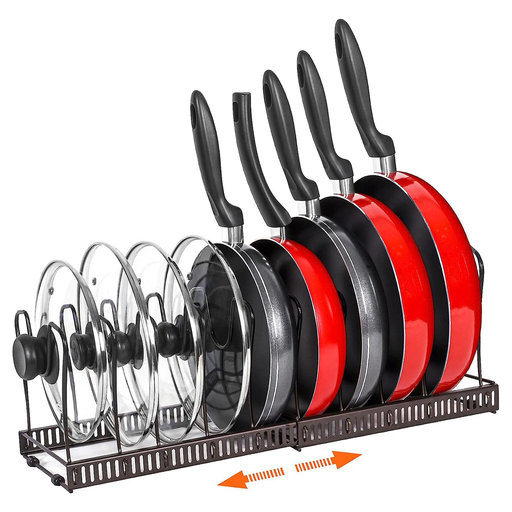
Why This Fits Their Persona: For households with lots of cookware, this rack provides a dedicated spot for lids, baking trays and pans. Use it alongside a drying rack for crockery, not as a replacement for one.
The adjustable dividers help keep different sizes separate, so lids are less likely to fall over or shift.
304 stainless steel; extends from approximately 30.5 to 58.4 cm; supplied as a set of two.
Browse our current range of pot racks and compare dimensions, materials and layouts before you order.
That depends on the number of plates and glasses you usually wash at once. First measure the available space, then choose a model with a second tier or an extra cutlery section. For a smaller household, a compact rack is often sufficient; families usually benefit more from a clear layout and greater drying capacity.
Empty the drip tray regularly and rinse it with warm water. Then wipe the surface dry. With hard water, visible marks can appear. Only use a mild cleaning product that’s suitable for the material and follow the manufacturer’s maintenance instructions.
Only if the product information allows it and the pans sit stably. Heavy cast iron or large metal pans can strain a lightweight rack. For such pans, it’s better to use a separate pot rack and reserve the drying rack for crockery, cutlery and lighter kitchen utensils.
