
Vandaag of morgen in huis

Kwaliteit gegarandeerd

Welkomstaanbiedingen ontgrendelen: GRATIS bezorging | Tot 80% korting | Gratis 30 dagen JoyPlus-proefperiode
Download de app
A dish drying rack may seem like a simple kitchen product, but choosing the wrong one can quickly lead to a wet worktop, wobbling plates or a rack that is difficult to keep clean. This is particularly important in small kitchens, student accommodation and flats where every centimetre counts.
A practical dish drying rack should suit your sink, crockery and washing-up routine. So don’t just look at the colour or price; pay close attention to the construction, drainage and stated dimensions.
A kitchen dish drying rack can look compact in product photos, while its total width and depth may not fit beside the sink. So check the space available on your worktop. Also allow for handles, a tap or a kitchen cupboard that opens outwards.
For example, a rack measuring 39 x 33.5 x 10.5 cm has a different footprint from a taller model measuring 43.5 x 32.5 x 19 cm. The height also determines whether you can place the rack underneath a kitchen cupboard.
A dish drying rack with drip tray does not automatically prevent water from collecting. A separate or shallow tray needs to be emptied regularly. An integrated drain or drainage plug can be more convenient, but check that the water can actually run towards the sink.
Without proper drainage, moisture remains underneath the crockery. This makes the worktop wet and means it needs cleaning more often.
A standard dish rack may offer space for plates, but no suitable place for glasses or cutlery. Plates may lean against one another and cutlery can slip through the gaps. So look for a separate cutlery holder, sturdy plate dividers and any hooks for cups.
A large rack is not automatically more practical. A compact dish drying rack with a well-designed layout may be sufficient for one or two people and takes up less worktop space.
First measure the space beside or above the sink. Make a note of:
Product information sometimes states how many plates or glasses a rack can hold. Use this as a guide and take the shape of your crockery into account. A deep plate takes up more room than a flat breakfast plate.
A plastic dish drying rack is often lightweight and easy to move. Polypropylene and ABS plastic are commonly used for drip trays and cutlery holders. Check that the product is suitable for regular contact with water and can be cleaned easily with warm soapy water.
A metal dish drying rack usually has a steel frame. Pay attention to the finish, such as a coating, and check regularly for damage. A metal frame may feel sturdy, but it is not necessarily maintenance-free. Do not leave water standing on the material for long periods, and dry the components when necessary.
A rack should be placed on a flat, stable surface. Non-slip feet or protective caps can help reduce scratches and prevent the rack from sliding. Do not fill the rack beyond its stated capacity, especially when it contains tall glasses or heavy pans.
Where possible, choose a design with removable components. This allows the drip tray, cutlery holder and rack to be cleaned separately. Also check whether narrow corners and gaps can be reached with a cloth or brush.
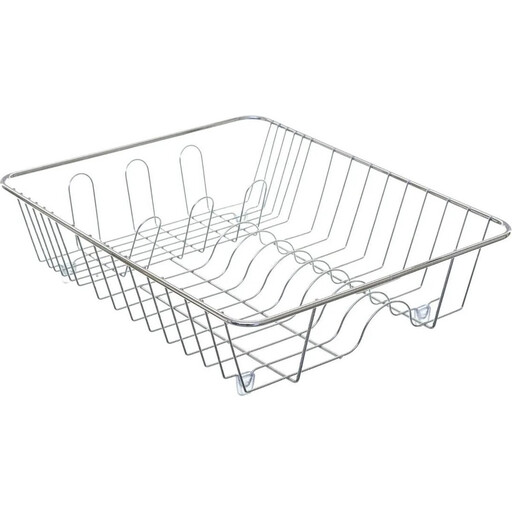
Why it suits this profile: Its relatively low height and clearly stated dimensions make it suitable as a first dish drying rack beside the sink. The model is also intended for use in the kitchen or while camping.
The stated overall dimensions make it easy to measure the space in advance. According to the product description, the raised edge is designed to help prevent leaks.
Steel frame with ABS plastic, space for up to 10 plates according to the product information, and a cutlery basket.
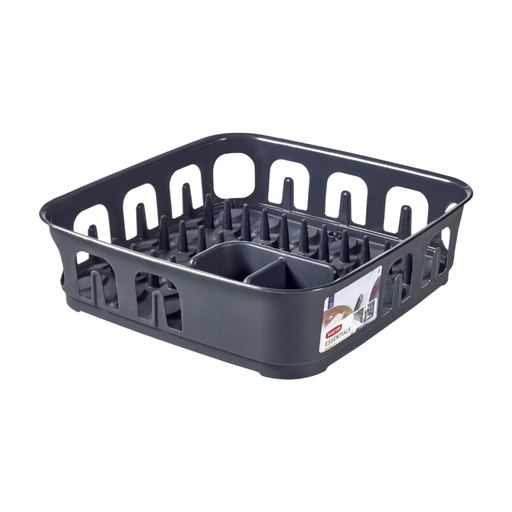
Why it suits this profile: This model combines several functions for everyday use: space for plates, a cutlery tray, hooks for cups and a drainage plug.
The drainage plug is a specific feature to check when dealing with a wet worktop. The product description recommends emptying the tray regularly and placing the rack on a flat surface.
Durable plastic construction according to the product information, capacity for up to 12 plates and external drying hooks for cups.
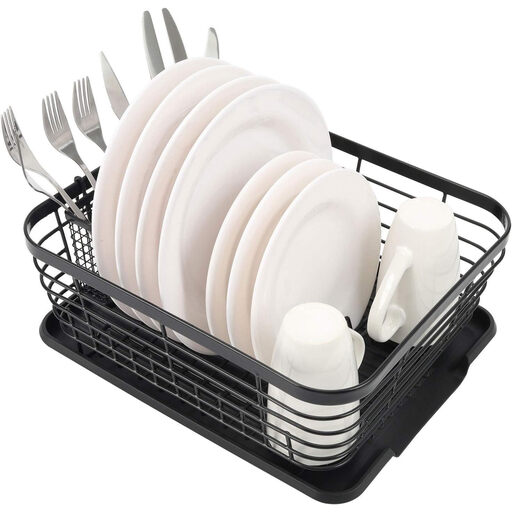
Why it suits this profile: The combination of a rack, drip tray and removable cutlery holder is useful for intensive daily use or in a flat with limited worktop space.
According to the product information, the components are removable, allowing you to clean the drip tray and cutlery holder separately. The warning not to overload the rack still applies.
Powder-coated metal frame, plastic drip tray and a fine-mesh cutlery holder. The stated dimensions of the rack are 14,2 x 12,1 x 5,5 inch.
We’ve put together a complete, up-to-date list of products that fully meet these strict selection criteria and the applicable European safety requirements.
Place the dish drying rack as close to the sink as possible, but not where the tap touches the rack. Stand plates upright in the dividers and place glasses with the opening facing down, if the design allows this. Cutlery should go in the holder with enough space between the pieces.
Empty the drip tray as soon as there is visible water in it. Clean the rack regularly with warm water and a mild cleaning product. Check metal parts for damage and plastic components for cracks. Always follow the manufacturer’s care instructions. For products with a stated legal guarantee, EU law provides at least the applicable statutory conformity protection; check the product page for additional terms.
Yes, especially when the rack is placed on the worktop beside the sink. The drip tray catches water draining from the dishes. However, you need to empty and clean it regularly. A model with a drainage plug may be suitable if you want the water to run directly into the sink.
First measure the space available and compare it with the product’s full dimensions. A compact model is often sufficient for one person or a small kitchen. Families will usually benefit more from a rack with separate sections for plates, glasses and cutlery. Don’t just look at the stated capacity; consider the shape of your crockery too.
A plastic rack is lightweight and generally easy to clean. A metal rack may offer a sturdy frame, but requires attention to its coating and prolonged exposure to moisture. The most practical choice depends on the space available, the capacity you need and how much maintenance you are comfortable with.
