
Vandaag of morgen in huis

Kwaliteit gegarandeerd

Welkomstaanbiedingen ontgrendelen: GRATIS bezorging | Tot 80% korting | Gratis 30 dagen JoyPlus-proefperiode
Download de app
A dish drying rack may seem straightforward, but choosing the wrong model can quickly become frustrating. A dish rack that is too small overflows after a single cooking session, a shallow drip tray leaves water on the countertop, and an unstable construction makes it difficult to place plates safely. For students, small households, campers and families, it is therefore important to look beyond colour and price.
In this buying guide, we compare the most important features of a dish drying rack, including size, material, drainage, capacity and layout. This makes it easier to choose a model that suits your kitchen and daily washing-up routine.
A rack that is 40 centimetres wide may fit on the countertop, but the usable space can be limited by thick edges, a large cutlery holder or awkward compartments. So check not only the length and width, but also the height and the layout for plates, glasses and bowls.
A compact countertop dish drying rack is particularly suitable for one- or two-person households. If you regularly wash pans, bowls and several glasses, a 2-tier dish drying rack is often a better choice.
A dish drying rack with drip tray does not automatically guarantee a dry countertop. Some models require the tray to be emptied by hand. Other designs have a drain plug or drainage tube that directs the water towards the sink.
Before buying, measure the distance to the sink. A drain that is too short or incorrectly positioned can still result in puddles of water.
The term “rust-resistant” is not always explained clearly. Therefore, check the specific material details. A stainless-steel dish drying rack may be suitable for a damp kitchen, but the joints, coating and finish also deserve attention. For steel racks with a plastic drip tray, it is useful to assess both materials separately.
According to the manufacturer’s product description, the Maxcook MCZW2898 model is made of stainless steel and polypropylene. The description also mentions drainage at the bottom. These are verifiable product specifications; they do not automatically indicate how long the product will last in every kitchen.
Measure the free space next to the sink and account for cabinet doors, taps and power sockets. Then consider the capacity:
A removable drip tray is easy to take out and clean. An integrated drain plug or drainage tube can be more practical when the rack stands directly next to the sink. Check that:
Empty and dry the drip tray regularly. Standing water can cause odours and residue, regardless of the material.
A cutlery holder should keep forks, knives and spoons separated without causing the rack to tip over. Place sharp knives with the point facing down, provided the layout allows this safely. For a 2-tier model, check that the upper tier is securely supported and is not overloaded.
A dishwasher rack is different from a dish drying rack: a dishwasher rack is part of a dishwasher, whereas a dish drying rack is intended for hand-washed crockery. If you are mainly looking for additional countertop organisation, a kitchen organiser or separate plate rack may also be relevant.
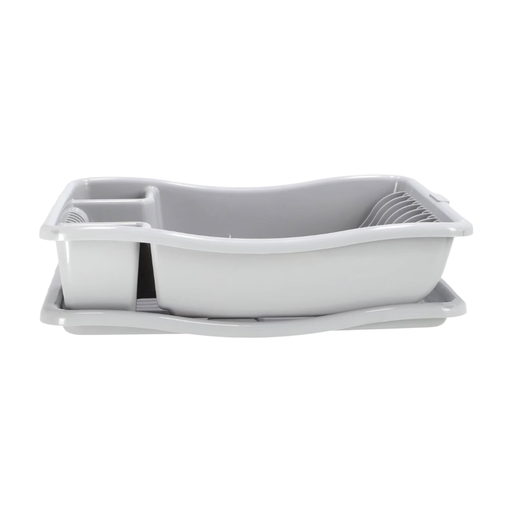
Why it fits: Measuring 38 x 29 x 8.5 cm, this plastic dish rack is suitable for smaller kitchens, student accommodation or everyday use with limited quantities of crockery. According to the product description, it holds up to 12 plates.
The included drip tray collects draining water. The two cutlery compartments help keep utensils separated instead of leaving them loose on the plates.
Plastic construction, space for up to 12 plates and two integrated cutlery compartments, according to the product information.
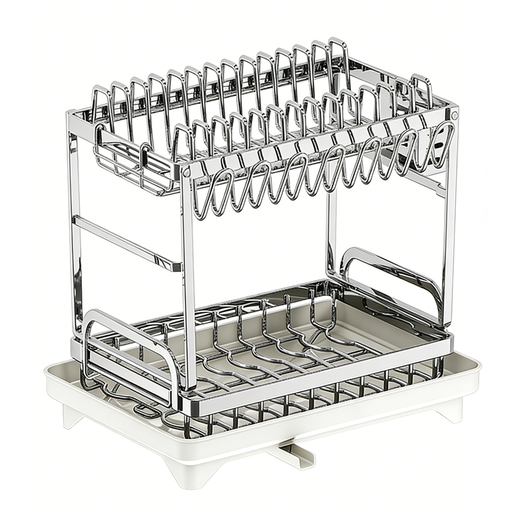
Why it fits: Measuring 42 x 32 x 30 cm, this model is designed for households that want to dry several types of crockery at once while making efficient use of vertical countertop space.
The product description mentions a two-tier layout, dedicated compartments and a drainage tube at the bottom. Before assembly, check that the tube points correctly towards the sink.
Stainless steel and PP as the stated materials, two tiers and a removable drainage solution, according to the manufacturer.
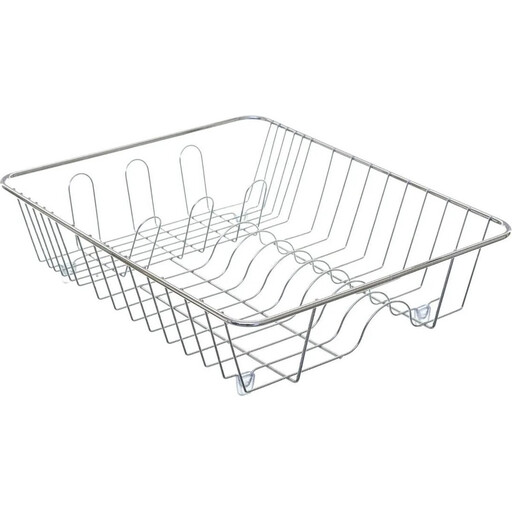
Why it fits: Measuring 39 x 33.5 x 10.5 cm, this model is designed for use at home or on the campsite. The product information states that it holds 10 plates and includes a cutlery basket.
According to the product description, the raised edge is designed to help prevent leaks. The open design requires no complicated assembly.
Steel and ABS plastic, a cutlery basket, a raised edge and a weight of approximately 610 grams.
Rinse away food residue before placing crockery in the rack. Clean the drip tray or drainage system weekly with warm water and a mild washing-up liquid. For metal racks, avoid steel wool and harsh abrasive cleaners, as these can damage the surface. Also inspect the welds, plastic edges and non-slip feet regularly.
A wooden serving rack is not the same as a dish drying rack. According to the product description, the Secret de Gourmet model has two bamboo tiers and is not dishwasher-safe. Use such a product only for its intended purpose and follow the care instructions.
Browse a current selection of kitchen organisers and products in a range of sizes, materials, tiers and drainage solutions. Compare the specifications before placing your order.
Yes, especially when the rack is not positioned directly over the sink. The drip tray collects water, but it must be emptied and cleaned regularly. If the rack stands right next to the sink, a drain plug or drainage tube may be more convenient.
Measure the available space and allow approximately 2 to 5 centimetres of additional room for placing and removing the rack. A compact model is often sufficient for one person. Households with several members may benefit from a 2-tier dish drying rack or a model with separate glass and cutlery holders.
Plastic is generally lightweight and easy to clean with warm water and mild washing-up liquid. Stainless steel and PP are combined in some models. Always check the complete material specification and dry the rack after cleaning to help prevent limescale and moisture build-up.
