
Vandaag of morgen in huis

Kwaliteit gegarandeerd

Welkomstaanbiedingen ontgrendelen: GRATIS bezorging | Tot 80% korting | Gratis 30 dagen JoyPlus-proefperiode
Download de app
A dish drainer may seem simple, but the wrong size, poor water drainage or an awkward cutlery holder can cause daily frustration. A model that looks spacious in the product photo may take up too much worktop space in a small kitchen. Water can also collect underneath the drainer, meaning you have to clean the worktop more often.
So look out for these three common pitfalls:
Measure the space beside the sink before ordering a dish drainer. Take handles, the tap and the space you need to remove plates from the rack into account. For a small kitchen, a compact dish drainer or a model designed to sit in the sink is often more practical than a wide rack on the worktop.
A size of around 40 cm long fits many worktops, but always check the actual dimensions. The 5five Dish Drain Rack, for example, measures 43.5 × 32.5 × 19 cm and, according to the product specification, holds up to 10 glasses. This is suitable for a household’s daily washing-up, but may be too large for a narrow shelf.
For extra capacity without taking up more floor space, consider a two-tier model. The Maxcook dish drainer with drip tray measures approximately 40 × 23.6 × 28.7 cm. Its vertical design makes good use of the height available, but does require sufficient space above the worktop.
A metal dish drainer made from steel or stainless steel will generally feel sturdy. However, check whether the product specification states which metal has been used and whether there is a coating. With a metal frame, it is advisable to remove water regularly and not ignore damage to the coating.
A plastic dish drainer is often lightweight and easy to move. Polypropylene, ABS and other plastics can be suitable for everyday use, as long as you do not expose the rack to heat it was not designed to withstand. According to the product information, the Curver models are made from durable plastic and feature an integrated cutlery tray or drainage solution.
For use over the sink, the product descriptions of several Maxcook models specify 304 stainless steel. This is a specific material description, but it does not mean you will never need to clean the rack. Limescale and food residue can still build up.
A dish drainer with a drip tray protects the worktop from dripping water, but pay attention to the design. Is the tray removable? Does it have a drainage opening? Can you clean it thoroughly? A drip tray that is difficult to remove may actually trap water and dirt.
A dish drainer with a cutlery tray keeps knives, forks and spoons separate from plates and glasses. Check that the holder is wide enough and that small cutlery cannot fall through the openings. The steel 5five model is listed with an additional polypropylene cutlery holder. According to the product description, the Curver Dish Drainer with Tray has two separate compartments for cutlery.
When choosing an adjustable dish drainer for the sink, measure the inside of the sink and check that the rack rests securely on the edges. A telescopic model must not be able to slide out of position. Always place it level and avoid overloading it.
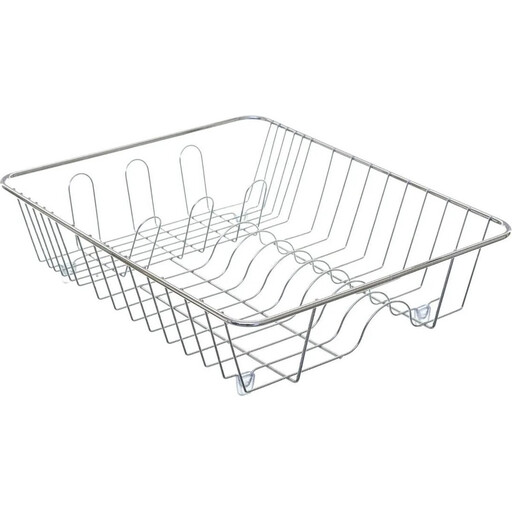
Why it suits this profile: This model is suitable for anyone looking for a simple rack for home, a student room or a campsite. It measures 39 × 33.5 × 10.5 cm.
According to the product information, the raised edge is designed to help prevent leaks. A separate cutlery basket stops small items from ending up between the plates.
Steel frame, space for 8 plates and 6 glasses according to the specification, and no assembly required.

Why it suits this profile: This kitchen dish drainer is ideal for households wanting a permanent solution beside the sink, with clearly defined sections for different types of crockery.
The removable PP drip tray can be emptied and cleaned. This prevents water from remaining permanently underneath the rack.
Stainless steel frame, dimensions of approximately 42 × 29 × 12.7 cm, integrated organisation and no assembly required according to the product description.

Why it suits this profile: A practical choice for small flats, motorhomes or households that want to keep the worktop clear. The rack is placed over the sink.
The length can be adjusted from 29 to 44 cm. According to the product description, water runs directly into the sink, so a separate drip tray is not needed.
304 stainless steel, telescopic length and dimensions of approximately 29–44 × 21.2 × 10.5 cm.
We have put together a complete, up-to-date list of products that fully meet these strict selection criteria and the applicable European safety regulations.
Place the rack on a stable, level surface and distribute the weight evenly. Put plates in the slots provided, stand glasses upright or follow the manufacturer’s instructions, and place cutlery with the handles facing down if the holder is designed for this. Take extra care with sharp knives and check that the cutlery tray offers sufficient protection.
Empty a dish drainer with a drip tray regularly. Rinse the drip tray and rack with warm water and a mild cleaning product. Do not use harsh products on plastic or coated metal parts without checking the product instructions first. Allow the parts to dry thoroughly to help prevent limescale and unpleasant smells.
The product descriptions for some models state a minimum two-year guarantee under EU consumer law. This relates to your statutory rights and does not replace careful maintenance. Check the latest information on the product page when purchasing.
Choose a compact model with a narrow base, a two-tier design or an adjustable rack for placing over the sink. Measure the available space and also check the width of the sink. A model that drains into the sink can help keep worktop space free.
That depends on how you use it. Metal provides a sturdy frame and is suitable for anyone who regularly dries a large amount of washing-up. Plastic is often lighter and easy to move, for example in student accommodation, a caravan or when camping. Pay particular attention to the exact material specification, the drainage system and the cleaning instructions.
Empty the drip tray after use, rinse it regularly and dry the rack if you are not going to use it for an extended period. With a rack positioned over the sink, the underside must be able to drain freely. Clean joints and cutlery holders particularly carefully, as water and small food particles can remain trapped there.
