
Vandaag of morgen in huis

Kwaliteit gegarandeerd

Welkomstaanbiedingen ontgrendelen: GRATIS bezorging | Tot 80% korting | Gratis 30 dagen JoyPlus-proefperiode
Download de app
A dish drainer may seem like a simple kitchen accessory, but the wrong choice can quickly lead to water marks, wobbly plates or a rack that takes up too much space. In student accommodation, flats and small kitchens especially, every centimetre of worktop space matters.
When choosing one, don't focus solely on appearance or the stated capacity. Pay particular attention to the dimensions, drainage, layout and materials. This will help prevent your dish drying rack from becoming awkward to use after just a few weeks of everyday use.
A rack may look compact in a product photo, while its depth is too great for your worktop. Measure the available space next to or behind the sink. Also take into account any kitchen cupboards that need to open.
For example, a 42 × 29 cm worktop dish rack requires a different location from a narrow model designed to sit directly over the sink. Don't just check the length and width; also consider the height of a 2-tier dish drainer.
A dish drainer with a drip tray catches water, but the tray needs to be emptied and cleaned regularly. If water remains under the dishes for a long time, the worktop may stay dry, but the rack itself will become less hygienic.
A drainage hole, spout or swivelling water outlet can be more practical when the rack is positioned close to the sink. Check beforehand that the water can actually run into the sink rather than ending up on the edge of the worktop.
“Suitable for the whole household” means little without specific figures. Check how many plates, glasses and cutlery compartments are actually stated. A rack with room for plates may be less suitable for large bowls, pans or tall mugs.
Also pay attention to stability. Overloading can cause the rack to tip over or block the drainage system. Always place it on a flat surface and distribute heavy dishes evenly.
First measure:
A space-saving dish drainer often makes use of height rather than taking up more worktop space. A 2-tier model can therefore hold more dishes, but it does require sufficient vertical clearance.
A metal dish drainer generally provides a sturdy base. With coated metal, check that the coating remains intact; damage can create a weak spot after prolonged contact with water. Powder coating is a product specification, not a guarantee that rust can never occur.
Stainless steel, such as 304 stainless steel, is often chosen for use around water. However, limescale and cleaning products can affect its appearance. Drying the rack and cleaning it regularly remain important.
A plastic dish drainer is usually lightweight and easy to clean. Check the maximum temperature. Some models are not designed for boiling water or extreme heat. Also inspect the rack regularly for cracks, particularly around the drip tray.
A dish drainer with cutlery holder prevents forks, knives and spoons from falling between the plates. A perforated or fine-mesh holder can accommodate different types of cutlery more effectively. Place sharp knives safely with the point facing downwards, or follow the usage instructions.
For small kitchens, a rack with an outlet leading into the sink is useful. With a drip tray that only collects water, you need to empty it in good time to prevent it from overflowing.
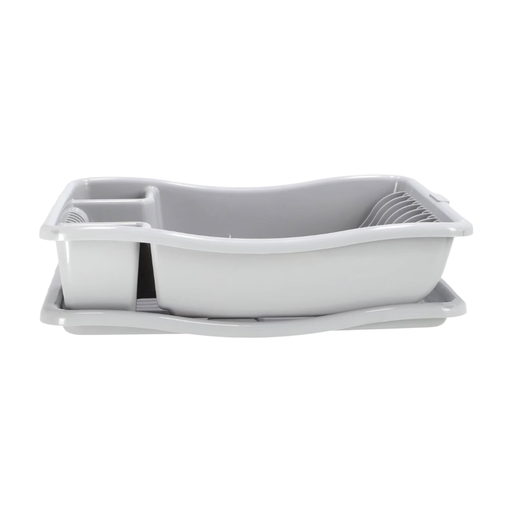
Why it suits this profile: Measuring approximately 38 × 29 × 8.5 cm, it is suitable for a compact worktop. This plastic model has room for up to 12 plates, two cutlery compartments and a drip tray.
The fixed dimensions and separate compartments make the capacity easier to estimate. However, the drip tray needs to be emptied and cleaned regularly.
Plastic construction, two cutlery compartments and a stackable design for compact storage.

Why it suits this profile: Measuring approximately 42 × 29 × 12.7 cm, this model is suitable for households looking for a sturdy, well-organised rack for everyday use.
The removable PP drip tray can be taken out for emptying and cleaning. The stated dimensions mean you don't have to rely solely on estimating size from a photo.
Stainless steel main construction, removable drip tray and compartments for plates, bowls, glasses and cutlery.

Why it suits this profile: This rack is designed to sit over the sink and can be adjusted from approximately 29 to 44 cm. This leaves more worktop space free in a small kitchen.
The water runs directly into the sink, so you don't have to manage a full drip tray on the worktop. Measure the sink width and check stability before use.
304 stainless steel, telescopic length and a fine-mesh surface for draining and washing.
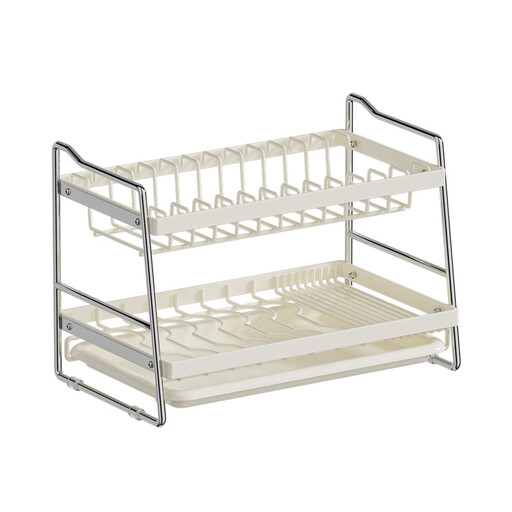
Why it suits this profile: Measuring approximately 40 × 23.6 × 28.7 cm, this model makes use of vertical space and has room for plates, cups, cutlery and kitchen utensils.
The stated height and footprint make measuring beforehand essential. The integrated drip trays collect water, but the rack does require assembly.
Two tiers, efficient use of vertical space and drainage trays that help protect the worktop from dripping water.
We've put together a complete, up-to-date list of products that fully meet these strict selection criteria and the applicable European safety regulations.
The lifespan depends on more than just whether the rack is made from metal or plastic. Clean your dish drainer regularly with warm water and a mild cleaning product. Remove limescale before it builds up around holes and drainage openings.
Also bear the following points in mind:
For a rack positioned over the sink, check that the telescopic sections are securely fastened. With a freestanding model, the balance between tall dishes and the supporting surface is particularly important.
Yes, if you don't have a suitable drainage route to the sink. The drip tray catches dripping water and helps keep the worktop dry. However, you need to empty, wash and dry the tray regularly. A model with an outlet leading into the sink requires less manual emptying, provided it is positioned correctly and has the right angle.
Measure the available space and compare it with the stated product dimensions. Allow a few extra centimetres of clearance for a drip tray, drainage outlet or opening cupboard doors. Choose a larger or 2-tier model if you often wash several pans and plates at once; a compact rack may be sufficient for one person.
Plastic is lightweight and easy to clean. Metal or stainless steel may offer a different level of sturdiness, but requires attention to the coating, limescale and possible damage. The right choice depends on the available space, the layout you want and how you plan to clean the rack. Always check the specific product specifications rather than relying solely on the material name.
