
Vandaag of morgen in huis

Kwaliteit gegarandeerd

Welkomstaanbiedingen ontgrendelen: GRATIS bezorging | Tot 80% korting | Gratis 30 dagen JoyPlus-proefperiode
Download de app
A dish drainer may seem simple, but choosing the wrong one can quickly become frustrating. A rack that’s just a little too large can take up space beside the sink. A lightweight model may shift when it’s full. And a drip tray that’s difficult to clean can leave water sitting on your worktop.
As a Joybuy Product Recommendation Officer, I’ve picked out the most important product specifications from our range. This will help you choose a dish drainer based on its size, material, capacity and drainage, rather than just its appearance.
A product description may say there’s room for plates, glasses and cutlery, but that doesn’t always tell you how much worktop space you’ll need. So check the length, width and height. A two-tier dish drainer makes use of vertical space, but it may not fit under a kitchen cupboard.
Pay attention to the layout, too. Separate sections for plates, cups and cutlery stop crockery from piling up and help it stay more stable.
A dish drainer with a drip tray collects water, but the tray needs to be emptied and cleaned regularly. Some models have a drain plug or drainage opening that lets water run towards the sink. This only works well if the rack is positioned correctly and the outlet sits above a suitable spot.
If you’re considering an extendable dish drainer for the sink, check its minimum and maximum width, too. The rack should rest securely on the edge of the sink and mustn’t tip over.
A plastic dish drainer is usually lightweight and easy to move. However, check for guidance on cracks, discolouration and cleaning. A metal dish drainer may feel sturdy, but check which parts are made from steel, stainless steel, plastic or a coated material.
Whatever the material, don’t leave water standing for long. Clean the drip tray regularly and check the rack for damage. Always place a dish drainer on a flat, stable surface and don’t exceed the stated weight limit.
First, measure the space beside or above the sink. Remember to allow for:
A compact dish drainer measuring around 38 by 29 centimetres may suit a smaller kitchen, student accommodation or caravan. For a household with more crockery, a two-tier model may be more practical.
Don’t just look at the stated number of plates. Check whether the rack also has a cutlery holder, cup hooks or a separate section for glasses. A model for plates and cutlery is more convenient when knives, forks and spoons don’t have to sit loose among the crockery.
A larger capacity doesn’t automatically mean the rack will be easy to use. Heavy crockery should sit low and securely. Lighter cups and glasses can go in their designated holders.
Good drainage helps prevent puddles on the worktop, but every system needs maintenance. If there’s a drip tray, check that it’s easy to remove. With direct drainage, the outlet needs to sit above the sink or another drain.
For everyday care, use a soft cloth or warm water with mild washing-up liquid, depending on the product information. Abrasive cleaners can damage plastic, coatings or shiny components.
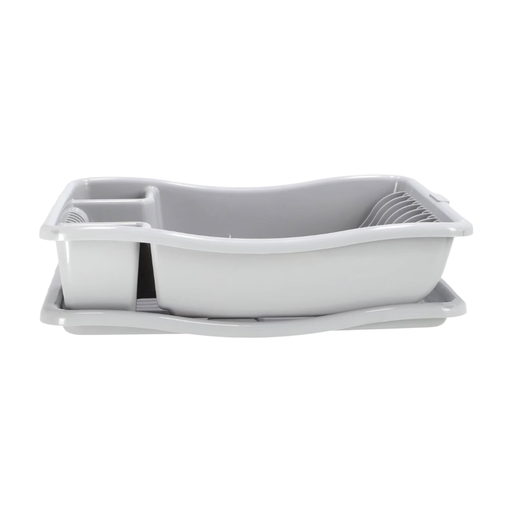
Why it suits this type of buyer: Its compact rectangular shape is ideal for a smaller worktop, and the product description says it can hold up to 12 plates. The included drip tray collects excess water.
The dimensions are clearly stated, and the drip tray is a separate component. So you don’t have to rely solely on a general capacity claim.
Plastic construction, two cutlery sections, separate spaces for small and large plates, and a stackable design for storage.

Why it suits this type of buyer: This extendable model is designed to sit over or in the sink. According to the product specifications, its length can be adjusted from 29 to 44 centimetres.
Water can drain straight into the sink, so you don’t need to empty a separate drip tray on the worktop. Measure your sink first to check the fit.
304 stainless steel, adjustable length of 29–44 cm, and a design that can also be used as a colander.
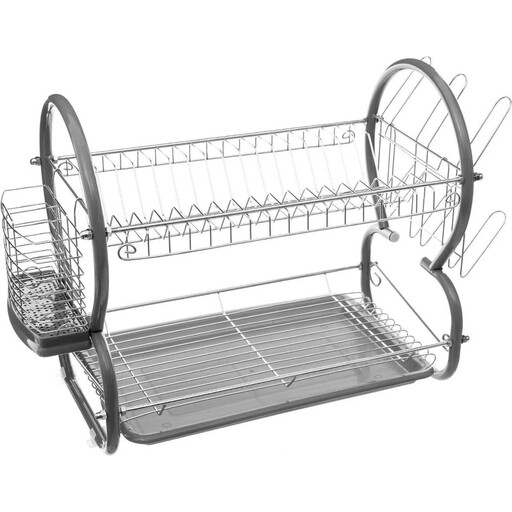
Why it suits this type of buyer: This two-tier dish drainer makes use of vertical space and has separate holders for cutlery and glasses. The product specifications state that it can hold up to 17 items, including plates, bowls, mugs, glasses and cutlery.
Its layout gives you a clearer idea of capacity than a general description alone. The dimensions and maximum load of 1,3 kg are stated, though overloading is still not recommended.
Two-tier design, powder-coated chrome-plated steel, polypropylene drip tray and separate glass holders.
We’ve put together a complete, up-to-date list of products that meet these strict selection criteria and the applicable European safety requirements.
A drip tray keeps water off the worktop, but it needs to be emptied and cleaned regularly. Rinse off any dried-on residue with warm water and mild washing-up liquid. Let the tray dry before putting it back.
A dish drainer is usually placed right next to the sink, so you can put your crockery away with minimal effort. In a small kitchen, a rack over the sink can free up worktop space. Always check that the model is stable or rests securely on the edges of the sink.
Its lifespan depends on the material, load, exposure to moisture and how well it’s cared for. Check plastic dish drainers for cracks and metal models for damaged coatings or rust. Avoiding overloading and regularly removing water will help prevent unnecessary wear.
