
Vandaag of morgen in huis

Kwaliteit gegarandeerd

Welkomstaanbiedingen ontgrendelen: GRATIS bezorging | Tot 80% korting | Gratis 30 dagen JoyPlus-proefperiode
Download de app
A dish drainer may seem like a simple kitchen accessory, but you’ll soon notice if you choose the wrong one. Plates may sit at an awkward angle, water may spill onto the worktop, or the drainer may take up more space than you expected. Every centimetre counts, especially in smaller Dutch kitchens, student rooms and caravans.
So don’t focus only on appearance or a low price. Check the size, layout, drainage and stability, too. Read on to find out which common pitfalls to avoid and which types of dish drainer suit different households.
A small dish drainer fits easily beside the sink, but may not have enough room for plates, glasses and cutlery. So check the layout as well as the overall dimensions. A drainer measuring 39 cm long, for example, may hold eight plates and six glasses, while a taller two-tier dish drainer makes better use of vertical space.
Without a good drip tray, excess water can collect on the worktop. This can leave marks and means more cleaning. A dish drainer with a drip tray is practical if it isn’t positioned directly over the sink. An integrated drainage plug can be useful if you want water to drain straight into the sink.
A metal dish drainer can be sturdy, but check whether the steel is treated or rust-resistant. For a plastic dish drainer, it’s important to check that it keeps its shape and has well-finished edges and a good-quality drip tray. Also look out for sharp ends, wobbly feet and cutlery holders that could tip over when filled with heavy cutlery.
First, measure the available space beside the sink. Leave some room around the drainer so you can clean and move it easily. Then consider its capacity:
Bear in mind that a stated capacity doesn’t always mean everything will fit comfortably at the same time. A drainer for twelve plates may have less room for large mugs or pans.
Stainless steel or treated steel is suitable for regular contact with water, but check the product information for the exact material composition. Some models combine steel with polypropylene or ABS plastic. This isn’t necessarily a problem, but different materials may react differently to heat and cleaning products.
A plastic dish drainer is lightweight and easy to move. That’s handy for students, campers and households that want to put the drainer away after use. Wash plastic regularly with warm water and a mild cleaning product. Avoid extreme heat if the product information advises against it.
A drip tray catches water and protects the worktop. Check whether it’s removable and easy to clean. A cutlery holder keeps knives, forks and spoons separate, but it should be securely attached to the drainer.
Separate sections for plates, glasses and cutlery are useful for families. For a camping or small kitchen, a simple drainer without extra parts may be more practical. Place any dish drainer on a flat, stable surface and avoid overloading it.
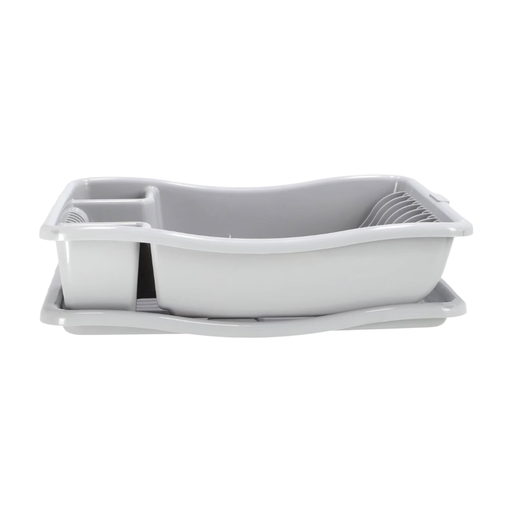
Why it suits this type of buyer: Its compact rectangular shape is well suited to a smaller kitchen or student room. It holds up to twelve plates and has two integrated cutlery compartments.
The included drip tray helps catch water and protect your worktop. The dimensions are clearly stated, so you can measure up beforehand.
Plastic construction, space for up to twelve plates, two cutlery compartments and an integrated drip tray.
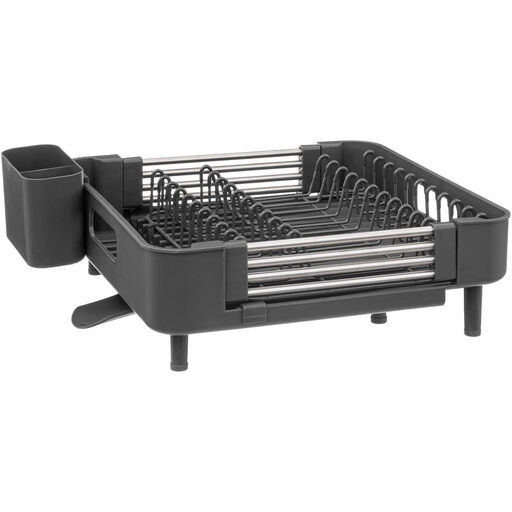
Why it suits this type of buyer: This spacious dish drainer is ideal for households that dry several plates, cups and glasses every day.
The external dimensions and stated capacity of twenty items make it easier to compare the available space with your daily needs.
Stainless steel and polypropylene, an extendable design, a separate cutlery holder and room for up to twenty items.
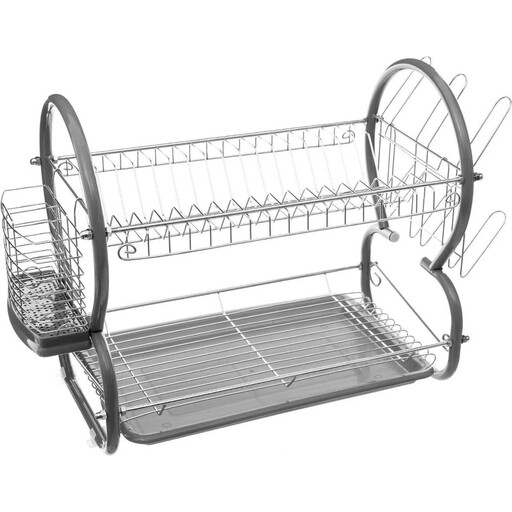
Why it suits this type of buyer: The two-tier design makes use of vertical space and is suitable for families or anyone who needs to dry a lot of dishes at once.
Separate sections for plates, glasses and cutlery prevent dishes from being piled up haphazardly. Bear in mind the assembly requirements and maximum load of 1,3 kg.
Two-tier layout, space for up to seventeen dishes, a separate cutlery basket and glass holders.
Place the drainer on a flat surface and distribute the weight evenly. Put heavy plates on the lower tier and place glasses securely in their holders. Empty the drip tray regularly and clean the corners where water can collect.
Check a metal dish drainer regularly for damaged coating or rust. For plastic models, look out for cracks, warping and loose parts. After use, let a camping model dry before folding or putting it away.
We’ve put together a complete, up-to-date list of products that meet these strict selection criteria and the applicable European safety regulations.
Measure the available length, width and height beside the sink. Compare these measurements with the product’s external dimensions. A compact dish drainer is often enough for one person. Families usually benefit from a larger or two-tier model.
Yes, especially if the drainer isn’t positioned over the sink. The drip tray catches water and helps keep the worktop dry. Empty and clean it regularly to prevent water from collecting.
Its lifespan depends on the material, load, moisture and care. Don’t overload it, avoid harsh cleaning products and don’t leave standing water for long periods. Before buying, check the assembly requirements, material description and warranty terms.
