
Vandaag of morgen in huis

Kwaliteit gegarandeerd

Welkomstaanbiedingen ontgrendelen: GRATIS bezorging | Tot 80% korting | Gratis 30 dagen JoyPlus-proefperiode
Download de app
A dish drainer might seem straightforward, until plates topple over, water collects on the worktop or there’s nowhere for the cutlery to dry properly. Every centimetre counts, especially in a flat, student room or small kitchen. The right dish drainer needs enough capacity, but it should also suit your sink, crockery and daily routine.
When choosing one, look out for these three common pitfalls:
Read on to find out which specifications are worth checking and which type of dish drainer could suit different households.
First, measure the space you have available. Check the height as well as the length and width. A worktop dish drainer should fit beside the tap without blocking cupboard doors or windows.
Also look for:
The stated capacity, such as space for up to twelve plates, is a product specification. In practice, how much the rack holds depends on the thickness of your crockery and how you arrange it.
A dish drainer with a drip tray collects water running off plates and glasses. This helps keep the worktop dry, but only if the tray is large enough and emptied and cleaned regularly.
There are three common options:
If you choose a model with a drain plug, check that it can sit over the sink. A plug that drains beside the sink won’t solve the problem. Clean the drip tray and drain regularly to help prevent limescale and standing water.
A stainless steel dish drainer is worth considering if you’re looking for a sturdy, adjustable model. For example, the MAXCOOK model in our selection is made from 304 stainless steel and extends from 29 to 44 cm. 304 is a material grade; it doesn’t mean the rack is completely immune to stains or limescale. It’s still a good idea to rinse and dry it.
Plastic dish drainers are often lighter and easy to move. They can be a good choice for everyday use, a caravan or a camping kitchen. Check for cracks and always place the rack on a stable, level surface.
A dishwasher rack isn’t a direct replacement for a worktop model: a dishwasher rack is designed to go inside a dishwasher, while a dish drainer lets wet dishes dry outside the machine.
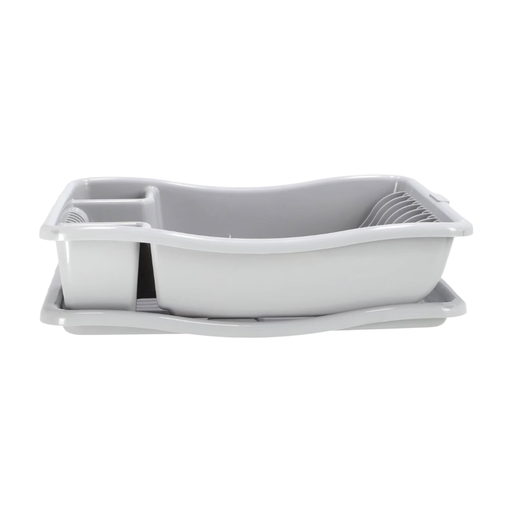
Why it suits this type of buyer: This compact plastic rack is suitable for everyday use in a smaller kitchen and doesn’t need to be assembled. Its dimensions make it a practical fit for a worktop beside the sink.
The included drip tray stops water running straight onto the worktop. The dimensions are listed in advance, so you can check that it will fit your available space.
Holds up to twelve plates, has two cutlery compartments and features a stackable design, according to the product description.

Why it suits this type of buyer: The adjustable length is handy if you have a wide sink or want to resize the rack after use. It can also be used as a colander and sink organiser.
The length adjusts from 29 to 44 cm, so you don’t have to guess whether a fixed-size model will fit your sink.
304 stainless steel, a fine-mesh surface and direct drainage into the sink; 29–44 cm long, 21.2 cm wide and 10.5 cm high.
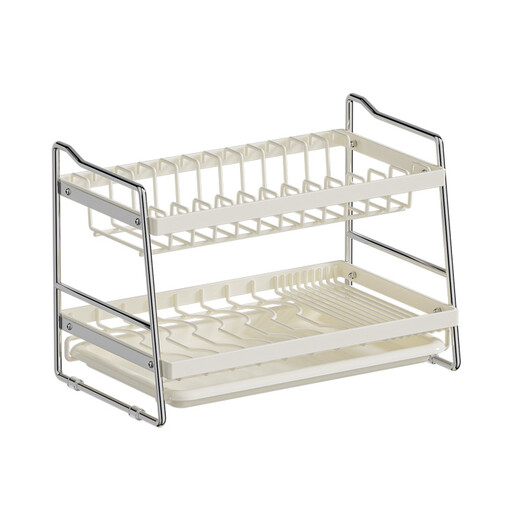
Why it suits this type of buyer: This freestanding model has two levels, making it a good choice for households that hand-wash a lot of dishes every day. It doesn’t need to be attached to the sink.
The two levels make use of vertical space rather than just the worktop. The integrated drainboards are designed to direct water into the sink or a collection area.
Two tiers, a freestanding design and dimensions of approximately 40 × 23.6 × 28.7 cm. The parts need to be assembled.
We’ve put together a full, up-to-date list of products that meet these strict selection criteria and the applicable European safety regulations.
Choose a dish drainer with a drip tray or a model with a drain plug. Place it close to the sink and check that the drip tray sits completely beneath the dishes as they drain. Empty and clean the tray regularly.
Its lifespan depends on the material, how heavily it’s loaded and how well it’s maintained. Don’t overload the rack beyond what its construction can support, avoid dropping it and check plastic models regularly for cracks. With stainless steel, it helps to remove limescale and water after use.
That’s possible with models specifically designed to work as both a dish drainer and a colander. Check the length, width and maximum load before placing one over the sink. A separate colander usually has a different shape and isn’t automatically suitable for holding plates while they dry.
