
Vandaag of morgen in huis

Kwaliteit gegarandeerd

Welkomstaanbiedingen ontgrendelen: GRATIS bezorging | Tot 80% korting | Gratis 30 dagen JoyPlus-proefperiode
Download de app
A dish drainer may seem simple, but the wrong size, poor drainage or a wobbly design can become a daily annoyance. On a small kitchen worktop, an oversized dish rack takes up unnecessary space. A compact model, on the other hand, may not have enough room for plates, glasses and cutlery.
So don’t focus only on the colour or an attractive offer. Check the dimensions, layout, stability and drainage in particular. Read on to find out what matters and which type of dish drainer suits different households.
A dish drainer for the worktop needs to fit between the sink, wall and any hob. So check the available length and depth before you order. Also allow room to empty the drip tray or move the rack.
With a two-tier dish drainer, height matters too. Check that it won’t block cupboard doors, a window or wall units.
A drip tray collects water, but it doesn’t automatically prevent the worktop from getting wet. Check whether the tray is easy to remove and whether water can be directed towards a drain. A dish drainer with a drip tray is useful when the rack sits next to the sink. A model with a drainage hole or plug may be more practical if the water needs to run straight into the sink.
A flat tray without proper drainage can collect limescale or dirt over time. You’ll still need to empty and clean it regularly.
A product may have room for several plates, but that doesn’t mean you can load it with heavy pans without limit. Check the stated capacity and maximum load. Put heavy items on the bottom and distribute your crockery evenly.
A cutlery holder and separate plate rack help keep knives, forks and plates organised. This prevents wet cutlery from being left among your crockery.
First, measure the space where the rack will sit. Then compare its overall dimensions with those of your crockery. Check the following:
A compact plastic model is often enough for a small flat or student room. Families may benefit more from a two-tier model or one with a higher load capacity.
A plastic dish drainer is usually lightweight and easy to move. Polypropylene is a commonly used material for drip trays and racks. Check that the product is suitable for your preferred cleaning method; many models are best washed by hand with warm water and mild washing-up liquid.
A metal dish drainer can offer an open, airy layout. Check which metal or finish has been used. Chrome-plated steel and stainless steel are not the same. If a rack is often left wet, it’s a good idea to remove the water regularly and dry the surface.
A rack should sit on a flat, stable surface. Check that the feet sit firmly and that the rack doesn’t wobble after assembly. If you’re choosing an adjustable dish drainer for the sink, compare its adjustable length with the width of your sink.
A model that hangs over or rests on the sink saves worktop space. Make sure it’s positioned securely so it can’t slip. Also check that the water runs straight into the sink rather than collecting on the rim.
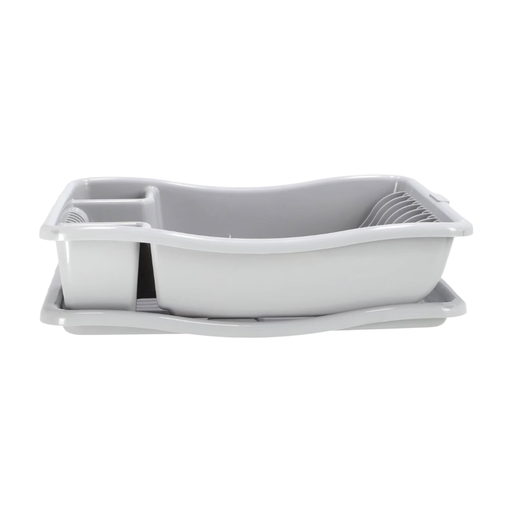
Why it suits this type of buyer: Its fixed dimensions and practical layout make it a good fit for everyday use in a smaller kitchen, student room or caravan.
The included drip tray collects the water. Two cutlery compartments and separate slots for small and large plates make the capacity easy to see.
Plastic construction, dimensions of 38 x 29 x 8.5 cm and space for up to 12 plates, according to the product information.

Why it suits this type of buyer: This model is designed for anyone who’d rather not have a rack on the worktop and wants to make the most of the space around the sink.
The length adjusts from 29 to 44 cm. This lets you tailor the fit to the width of your sink, rather than relying on a fixed size.
Made from 304 stainless steel, with a fine-mesh surface and dimensions of 29–44 x 21.2 x 10.5 cm.
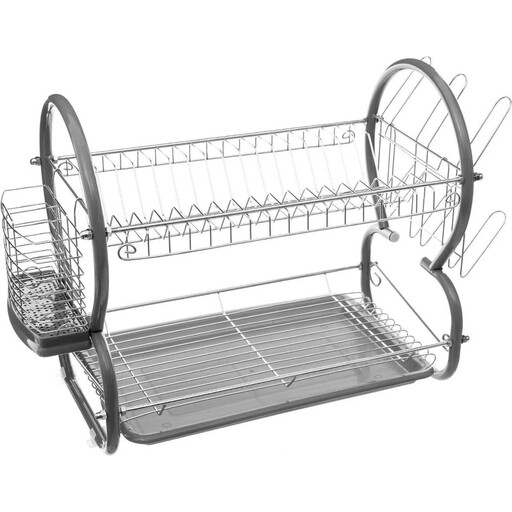
Why it suits this type of buyer: Families who dry several types of crockery at once can make good use of the two tiers and separate holders.
The product information lists a separate cutlery basket, glass holders and a maximum load of 1.3 kg. This makes the layout and weight limit clearer than with an open rack that has no specifications.
Two-tier layout, space for up to 17 items according to the product information, and a combination of chrome-plated steel, powder coating and polypropylene.
We’ve put together a complete, up-to-date list of products that meet these strict selection criteria and current European safety regulations.
Measure the available space on your worktop or in your sink, then allow a few centimetres of clearance. Next, compare the measurements with your largest plates, glasses and mugs. For a household with several people, a two-tier model is often more practical than a low rack with a large footprint.
A drip tray is useful when the rack isn’t positioned directly over the sink. It collects water and helps keep the worktop dry. Empty and clean the tray regularly. If the rack sits over the sink, a draining model without a large drip tray can save more space.
First, remove the crockery and cutlery. Wash the rack and drip tray with warm water and mild washing-up liquid. Dry the parts thoroughly before putting them back. For metal models, check the joints and edges too, as water can collect there. Always follow the manufacturer’s care instructions.
