
Vandaag of morgen in huis

Kwaliteit gegarandeerd

Welkomstaanbiedingen ontgrendelen: GRATIS bezorging | Tot 80% korting | Gratis 30 dagen JoyPlus-proefperiode
Download de app
A dish drainer may seem straightforward, until it starts wobbling after a few weeks, water collects on the worktop or your plates don’t fit properly. Every centimetre counts, especially in Dutch kitchens with narrow worktops. So a suitable dish drainer needs to do more than hold enough crockery: it should also work with your sink, washing-up routine and available space.
A dish drainer that’s 40 cm wide may look compact on paper, but its height and depth matter just as much. Check the space beside the sink and the position of your kitchen cupboards. A 2-tier dish drainer makes better use of vertical space, but may be awkward if there’s a low cupboard above it.
Pay attention to the layout inside the rack, too. It may look spacious, but have very few stable slots for plates. Check whether the product description gives specific figures for the number of plates, glasses or other items it can hold.
A separate tray beneath the dish drainer doesn’t automatically keep your worktops dry. If water collects in it, you’ll need to empty and clean it regularly. A dish drainer with a drip tray is more practical if the tray is easy to reach or has a drainage opening that can be positioned over the sink.
Also check that the rack sits level. Even a slight slope can make water run to one side or onto the worktop.
A plastic dish drainer is often lightweight and easy to wipe clean. However, you’ll need to look out for cracks and discolouration, and check the temperature it can withstand. A metal dish drainer may feel sturdy, but damaged coating or prolonged exposure to moisture calls for extra care.
Always check the care instructions. Use a mild cleaning product where possible, dry the rack regularly and remove food debris from corners and holders.
Before buying, measure:
A compact worktop dish drainer may be enough for a small household. If you wash a lot of dishes by hand every day, a 2-tier dish drainer or a dish rack with separate sections for plates, cups and glasses may be a better choice.
Bear in mind that the stated capacity doesn’t always mean the number of large dinner plates it can hold. A rack that holds up to 12 plates may have less room left for bowls and mugs.
A good plate holder keeps crockery upright and stops plates sliding against one another. A separate cutlery holder is useful for forks, knives and spoons, but check that it’s deep enough and stays stable when full.
Cup hooks and a separate section for glasses can also free up space on the main rack. So when choosing a kitchen organiser, it’s not just about overall capacity: a practical layout matters most.
Plastic is usually lightweight and easy to clean. For a metal dish drainer, the finish and the material of the drip tray matter. Check that the product sits firmly on a level surface, and look for the maximum load if this information is provided.
For models that need assembling, the structure should not wobble once put together. Check that all the connections are secure before placing crockery in the rack.
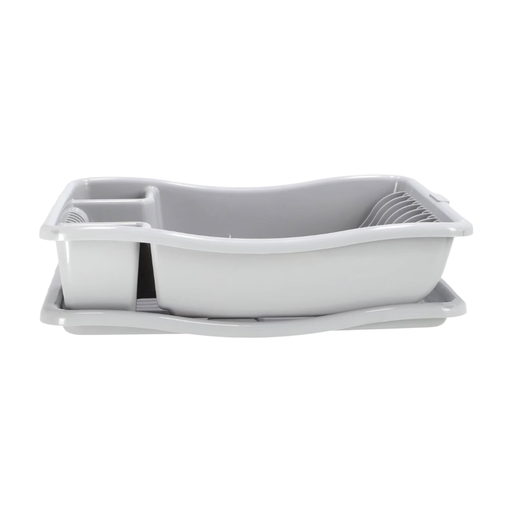
Why it suits this type of buyer: This plastic dish drainer measures 38 x 29 x 8.5 cm and needs no assembly. It’s a good choice if you’re looking for a neat everyday solution without adding a tall rack to your worktop.
The included drip tray catches draining water. Two cutlery compartments and separate slots for small and large plates make it easy to check the layout.
Holds up to 12 plates, has two cutlery holders and features a stackable design for compact storage.
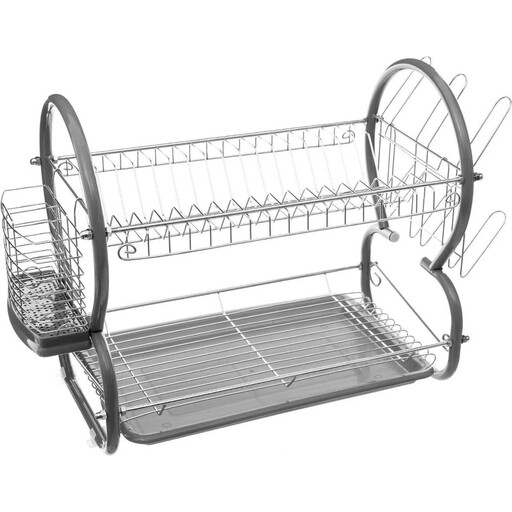
Why it suits this type of buyer: The 2-tier design is made for households that dry several types of crockery at once and want separate spaces for glasses and cutlery.
The product information lists a separate cutlery basket, glass holders and a maximum load of 1.3 kg. Make sure you place the rack on a level surface.
Measures 44 x 24 x 38 cm and holds up to 17 pieces of crockery and drinkware. Made from a combination of chrome-plated steel, powder-coated steel and polypropylene.
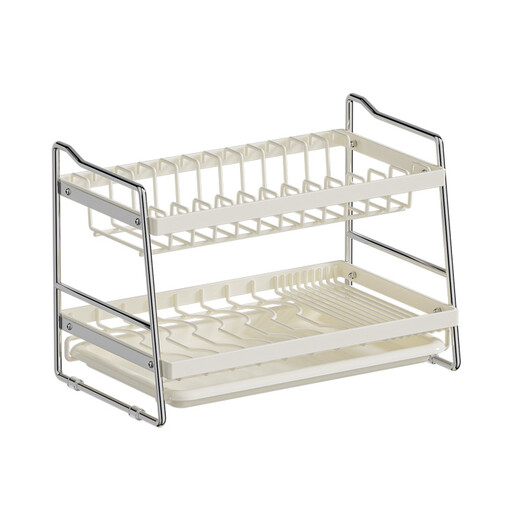
Why it suits this type of buyer: This model is designed for anyone who wants to make use of vertical space. Measuring approximately 40 x 23.6 x 28.7 cm, it has two levels for plates, cups, cutlery and kitchen utensils.
The integrated drip trays are designed to direct water towards the sink or a suitable collection point. Assembly is required; check the rack is stable once assembled.
Two drying levels, a freestanding design that doesn’t attach to the sink, and a relatively compact depth of 23.6 cm.
We’ve put together a complete, up-to-date list of products that meet these strict selection criteria and the applicable European safety regulations.
First, measure the available depth. A compact plastic model that’s around 29 cm deep may be more practical than a wide 2-tier rack. If you’re short on horizontal space but have enough height, a vertical model could make better use of the room.
A drip tray is useful if water can’t run straight into the sink. Where possible, choose a model with an easy-to-reach tray or drainage opening. A drip tray doesn’t mean you can skip cleaning: standing water needs to be removed regularly.
Its lifespan depends on the material, load, moisture and how well you care for it. Don’t exceed the stated capacity, avoid harsh cleaning products and replace the rack if it develops cracks, sharp edges, loose connections or damaged coating.
