
Vandaag of morgen in huis

Kwaliteit gegarandeerd

Welkomstaanbiedingen ontgrendelen: GRATIS bezorging | Tot 80% korting | Gratis 30 dagen JoyPlus-proefperiode
Download de app
A dish drainer may seem simple, but the wrong model can quickly become a nuisance. Water collects on the worktop, plates don’t fit neatly between the racks or the drainer takes up more space than you expected. In a compact kitchen, it’s especially important to look beyond colour and price.
When comparing dish drainers, pay particular attention to the dimensions, drainage, layout and material. Read on to find out which features make a practical difference and which type of dish drainer is right for different households.
A model may look small in the product photo, but plates, mugs and pans can get in each other’s way in practice. So check more than just the length and width: look at the height, tiers and any holders for glasses or cutlery too.
A 2-tier dish drainer makes better use of vertical space. That’s useful when worktop space is limited, but check that there’s enough clearance above the worktop for tall glasses and crockery.
A dish drainer with a drip tray is only helpful if you can easily get rid of the water. If the tray is flat, you’ll need to empty it regularly. An integrated drainage plug or a design that sits over the sink may be more practical.
Think about where you’ll place it, too. A drainer with a drainage hole will only work well if the water can run into the sink or a suitable receptacle. Otherwise, water may still collect under the crockery.
A plastic dish drainer is often lightweight and easy to clean. Check that it’s sturdy enough for everyday use and that its layout won’t quickly warp. A metal dish drainer may feel stable, but check the finish and wipe up any spilled water regularly.
Whatever the model, place it on a flat surface and don’t overload it. Keep sharp knives safe in a cutlery holder or separate knife holder.
First, measure the available space next to or above the sink. Bear in mind:
A compact dish drainer may be enough for a household with little washing-up. If you cook regularly or live with several people, a two-tier model or one with a larger base may suit you better.
A dish drainer with a drip tray is a good choice if you want to place it away from the sink. Check whether the tray can be removed and is easy to clean. A model with a drainage plug can direct water to a suitable spot.
An adjustable over-sink dish drainer works differently. This type sits over or inside the sink, so the water runs straight into it. Measure the inside or outside of your sink before ordering. The Maxcook model below adjusts from 29 to 44 cm.
A plastic dish drainer is lightweight, won’t rust and can be cleaned easily with mild washing-up liquid. For a metal dish drainer, the finish and components are important. A combination of chrome-plated steel, powder coating and polypropylene has different care requirements from an all-plastic model.
According to the product specifications, the 5five cutlery holder is made from ABS plastic and is dishwasher-safe. Always check the care instructions for other products, and don’t use harsh cleaning products unless recommended.
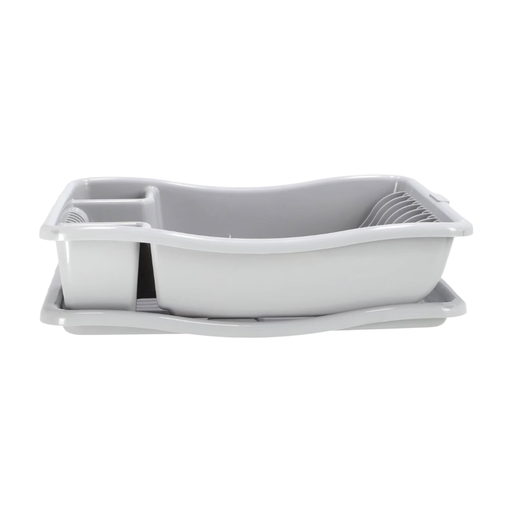
Why it suits this type of buyer: This rectangular plastic dish drainer measures 38 x 29 x 8.5 cm and is ready for everyday use, with no assembly required. It holds up to 12 plates and has two separate cutlery compartments.
The included drip tray catches the water, and the fixed dimensions make it easy to measure up beforehand. That way, you won’t have to guess whether it will fit next to your sink.
Holds up to 12 plates, has two cutlery compartments and a stackable design for compact storage.
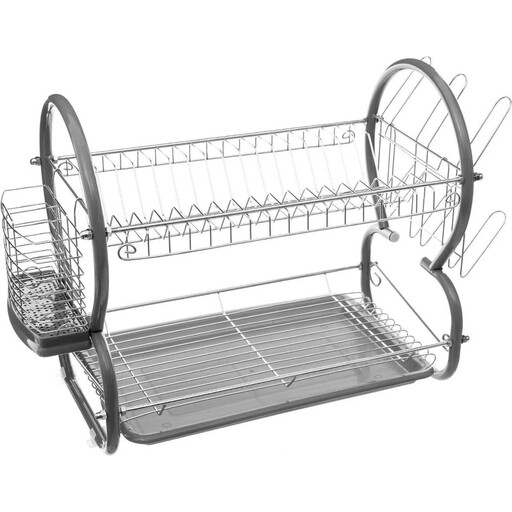
Why it suits this type of buyer: This metal dish drainer has two tiers, with separate holders for cutlery and glasses. It measures 44 x 24 x 38 cm, and the product specifications state that it holds 17 pieces of crockery and drinkware.
Separate tiers, glass holders and a cutlery basket stop everything from being piled onto one small surface. The maximum load is 1.3 kg, according to the specifications.
Chrome-plated steel, powder coating, a separate cutlery basket and space for plates, bowls, mugs and glasses.

Why it suits this type of buyer: This adjustable over-sink dish drainer has a telescopic frame that extends from 29 to 44 cm. It’s designed to sit over or inside the sink, combining dish drying with a colander function.
According to the product description, water drains straight into the sink, so you won’t need a separate drip tray on the worktop. Just remember to measure your sink first.
304 stainless steel, adjustable length from 29–44 cm, and can be used as both a dish drainer and a colander.
We’ve put together a full, up-to-date list of products that meet these strict selection criteria and the applicable European safety regulations.
Empty your dish drainer regularly and remove limescale or soap residue with a mild cleaning product. Don’t leave crockery in standing water for long periods. Check metal parts for damage, and look for cracks or warping in plastic components.
A cutlery holder is easier to clean if it can be removed. The 5five Cutlery Drainer has three compartments, measures 12.8 x 11 x 20.2 cm and is dishwasher-safe according to the product specifications. Take a look at this separate cutlery holder if you already have a dish drainer but need extra organisation.
Place it on a stable, flat surface next to the sink. If it has a drainage plug, position the drain so that water runs into the sink or a suitable receptacle. An in-sink or over-sink drainer saves worktop space, but make sure it’s the right width.
It depends on how many people are in your household and how much crockery you wash at once. First, measure the space available, then compare the outer dimensions of the drainer. For a small kitchen, a compact model around 30 to 40 cm wide is often more practical than a large one with unused capacity.
Empty the drip tray regularly, rinse the drainer and let all the parts dry thoroughly. Clean cutlery holders and drainage holes separately, as water and food residue can collect there. Use a mild cleaning product on plastic and metal, following the manufacturer’s care instructions.
