
Vandaag of morgen in huis

Kwaliteit gegarandeerd

Welkomstaanbiedingen ontgrendelen: GRATIS bezorging | Tot 80% korting | Gratis 30 dagen JoyPlus-proefperiode
Download de app
A dish drainer may seem like a simple kitchen accessory, but you’ll notice a poor choice every day. A rack that doesn’t fit properly on your worktop, leaves water behind or doesn’t have enough room for glasses and cutlery can soon become a source of frustration. This applies to households, students, families and campers alike.
The product description alone won’t always tell you how a model will fit in your kitchen. So pay particular attention to these three common pitfalls:
Measure the space next to the sink before ordering a worktop dish drainer. Note the maximum length, width and height. Also allow for any kitchen cupboards above the rack.
A two-tier dish drainer makes better use of vertical space, but may not fit beneath a low cupboard. A compact dish drainer is more convenient for a student room, small kitchen or caravan. For families, the combination of overall dimensions and a practical layout is particularly important.
If you have limited worktop space, consider an adjustable over-sink dish drainer. This type rests above the sink, allowing water to drain straight into it.
A dish drainer with a drip tray protects your worktop from dripping water, but check how the tray is emptied. A built-in drainage plug can be useful if you place the rack next to the sink and want the water to run into a suitable drain.
If a rack doesn’t have a drip tray, it’s important to position it securely above or in the sink. Make sure the surface is level and the rack can’t slide around. An open design can let air circulate around your dishes, but it doesn’t mean you won’t need to clean the tray or rack regularly.
A plastic dish drainer is usually lightweight and easy to move. That makes it practical for everyday use, a caravan or a camping set-up. Check whether the model has a separate cutlery holder, plate slots and glass holders.
A metal dish drainer can have a sturdy look and often offers several levels of storage. Check the materials listed, such as stainless steel, chrome-plated steel or a combination with plastic. For example, the Maxcook model below is listed as being made from 304 stainless steel. This is a specific material description; it doesn’t mean the rack will be maintenance-free in every situation.
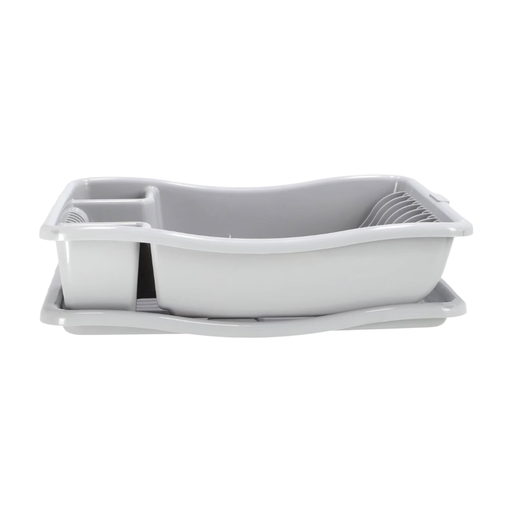
Why it suits this type of buyer: This plastic dish drainer has clearly defined sections for small and large plates, two cutlery compartments and a drip tray included. Its dimensions are clearly stated, making it easy to check whether it will fit on a standard worktop.
The drip tray helps keep water off your worktop. The separate compartments help stop dishes from being piled on top of one another.
Space for up to 12 plates according to the product description; two integrated cutlery compartments and a stackable design.

Why it suits this type of buyer: This adjustable over-sink dish drainer is a good choice if you want to keep your worktop clear. Its length adjusts from 29 to 44 cm and it’s made from 304 stainless steel.
The adjustable length means you’re not restricted to one fixed size. Water can drain from the raised rack straight into the sink.
304 stainless steel, adjustable from 29 to 44 cm and also suitable for draining fruit and vegetables.
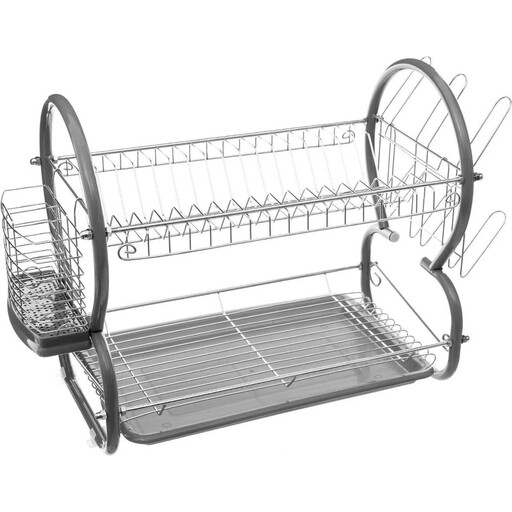
Why it suits this type of buyer: The two tiers provide space for plates, bowls, mugs, glasses and cutlery. This model is well suited to households that need to dry several types of dishes at once.
The separate cutlery basket and glass holders help keep delicate items from getting jumbled in with the plates. Do check the maximum load of 1.3 kg.
Two-tier design, stated capacity for 17 items and dimensions of 44 x 24 x 38 cm; self-assembly required.
We’ve put together a complete, up-to-date list of products that meet these strict selection criteria and current European safety regulations.
A well-chosen dish rack is more practical when it’s easy to clean. Keep these points in mind:
First, measure the space available and compare it with the product dimensions. If you’re placing a rack next to the sink, allow room to empty the drip tray or operate a drainage plug too. A two-tier model can save space in a household with lots of dishes, while a compact model is a better fit for a small worktop.
No. A drip tray is useful when the rack is on the worktop. An adjustable model that rests above the sink can drain water straight into the basin. Choose based on where you’ll use the rack and check that its drainage works with your sink.
Its lifespan depends on the load, moisture, cleaning and material. Stick to the stated maximum capacity, let parts dry thoroughly after cleaning and don’t use a rack if it’s damaged or unstable. Product descriptions may list a material and warranty, but they can’t give a fixed lifespan that applies to every household.
