
Vandaag of morgen in huis

Kwaliteit gegarandeerd

Welkomstaanbiedingen ontgrendelen: GRATIS bezorging | Tot 80% korting | Gratis 30 dagen JoyPlus-proefperiode
Download de app
A dish drainer may seem like a simple kitchen essential, but you will quickly notice if you choose the wrong one. A rack that is just a little too small can cause plates to topple over. A drip tray without proper drainage holds on to water. And a model that does not fit your sink takes up valuable worktop space unnecessarily.
For households, students, flat dwellers and campers, these are the three main pitfalls to watch out for:
Below, you will find out which specifications you should actually compare and which models suit different kitchen situations.
Before buying, measure the space next to or above the sink. Pay attention to length, width and height. Also check that kitchen cupboards can still be opened when using a taller dish drainer.
A compact dish drainer for the sink is useful in a studio flat or student kitchen. A model that rests over the sink keeps the worktop clear, but it must sit securely on the edge of the bowl. So check the adjustable length and the width of your sink.
A multi-tier dish drainer makes particularly good use of vertical space. This can increase capacity without making the rack much wider. Keep stability in mind: heavy pans should not automatically go on the top tier.
Do not look only at the number of plates. A practical dish rack should also have room for:
The Curver models in this selection, for example, are listed as holding up to 12 plates. The 5five model measuring 43.5 × 32.5 × 19 cm states that it can hold 10 glasses. Specific details like these are more useful than general terms such as “large capacity”.
A dish drainer with a drip tray collects water when it cannot run directly into the sink. Check whether the tray can be removed and cleaned easily. An integrated drain or swivel spout can be useful, but it must be positioned properly above the sink or a suitable drain.
A stainless steel dish drainer is a logical choice if you are looking for a metal design. The Maxcook models are listed as being made from 304 stainless steel. According to the product description, the material is designed for use as a rack and colander and has a fine-mesh structure for draining water.
A standard steel dish drainer can also be suitable for everyday use. In that case, check whether it has a coating and dry the rack if you want to limit prolonged exposure to moisture or limescale.
A plastic dish drainer is often lightweight and easy to move. This is practical for a small kitchen, caravan or campsite. The Curver Essentials models are made from plastic and have an integrated cutlery holder. Clean plastic with warm water and a mild washing-up liquid; do not use extremely hot liquids if the product information advises against this.
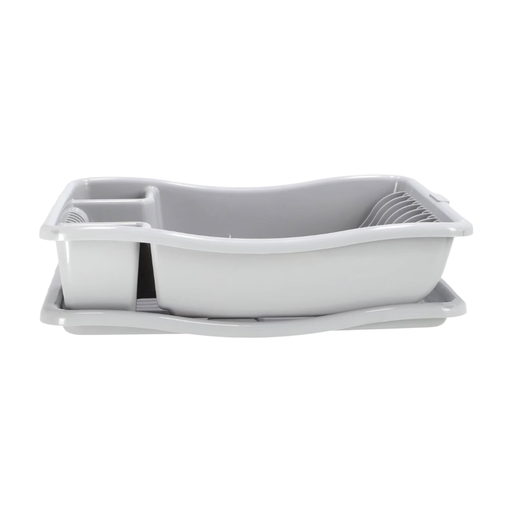
Why it suits this profile: This compact plastic rack offers an organised starting point for a small kitchen and holds up to 12 plates.
The dimensions and maximum capacity are clearly stated. The included drip tray catches excess water.
Plastic construction, integrated drip tray and slots for small and large plates.

Why it suits this profile: The stainless steel and PP construction is ideal for anyone who values a permanent set-up beside the sink and a clear layout.
The drain and removable PP drip tray tackle standing water directly. According to the description, the rack requires no assembly.
Dimensions of approximately 42 × 29 × 12.7 cm, stainless steel and slots for plates, bowls, glasses and cutlery.
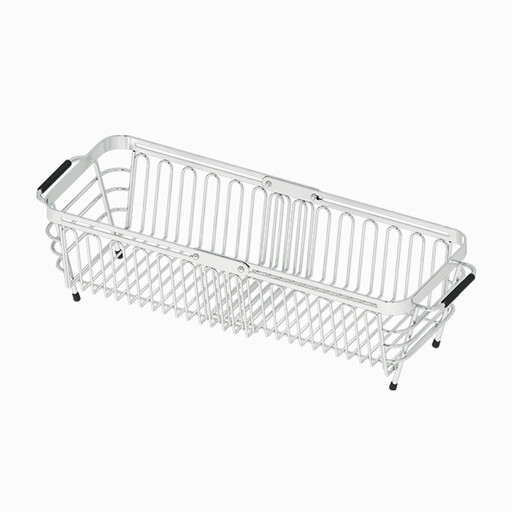
Why it suits this profile: This model sits over the sink and can be extended. It is ideal if you want to keep your worktop clear.
The adjustable length prevents you from choosing a fixed size without measuring your sink first. Water runs straight into the bowl.
304 stainless steel, adjustable from 29 to 44 cm and suitable for use as a dish drainer or colander.
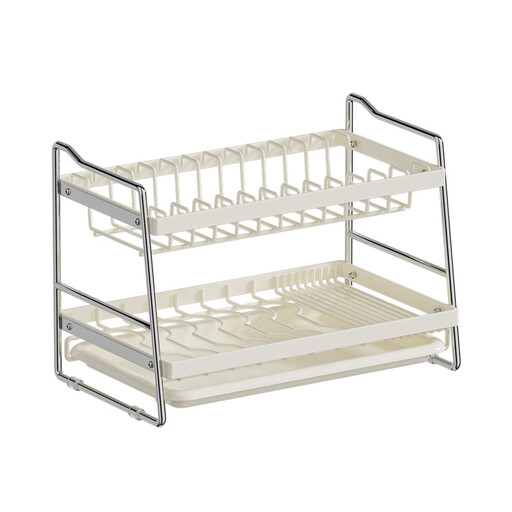
Why it suits this profile: The two-tier layout makes use of vertical space for households that regularly wash lots of crockery at once.
The integrated drip tray is designed to collect and drain water. After assembly, check that the rack is stable and not overloaded.
Two tiers, dimensions of approximately 40 × 23.6 × 28.7 cm and space for different types of crockery.
We have put together a complete, up-to-date list of products that fully meet these strict selection criteria and the applicable European safety regulations.
Place the rack on a flat, stable surface and leave space between plates and glasses to allow air to circulate. Empty the drip tray regularly and clean both the rack and the tray with a mild cleaning product. Check metal parts for damage to the coating and plastic parts for cracks.
With an adjustable model, make sure both sides rest securely on the edge of the sink. Do not use the rack over a bowl that is narrower than the specified range. For camping, low weight and easy cleaning are often more important than a large capacity.
First measure the available space and compare it with the rack’s external dimensions. Also take the height into account if there are kitchen cupboards above the worktop. A multi-tier dish drainer can be useful for a family; in a small kitchen, a compact model is often sufficient.
A drip tray is useful when the rack is not positioned above the sink. It prevents water from running straight onto the worktop. Preferably choose a removable version or a model with clear drainage, and empty the tray regularly.
Plastic is lightweight and easy to wash. Stainless steel, such as 304 steel in certain models, is suitable if you are looking for a metal design. No material is completely maintenance-free: drying, cleaning and removing limescale remain important for long-term use.
