
Vandaag of morgen in huis

Kwaliteit gegarandeerd

Welkomstaanbiedingen ontgrendelen: GRATIS bezorging | Tot 80% korting | Gratis 30 dagen JoyPlus-proefperiode
Download de app
Buying dinnerware seems straightforward – until a plate scratches after a few weeks, a lunchbox leaks, or a mug doesn’t fit under the coffee machine. Families, commuters and campers in particular sometimes pay extra for features that add little in practice. The right choice therefore starts not with colour or shape, but with material, dimensions, care and how you’ll actually use it.
As Joybuy Product Recommendation Officer, I filter product information based on verifiable features. Below are practical points to consider and popular choices for households in the Netherlands.
Words like “unbreakable”, “durable” or “food-grade” say little when material, dimensions and care instructions are missing. Always check whether the product is made from, for example, 304 stainless steel, ceramic, porcelain, glass, plastic or bamboo. Also look for information about dishwasher, microwave, oven and induction compatibility.
A brand’s product description is not independent proof. Statements about rust resistance, scratch resistance or temperature retention should therefore be read as information from the seller or manufacturer.
Divided plates and a bento lunchbox are handy for keeping food separate, but the compartments can be small or shallow. Check the overall dimensions and the capacity of each compartment. A five-section plate is practical for various side dishes, while a lunchbox should primarily be suitable for transport and sealing.
With children, also pay attention to the temperature of the food and to edges that can become hot. A metal plate is not intended as a toy.
Dishwasher-safe dinnerware can save a lot of cleaning, but not every part of a set has the same properties. A glass coffee mug may be suitable for the dishwasher, while a bamboo cutlery set should be washed by hand. A lid can also have different instructions from the cup itself.
Also check whether the microwave and oven are allowed. Stainless steel plates should generally not go in the microwave, even if they can withstand heat.
304 stainless steel is often used for plates, cutlery sets and camping dinnerware. According to the product information from PURECOOK and Maxcook, their respective models are made from 304 stainless steel and intended for contact with food. The product pages for some models refer to food contact standards, including GB 4806.9 and US FDA standards. These references are product and manufacturer claims; if in doubt, check the available conformity information.
Stainless steel is generally practical for families and outdoor use because it cannot break like ceramic. It does conduct heat quickly, however. So take care with hot dishes and follow the care instructions.
Ceramic and porcelain plates work well for everyday dining, sushi plates and pasta bowls. They may be microwave- or dishwasher-safe, but remain prone to cracking or chipping if dropped or exposed to large temperature changes.
Glass is suitable for coffee mugs and cold or hot drinks. With double-walled glasses, an insulating layer of air forms between the walls. According to the product description of the 2-Pack 350 ml Double-Wall Glass Mugs, this design is intended to keep hot and cold drinks at the right temperature for longer.
For a family, wide plates and deep bowls are often more important than a striking design. Check:
A 275 ml mug is compact for coffee on the go. A 350 ml model is better suited to a larger coffee, tea or cold drink. For an office or catering business, it’s also useful to look at stackability, quantities per pack and replaceability.
A smooth, seamless surface can help prevent food residue from sticking. With some stainless steel models, the manufacturer recommends hand washing to keep the finish looking good for longer, even when dishwasher use is mentioned.
Bamboo cutlery is light for a picnic, but according to the product information, the sets mentioned are not dishwasher-safe and sometimes not suitable for the microwave either. Ceramic can be dishwasher-safe, but it’s best to avoid using an abrasive sponge or metal scourer to protect the glaze and decoration.
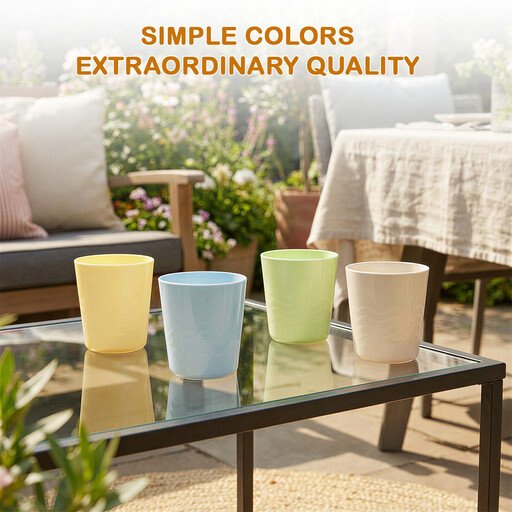
Why this fits: A four-piece set of plastic drinking cups is practical for families, guest rooms, picnics or a first kitchen starter kit.
The 300 ml capacity and quantity of four are clearly stated. Do check the full care instructions for PP plastic before purchasing.
Four cups per pack and a compact size for water, juice and everyday use.
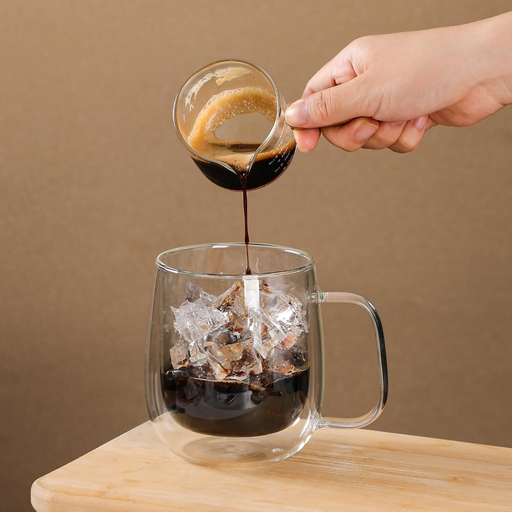
Why this fits: The two glass coffee mugs suit coffee, tea, latte and cold drinks at home, in the office or in a hospitality setting.
The capacity, double-walled construction, handle and dishwasher information are all clearly described. Glass remains fragile and requires careful handling.
350 ml capacity, double-walled glass, handle and two identical mugs in one set.
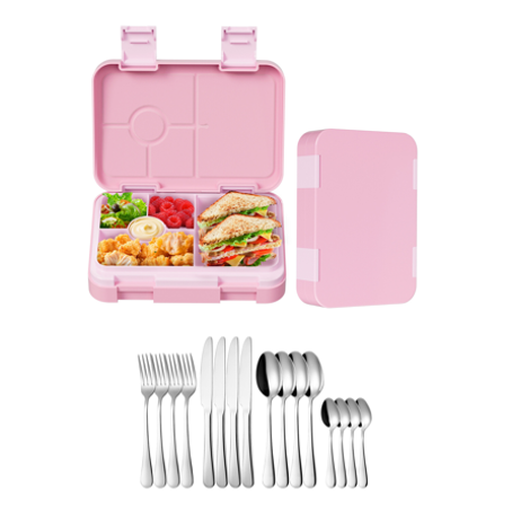
Why this fits: Five compartments are ideal for keeping lunch items, fruit, snacks and side dishes separate. The cutlery set is designed for four people.
The product description mentions five compartments and double closures. Before buying, check whether the size fits in your bag and that the seal closes fully.
A lunchbox with five compartments combined with a 16-piece stainless steel cutlery set; the cutlery set is described as dishwasher-safe.
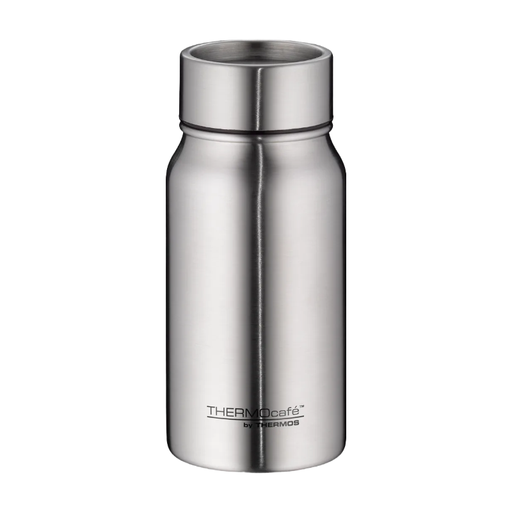
Why this fits: This thermal mug is designed for on the go, with double-walled vacuum insulation, a compact size and a closure for transport.
The product page states a capacity of 350 ml, a weight of 281 grams and a removable lid. The stated hot and cold retention times are manufacturer claims.
Double-walled vacuum-insulated stainless steel, 350 ml capacity and a lid that, according to the product information, can go on the top rack of the dishwasher.
Browse a current selection of dinnerware and eating and drinking accessories with verifiable product information for home, on the go and outdoor use.
A basic set can be expanded with items that suit your routines:
That depends on how you use it. Stainless steel is practical for families, outdoor use and catering. Ceramic and porcelain suit dining and presentation. Glass works well for drinks but requires care. Always compare the product specifications and care instructions rather than just the marketing text.
Some stainless steel plates and divided plates are listed as dishwasher-safe. This varies by product. Check the specific product page and dry the dinnerware after washing if water spots or discolouration could be an issue. Stainless steel should not go in the microwave unless the manufacturer explicitly states otherwise.
The lifespan depends on the material, frequency of use, drops, heat and cleaning. Stainless steel is less prone to breakage than ceramic, but can get scratched or dented. Ceramic and glass can last for years with careful use. Follow the safety warnings and replace dinnerware when it is cracked, warped or damaged.
