
Vandaag of morgen in huis

Kwaliteit gegarandeerd

Welkomstaanbiedingen ontgrendelen: GRATIS bezorging | Tot 80% korting | Gratis 30 dagen JoyPlus-proefperiode
Download de app
A dining table doesn’t just determine how many people can sit down to eat. It also affects how much room you have to move around, how much maintenance is needed and the atmosphere in your kitchen or dining room. Yet it’s easy to fall into a few common traps when buying one: a table that looks more spacious in the product photo than it is in real life, a delicate finish that needs lots of care, or a base that leaves too little legroom.
Use these checks to compare a round dining table, a modern dining table, a country-style dining table or an extendable dining table based on practical features, not just looks.
A 120 cm tabletop may be suitable for four people, but you’ll need more space overall. Measure the base and chairs, and allow for room to move around the table. As a general rule, allow about 60 cm per seat. You’ll also need extra space around the table to pull chairs out.
A 120 cm round table often works well in a compact dining room or kitchen. Its rounded shape has no sharp corners and can make conversation easier. However, check that the diameter is large enough if you regularly eat with five or six people.
An MDF dining table isn’t automatically less practical than one made from solid wood. Its suitability depends on the thickness, finish, edges and base. MDF with a smooth protective coating is easy to wipe clean, but prolonged exposure to moisture, hot pans and abrasive cleaning products can damage the finish.
A marble-effect dining table usually has a decorative finish rather than a solid marble top. This can make the table lighter and easier to maintain, but always check what material is underneath the top layer.
An eye-catching base isn’t automatically stable. Check the leg construction, fixing points and whether you can adjust the table to sit level. A table with metal legs may feel sturdy, but an uneven floor can sometimes call for adjustable feet.
Also check whether assembly is required and which parts are included. An attractively priced kitchen table may not be such a good deal if tools, fixings or an extension leaf are missing.
Use these guidelines as a starting point:
A round table makes different use of the available space from a rectangular dining table. A round shape can work more efficiently in a small room, while a rectangular table is easier to place against a wall.
Pay attention to the combination of tabletop and finish:
Follow the manufacturer’s care instructions. Don’t use an abrasive sponge on a marble-effect or laminate top, and wipe up spills promptly.
With an extendable dining table, the maximum length isn’t the only thing that matters. Check where the extension leaf is stored, whether it’s included as standard and whether the tabletop sits flush when extended.
The product information for the Urban Meuble table states a maximum load of 100 kg per chair. This is a specification for the load on each chair, not a general indication of the maximum weight the tabletop can support. Always place a table on a flat, stable surface and check the leg joints after assembly.
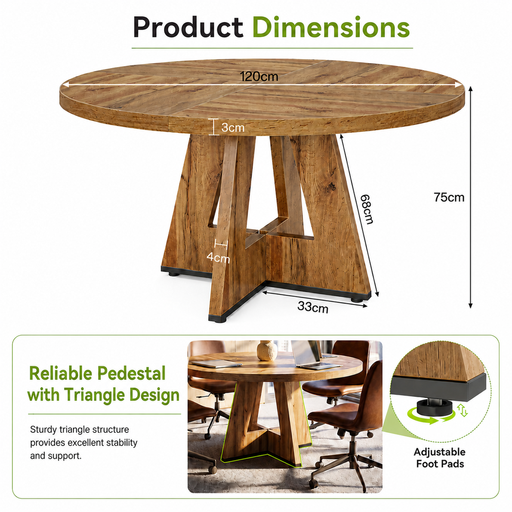
Why it suits this profile: This round dining table is designed for households looking for a practical model for four people. With a diameter of 120 cm, it’s a good fit for a compact dining room, kitchen or country-style living room.
The diameter and seating capacity are clearly stated. The MDF top and metal frame give you a clearer idea of the materials than a product photo alone.
120 cm round top, metal frame, MDF surface and assembly hardware included, according to the product description.
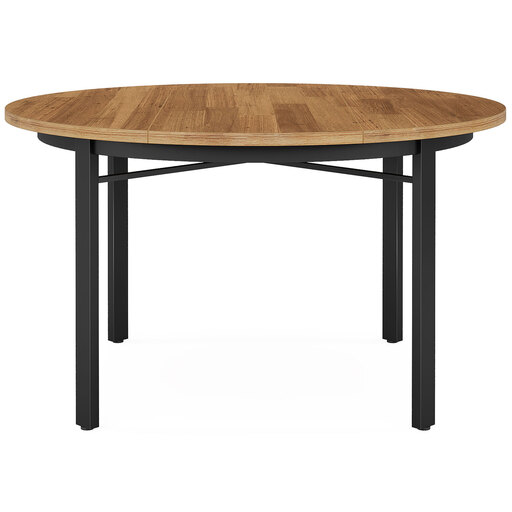
Why it suits this profile: This model is a good fit for families or couples looking for a round table for everyday meals and entertaining. The adjustable feet are useful on floors that aren’t completely level.
The product description gives the 118.5 cm diameter and mentions the adjustable feet and metal base. This means you can check the size and stability features before buying.
Seats 4 to 6 people according to the product information, with a water-resistant MDF top and sturdy metal legs.
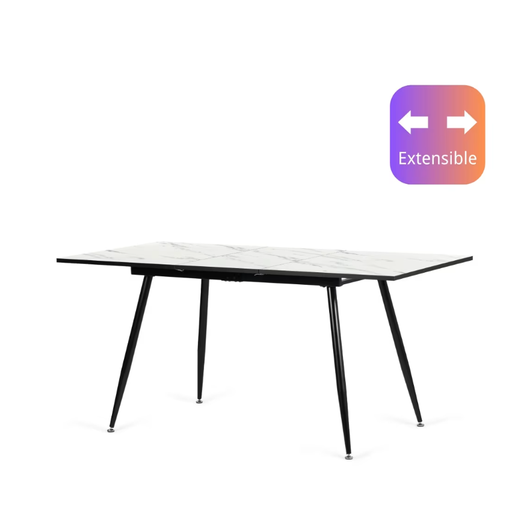
Why it suits this profile: This rectangular dining table is a good choice for households that want to save space during the week and have extra seats available when guests come over. The top extends from 120 to 160 cm.
The dimensions with and without the extension are listed separately. The product information also specifies an MDF top with a marble-effect PVC finish and a triangular metal base.
Extends from 120 to 160 cm, seats 4 to 6 people according to the description, and has a surface that can be cleaned with a damp cloth.
We’ve put together a complete, up-to-date list of products that meet these strict selection criteria and the applicable European safety regulations.
Before assembling the table, check that all the parts are included in the package. Place the tabletop on a soft surface to prevent scratches, and initially tighten the screws only loosely. Tighten them fully once the base is correctly aligned.
After assembly:
Also bear in mind that chairs aren’t included with some models. Check what’s included before putting together a complete dining set.
As well as the tabletop, allow about 60 cm per seat and enough room to pull the chairs out. If you have a 120 cm round dining table, it’s important to leave clear space around it, especially if it’s in the middle of the room.
It depends on the space. A round table has no corners and can be a good choice for conversation and compact dining areas. A rectangular table is often easier to place against a wall, and an extendable model gives you more flexibility when guests come over.
Its lifespan depends on the panel thickness, edge finish, construction and how it’s used. Moisture, heat and abrasive cleaning products can cause damage. Wiping up spills straight away, using coasters and checking the assembly joints can help reduce everyday wear and tear.
