
Vandaag of morgen in huis

Kwaliteit gegarandeerd

Welkomstaanbiedingen ontgrendelen: GRATIS bezorging | Tot 80% korting | Gratis 30 dagen JoyPlus-proefperiode
Download de app
A dimmable LED night light might seem easy to choose, but small differences can determine whether you enjoy using it every day. A bright light can be inconvenient during a night feed, while a lamp without a memory function may need to be adjusted every time you switch it on. And a rechargeable lamp that lasts a long time mainly on its lowest setting won’t necessarily provide hours of light at maximum brightness.
For parents, families and adults, these are the three main pitfalls to watch out for:
A night light for the nursery needs to do more than simply switch on and off. Check whether the product:
A touch night light is practical during night feeds, as you won’t have to search for a small switch. A soft silicone casing can also be comfortable to hold on a children’s night light. However, follow the safety instructions and keep the product out of reach while it is charging.
A rechargeable night light means you won’t have to replace disposable batteries regularly. Check the battery capacity, charging voltage and stated run time. A capacity of 1200 mAh or 2000 mAh doesn’t tell you on its own how many hours the lamp will stay on; brightness and the selected colour mode make a big difference.
Also check:
A portable night light is handy if you want to move it between the bed, changing table and travel bag. For long-term use in one place, a plug-in light or LED table lamp may be more practical.
Light colour is measured in Kelvin. At 3000K, some models give off a warmer-looking light than at 4000–4500K. Choose a light for your bedroom or bedside based on the atmosphere and visibility you want, rather than general claims about its effect on sleep or your eyes.
Also measure the space available. A compact lamp around 9 cm in diameter will fit on a small bedside table, while a lamp that is 21 cm tall will make more of a statement on a chest of drawers or desk. In a bathroom or damp room, pay particular attention to the IP rating. A product rated IP20 is designed for dry indoor use, not damp environments.
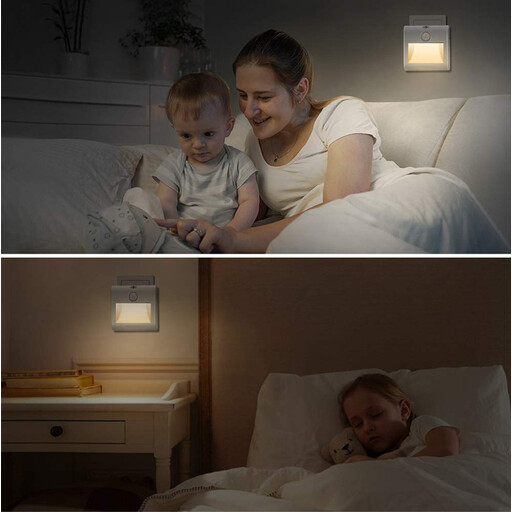
Why it suits this buyer: The two lights can be placed in different rooms at the same time, such as the hallway and bedroom. This is practical if you want to light several dark passageways without making two separate purchases.
The specifications list both a constant-on mode and a motion-sensor mode. The detection range is 3–5 metres, and according to the product description, the sensor responds when ambient light is no more than 20 lux.
Two lights, 1W LED power consumption per light, stepless touch dimming and a memory function. The stated colour temperature is 4000–4500K.
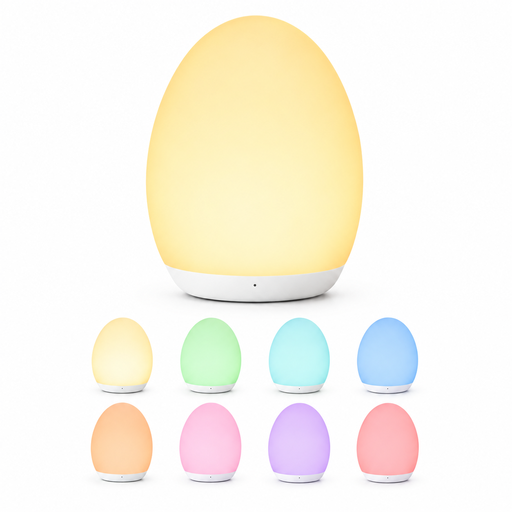
Why it suits this buyer: This model combines dimmable warm white light with colour settings, a timer and a portable design. It’s a good fit for parents who want one light for night feeds, changing, bedtime and travel.
The run time is broken down by brightness setting: according to the product information, it lasts around 7 hours at maximum brightness and up to 100 hours on the lowest setting. The timer switches the light off after 1 hour.
2000mAh battery, touch controls, dimmable warm white light, eight colour modes and a compact size of 9,2 × 9,2 × 11 cm.
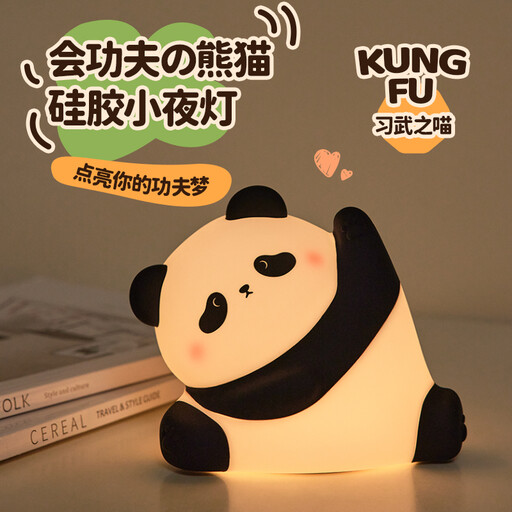
Why it suits this buyer: The cute panda design is made for a child’s bedroom, and its compact size makes it easy to place beside the bed or near the changing table. The controls are designed for quick, everyday adjustments.
The lamp has three brightness settings and touch controls, so you aren’t limited to a single fixed brightness. The 1200mAh battery is rechargeable via USB.
Silicone casing, three brightness settings and a cordless design. According to the product description, it is made from ABS, PP and food-grade silicone. Use indoors and follow the warnings provided.
We’ve put together a complete, up-to-date list of products that meet these strict selection criteria and the applicable European safety requirements.
It can be, provided it’s easy to operate and has a low brightness setting. Touch controls, a memory function or a timer can be useful. Check the battery life at your chosen brightness beforehand, and place the light on a stable surface out of your child’s reach.
That depends on its wattage, how long you use it and charging losses. A 1W lamp uses around 1 Wh for each hour it is on, excluding charging losses. According to the product specifications, an integrated 2W LED table lamp uses around 2 kWh over 1000 hours of use. The actual cost depends on your energy tariff.
Only if its IP rating and instructions for use make it suitable. A model rated IP20 is designed for dry indoor use only. Keep it away from water, and choose a product suitable for damp conditions if you plan to use it in a bathroom.
