
Vandaag of morgen in huis

Kwaliteit gegarandeerd

Welkomstaanbiedingen ontgrendelen: GRATIS bezorging | Tot 80% korting | Gratis 30 dagen JoyPlus-proefperiode
Download de app
Written by: Joybuy Product Recommendation Officer
The right lighting can make or break a room. A light that's too bright during a movie night is distracting, while light that's too dim is tiring when you're trying to work. A dimmable ceiling light offers the flexibility to adjust the light intensity, and often the color, to suit any moment of the day. But with so many options available, the choice can be overwhelming.
This article serves as a practical guide. We will highlight the most important factors to consider and present a selection of popular models, so you can make an informed decision that suits your needs and interior design.
Before you make a choice, it's helpful to consider a few functional aspects. This will help you find the light that truly fits your lifestyle.
The way you control the light determines its day-to-day convenience.
A dimmable function is the baseline, but the ability to adjust the color temperature offers even more control over the atmosphere.
A ceiling light should be functional, but it also needs to complement your interior. A black ceiling light is a popular choice in modern and industrial interiors, as it provides a sleek contrast. Also, pay attention to the diameter and height of the light. A large, striking fixture can make a statement in the living room, while a subtle and slim model is often a better fit for a bedroom ceiling light or hallway.
Based on specifications and functionality, we have selected a few models that provide a good overview of the current options.
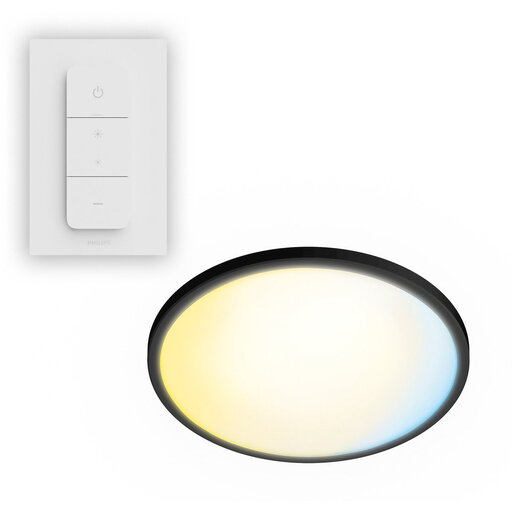
Why it stands out This Philips model is notable for its extremely slim design (2.4 cm high), allowing it to blend almost seamlessly into the ceiling. The included remote control makes it easy to switch between five pre-programmed light scenes. According to the manufacturer, the WarmGlow technology ensures the light becomes warmer as you dim it further, creating a cozy atmosphere.
Advantages
Who is it for? Ideal for those seeking a discreet yet highly functional LED ceiling light for spaces like the living room, bedroom, or office. Its simple operation makes it accessible to everyone.
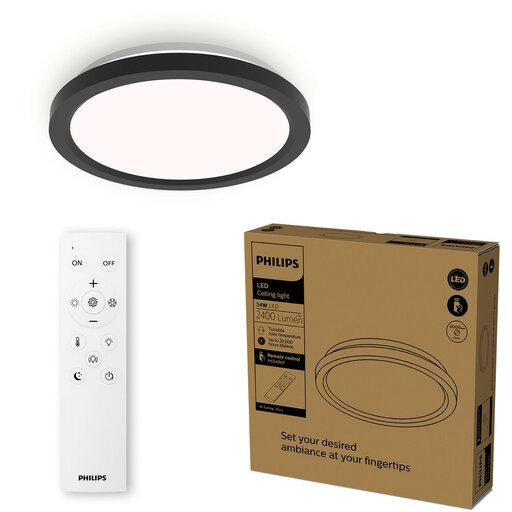
Why it stands out This Philips ceiling light offers similar functionality to the SuperSlim but with a slightly more robust design and a higher light output (2400 lumens). The light can be controlled with both the remote and an existing wall switch, thanks to SceneSwitch technology. This allows you to cycle through three light settings by quickly flicking the switch on and off.
Advantages
Who is it for? Suitable for users who need a powerful, dimmable ceiling light and want the flexibility to use both a remote control and their familiar wall switch.
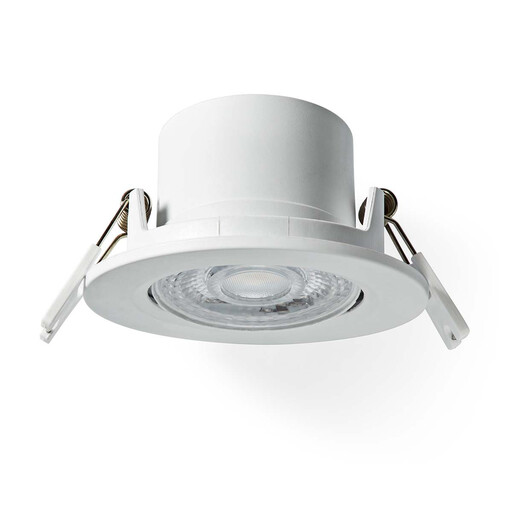
Why it stands out This is a smart ceiling light that connects directly to your Wi-Fi router without needing a separate hub. Using the Nedis SmartLife app, you can control the color temperature and brightness, set schedules, and link the light to voice assistants like Google Home and Amazon Alexa. It is a recessed downlight, making it ideal for suspended ceilings.
Advantages
Who is it for? Perfect for the tech enthusiast who wants to integrate their lighting into a smart home system. Due to its compact size, it is a recessed downlight, specifically designed for suspended or plasterboard ceilings.
The selection above showcases the diversity in dimmable ceiling lights. Are you looking for a different shape, another material, or do you simply want to compare more models?
? Explore our full range of round LED lighting for more inspiration.
1. How does a dimmable ceiling light work? A dimmable LED ceiling light contains a special driver that can regulate the amount of current flowing to the LEDs. By reducing the power supply, the light intensity decreases. In advanced models, this driver can also adjust the color temperature by mixing different sets of LEDs (warm and cool).
2. Can I connect a dimmable LED ceiling light to a standard switch? Yes, you can. A dimmable ceiling light will always function as a normal on/off light with a standard switch. However, to use the dimming function and any color settings, you will need the included remote control, a compatible wall dimmer, or an app (for smart models). Some lights, like the Philips with SceneSwitch, offer limited functionality via a standard switch.
3. What is the difference between warm white and cool white light? Warm white light (approx. 2200K-3000K) has a yellowish, orange glow and is perceived as cozy and relaxing. It is ideal for living rooms and bedrooms. Cool white light (approx. 4000K-6500K) is bright and leans towards blue, similar to daylight. This type of light promotes concentration and is well-suited for kitchens, garages, and home offices. A light with an adjustable color temperature gives you the best of both worlds.
