
Vandaag of morgen in huis

Kwaliteit gegarandeerd

Welkomstaanbiedingen ontgrendelen: GRATIS bezorging | Tot 80% korting | Gratis 30 dagen JoyPlus-proefperiode
Download de app
A digital thermometer may seem like a straightforward purchase, but the differences between models can be significant. A forehead thermometer for a sleeping baby works differently from a digital body thermometer for everyday use. And a cooking thermometer or meat thermometer is not suitable for measuring body temperature.
The most common poor purchases stem from three pitfalls:
For families, a digital body thermometer with a clear beep, easy-to-read screen and simple controls is often sufficient. A pen-style model may be suitable for oral, axillary or rectal measurements, but always check the manual for the permitted measurement method.
A thermometer for children or baby fever thermometer should above all be practical and hygienic. With young children, a contactless reading may be less disruptive, while an ear thermometer works quickly when the child is able to sit still. Use the same measurement method with each model if you want to compare readings.
A forehead thermometer, contactless thermometer or infrared thermometer measures without direct contact. This is useful at night and for children who find having their temperature taken unpleasant. Pay attention to the following points:
According to the Medisana TM 750 product information, this model is intended for forehead measurements and not for internal measurements. This distinction helps prevent incorrect use.
An ear thermometer can take readings quickly and is practical for several members of the family. Correct positioning in the ear is important, however. The Braun ThermoScan 7 is supplied with hygienic lens filters; according to the product information, a clean filter should be used for every measurement. Also check that the ear canal is easy to access and follow the manufacturer’s instructions.
A cooking thermometer or meat thermometer belongs to a different product category from a medical thermometer for home use. For grilling, barbecuing, smoking, baking and confectionery, the following features are particularly relevant:
A model that measures high temperatures is not automatically suitable for body temperature. Only use a thermometer for the purpose for which it was designed.
Check that the measuring range is suitable for the intended use. A body thermometer generally operates within a limited temperature range, while a cooking thermometer needs to handle much higher temperatures.
Also pay attention to how accuracy is described. A resolution of 0.1 °C means that the display shows values in tenths of a degree; it is not the same as a guaranteed measurement error of 0.1 °C. According to the product information, the Treesmile T11 specifies a margin of error that varies by temperature range. Details like these are more useful than simply relying on a rounded marketing claim.
A thermometer with a large display is convenient for older people, carers and use at night. A backlit screen, colour coding or silent mode can make the device even more practical. A thermometer with a memory function helps you review previous readings, but does not replace medical assessment.
Also check whether the device has a beep, vibration alert or automatic switch-off. For a sleeping child, a silent mode can be a practical advantage.
Check whether the probe can be washed and whether only the probe or the entire device is water resistant. An IP67 rating does not automatically apply to every component or use. For the Typhur InstaProbe Core, the product information states that the probe can be rinsed, while the housing should not be fully submerged.
Also check:
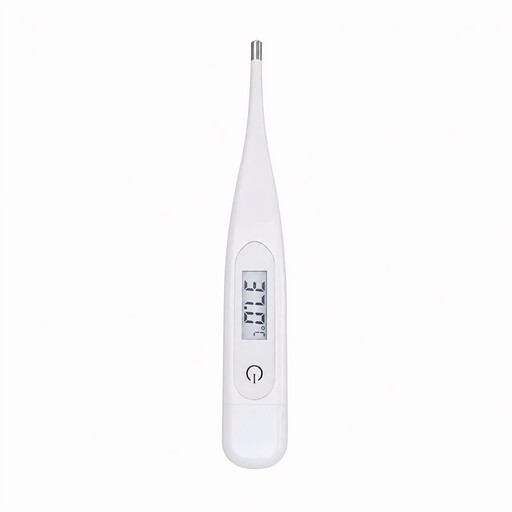
Why it suits this profile: This pen-style model is designed for simple home use and displays the temperature in increments of 0.1 °C. The thermometer is compact and runs on an LR41 button cell.
The product information states the range, the measurement error for each range and the permitted usage environment. This gives you more than just a speed claim.
Mercury-free design, °C/°F switching and a beep when the reading is complete.
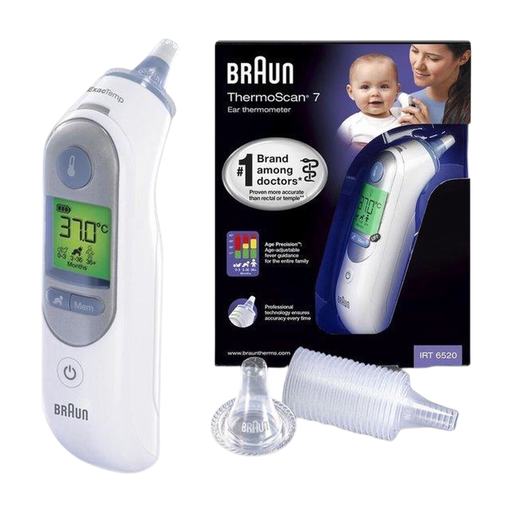
Why it suits this profile: This model is aimed at families looking for an ear thermometer with age settings, positioning guidance and included lens filters.
The included lens filters support hygienic use. According to the product information, the ExacTemp indicator shows whether the positioning is stable.
Age settings, protective case, two AA batteries and 21 lens filters.
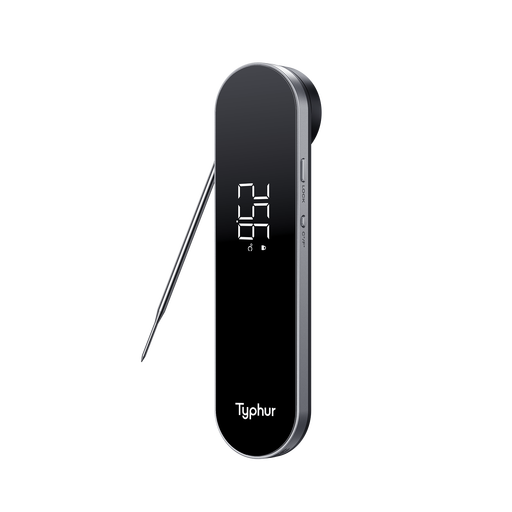
Why it suits this profile: For barbecuing, grilling, smoking and kitchen use, this model offers fast readings and a large, easy-to-see display.
It is clearly positioned as a cooking thermometer, not a body thermometer. The IP67 rating and cleaning instructions make it practical for use around food.
According to the product information, a response time of 0.5 seconds, a range of -58 °F to 572 °F and a 180° rotating display.
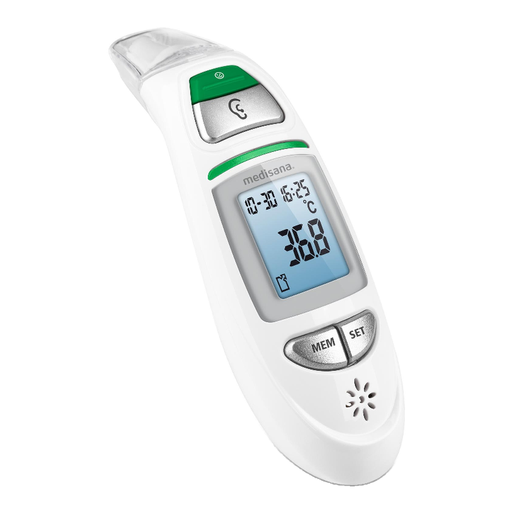
Why it suits this profile: The contactless forehead measurement, memory function and digital display are practical for everyday use in a household.
The usage instructions specify the correct distance, a clean forehead and avoiding direct sunlight. This keeps the measurement method clearly defined.
Contactless infrared measurement, memory function, large easy-to-read display and one-button operation.
We have put together a complete, up-to-date list of products that fully meet these strict selection criteria and the applicable European safety regulations.
A contactless thermometer can be practical for babies because the measurement is taken without touching them. However, the result depends on the distance, ambient temperature and a clean, dry forehead. Always follow the manual and do not use the reading as a substitute for medical advice.
The lifespan depends on battery use, cleaning, storage and the vulnerability of the sensor. Store the device in a dry place, avoid dropping it and replace the batteries in good time. With models that use lens filters, you should also consider the availability and cost of replacement filters.
In addition to the purchase price, batteries, lens filters or accessories can affect the running costs. A pen-style model with one battery generally requires very few consumables. An ear thermometer with disposable filters may be more hygienic, but involves recurring costs. The right choice therefore depends on how often you take readings and how many people use the thermometer.
