
Vandaag of morgen in huis

Kwaliteit gegarandeerd

Welkomstaanbiedingen ontgrendelen: GRATIS bezorging | Tot 80% korting | Gratis 30 dagen JoyPlus-proefperiode
Download de app
A digital thermometer may seem straightforward, but the differences between models can be significant. Do you mainly want to take a quick reading while your baby is asleep, are you looking for a traditional fever thermometer for the medicine cabinet, or would you also like to check milk and bath water? The right choice depends on the measuring method, hygiene and how you interpret the result.
Pay particular attention to these common pitfalls:
A forehead thermometer with an infrared sensor takes a reading without direct contact. This is practical when measuring a sleeping child and can be more hygienic when several family members use the thermometer. However, the surroundings, distance, sweat and hair on the forehead can affect the reading.
Models such as the Medisana TM 750 are described as being intended for measurements taken from a distance of a few centimetres. The manufacturer also states that direct sunlight and moisture can affect the reading. Therefore, follow the recommended distance and measure on a clean, dry forehead.
An ear thermometer uses infrared to take a reading inside the ear. This can be quick, but positioning is important. Some models require disposable lens filters. These improve hygiene, but they do involve an ongoing cost.
The Braun ThermoScan 7 comes with hygienic lens filters. According to the product information, the ExacTemp indicator helps with positioning. This is a helpful aid, but it is not a reason to ignore the instructions. With babies and young children, you must also select the correct age setting.
A classic digital fever thermometer with a flexible or fixed tip is usually simple and affordable. The Treesmile T11 displays the temperature in increments of 0.1 °C and has a stated margin of error that depends on the temperature range. The model is mercury-free and uses an LR41 battery.
This type of thermometer does not offer contactless measurement. Clean the tip according to the instructions and do not use it for different people without cleaning it in between.
A thermometer for babies is not automatically suitable for every measurement site. Check whether the device is intended for forehead, ear, oral, armpit or rectal measurements. For children, normal body temperature can vary depending on the measurement site and age.
An age function, such as the one found on certain Braun models, provides a colour indication based on preset age groups. According to the product information, Braun uses the groups 0–3 months, over 3 to 36 months and from 36 months onwards. Treat this as an aid to interpreting the reading, not as a medical diagnosis.
A contactless infrared thermometer does not require disposable lens filters, but the sensor must still be kept clean. Use a soft cloth or the cleaning product specified by the manufacturer. Do not immerse the device in water.
With an ear thermometer, check whether lens filters are required and whether enough filters are included. With a pen-style model, it is important that the measuring tip is easy to clean.
Look for features that suit your situation:
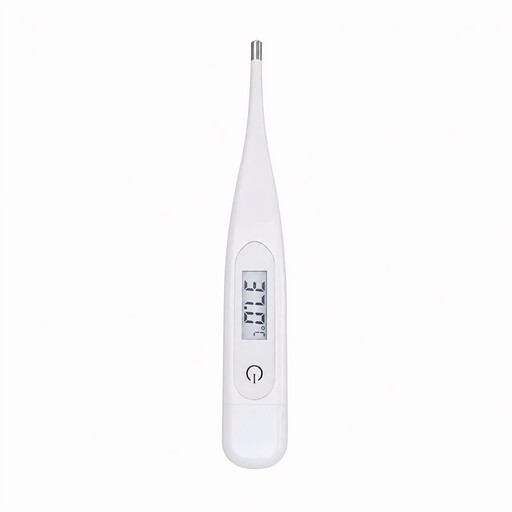
Why it suits this profile: A straightforward pen-style model for anyone looking for a digital thermometer for the medicine cabinet, without additional measurement modes.
No unnecessary object or app features. The measuring method and range are clearly described.
0,1 °C display resolution, °C/°F switch and mercury-free design according to the product description.
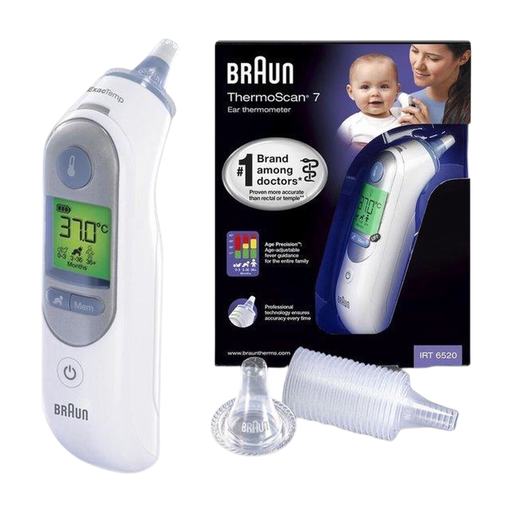
Why it suits this profile: For families who want an ear thermometer with age settings, positioning assistance and hygienic lens filters.
The set includes lens filters, and the instructions emphasise using a clean filter for every measurement.
Age settings, ExacTemp positioning indicator and memory for 9 readings according to the product information.
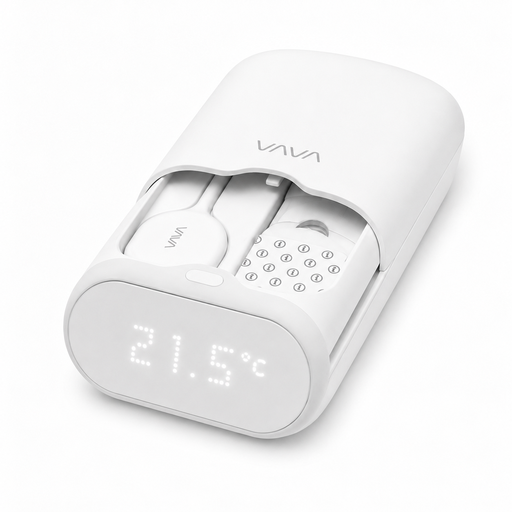
Why it suits this profile: For parents who want to monitor temperature from a distance and prefer a separate display with light and sound alerts.
The system works without an app; the product description states a range of up to 15 metres and a maximum sensor use time of 24 hours.
Continuous monitoring, a separate display and alerts when an elevated reading is detected.
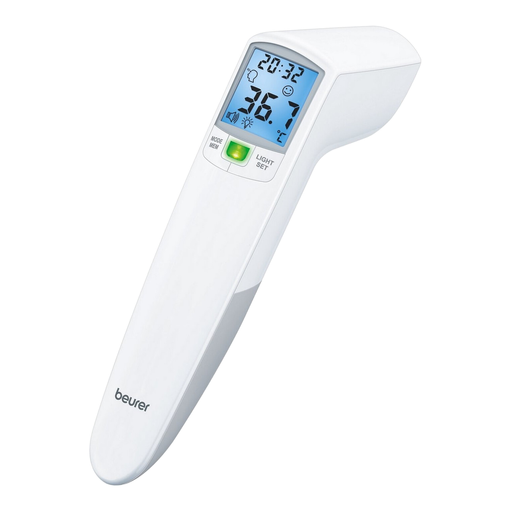
Why it suits this profile: A practical model for families who want to measure body, object and room temperature with a single device.
The recommended distance of 4–6 cm is clearly stated, so you do not have to judge the distance by eye.
60 memory positions, colour indication, object measurement and a large backlit display according to the product description.
Allow the thermometer and the user to acclimatise to the same room temperature first. Avoid taking a reading immediately after exercise, a hot shower, eating or drinking. For a forehead measurement, dry the forehead and hold the device steady at the prescribed distance.
If in doubt, take another reading at the same site and do not compare results from different measuring methods as though they were identical. Readings from an ear, forehead and pen-style thermometer can differ. If you have ongoing concerns or unusual symptoms, consult your GP; a thermometer is intended as an aid and does not replace a medical assessment.
We have put together a complete, up-to-date list of products that fully meet these strict selection criteria and the applicable European safety regulations.
This depends on the battery, sensor, storage and maintenance. There is no fixed lifespan for every model. Store the device in a dry place, avoid dropping it and replace the batteries when the symbol appears. Before buying, also check whether replacement lens filters or special batteries are required.
A contactless forehead thermometer can be practical when taking a sleeping baby’s temperature, but always follow the distance and measurement instructions. If the reading seems unusual, check it again and pay attention to any other symptoms. If in doubt, seek medical advice.
With a pen-style model, you generally only need to pay for a battery occasionally. An ear thermometer may require disposable lens filters. A contactless thermometer usually does not need filters, but it does require regular cleaning and sometimes new AAA batteries. So do not only consider the purchase price, but also these ongoing costs.
