
Vandaag of morgen in huis

Kwaliteit gegarandeerd

Welkomstaanbiedingen ontgrendelen: GRATIS bezorging | Tot 80% korting | Gratis 30 dagen JoyPlus-proefperiode
Download de app
A digital thermometer is a basic item in many UK households. Even so, choosing the right model is not always straightforward. For example, a short measuring time does not automatically mean that every reading is equally useful in all circumstances. A contactless thermometer may also measure differently from one used under the armpit, in the mouth or rectally.
As a Joybuy Product Recommendation Officer, I filter product information for practical details: measuring method, ease of use, memory, cleaning and the conditions a model is designed for. This helps you avoid paying mainly for marketing claims.
A manufacturer may state a measuring time of one or eight seconds. The actual duration may depend on the person, the measurement site, the distance and how the device is used. For example, the product information for the Braun PRT1000CE states that it measures within eight seconds, while noting that internal test results varied.
So do not focus on speed alone. Also check:
An infrared thermometer or contactless thermometer is convenient, but the surroundings can affect the reading. Sweat, hair, a hat, a warm blanket or direct sunlight may all play a part. With some models, the thermometer and user must first spend a longer period in the same room.
When measuring body temperature with a forehead thermometer:
A colour indicator can help you read a result quickly, but it is not a diagnosis. If you are concerned about a fever or other symptoms, follow your GP’s advice.
An ear thermometer often uses disposable lens filters. This is practical for hygienic use within a family, but it creates ongoing costs. A pen-style model with a flexible tip is easier to clean, but requires more care to ensure correct positioning.
Before buying, check:
A simple fever thermometer with contact measurement is often suitable if you are looking for an affordable model for occasional use. A flexible tip can make it more comfortable to use. For families with a baby, a thermometer for babies with a soft tip or a contactless model may be more practical.
A forehead thermometer generally measures quickly and is convenient when checking sleeping children. An ear thermometer can work quickly, but it must be positioned correctly in the ear canal. A model with positioning assistance, such as a light or sound indicator, can help.
A display that shows temperatures to 0.1 °C tells you about the resolution, not automatically about the overall measuring accuracy. Also look at the stated measuring range, permitted ambient temperature and instructions for repeated measurements.
Brand claims should be considered in context. According to Braun’s own research, Age Precision technology is adapted to different age groups. This helps with interpreting the displayed colour, but does not replace medical assessment.
A memory function is useful when you want to compare readings taken at different times. Check how many readings are stored: some models save the last reading, while others store 35 or 60 readings. A large display, silent mode and automatic switch-off are particularly useful when taking measurements at night.
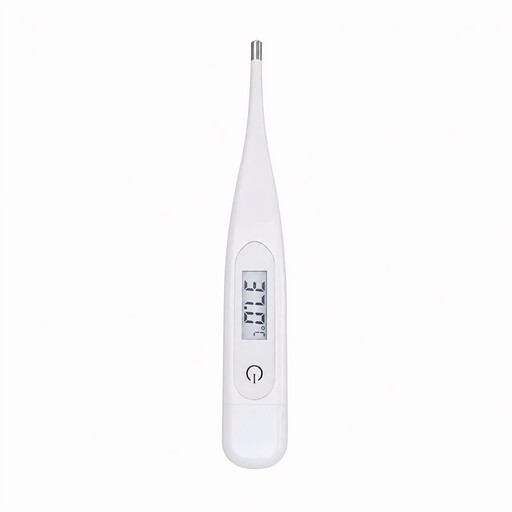
Why it suits this profile: This pen-style model is designed for basic use at home and on the go. It runs on one LR41 button cell battery and displays the temperature in increments of 0.1 °C.
The product information clearly states the range, units and operating conditions. This means you know in advance what to expect from a simple thermometer for home use.
Compact pen-style design, °C/°F switching, mercury-free construction and an audible signal when the reading is complete.
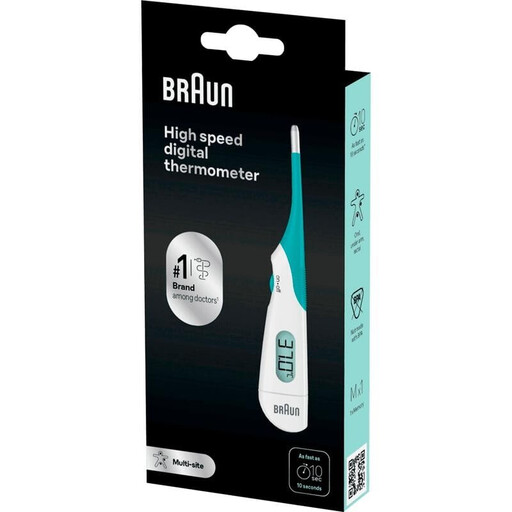
Why it suits this profile: Suitable for households that want to use one contact thermometer for adults and children, with several measurement sites.
The product description explicitly mentions oral, rectal and armpit measurements. The measuring time is also not presented without qualification: results may vary depending on the person and measurement method.
Flexible tip, last reading stored in memory, battery and storage cap included.
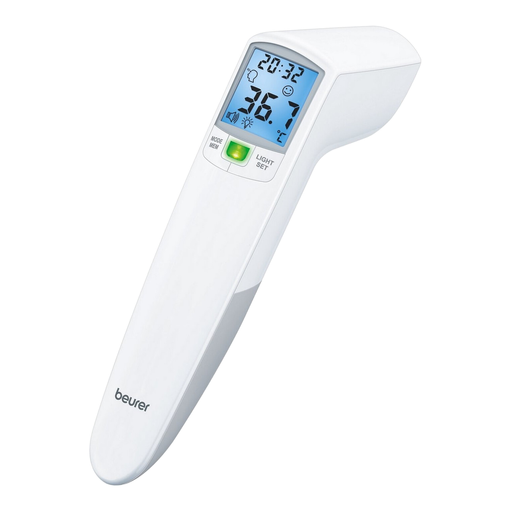
Why it suits this profile: A family that takes readings frequently can benefit from contactless measurement, a distance indicator and memory for 60 readings.
The recommended distance of 4-6 cm and automatic start help provide a consistent method. However, the sensor still depends on a clean forehead and correct positioning.
Contactless measurement, 60 memory slots, and measurement of body, object and ambient temperature according to the product description.
We have put together a complete, up-to-date list of products that fully meet these strict selection criteria and the applicable European safety regulations.
Before using the thermometer for the first time, read the instructions and note which measurement type the device uses. Ideally, always measure in the same way, and do not compare an armpit reading directly with an ear reading as though they were taken at exactly the same measurement site.
Keep the thermometer dry and clean. Check the battery regularly and replace it when the device indicates a low battery level. With an infrared model, an undamaged sensor is important. A scratch, dust or moisture on the measurement area may affect its operation.
Also consider the user’s age. A thermometer for children may have additional features, such as age settings, colour codes or a silent mode. For newborns, vulnerable children or noticeable symptoms, it is sensible to follow the instructions and seek professional medical advice.
Its lifespan depends on battery use, cleaning, storage and daily use. There is no fixed period that applies to every model. A thermometer that is dropped, gets wet or has a damaged sensor may work less reliably. Store the device in the supplied case or storage box and follow the maintenance instructions.
In addition to the purchase price, you will usually need to pay for batteries. With an ear thermometer, disposable lens filters may also be required. A contactless forehead thermometer often does not need filters, but the sensor must still be cleaned correctly. So check the included accessories and battery type before ordering.
An infrared thermometer can be practical for a baby because you can often take a forehead reading without contact. The result still depends on the distance, surroundings and positioning. Follow the instructions carefully and do not use a reading as a substitute for medical advice. If you are unsure about a baby’s health, contact your GP.
