
Vandaag of morgen in huis

Kwaliteit gegarandeerd

Welkomstaanbiedingen ontgrendelen: GRATIS bezorging | Tot 80% korting | Gratis 30 dagen JoyPlus-proefperiode
Download de app
A digital fever thermometer should be readily available when a child feels unwell, a baby feels warmer than usual or you want to check your own body temperature. Yet many models look similar. The differences often come down to the measurement method, instructions for use, hygiene and how a temperature reading is interpreted.
As a Joybuy Product Recommendation Officer, I filter product information based on practical considerations. This helps you avoid paying mainly for a standout feature when the device does not actually suit your family.
An infrared thermometer may display a reading in around one second according to the product description. This is useful when checking a sleeping baby, but a fast reading does not automatically mean the thermometer is accurate. Positioning, the distance from the forehead, ambient temperature and a clean sensor can all affect the result.
Always check:
A thermometer with a fever alert or green, amber and red display is easy to read. However, the thresholds may vary depending on age and measurement site. If a model uses age settings, you must set these correctly before assessing a reading.
According to Braun’s product information, the ThermoScan 7 uses Age Precision technology to interpret temperature readings for the following groups: 0–3 months, 3–36 months and over 36 months. This is a brand-specific feature; do not treat the colour indication as a medical diagnosis.
An ear thermometer with disposable lens filters requires a supply of hygiene caps. This increases ongoing costs. A contactless forehead thermometer generally avoids this issue, but it does require a consistent measuring distance and a clear, dry forehead.
Also pay attention to the difference between a body thermometer and an infrared thermometer intended for cooking, surfaces or technical applications. A kitchen model such as a meat thermometer is not designed for people.
A baby fever thermometer should suit the child’s age and the way you want to take the measurement. The main options are:
A thermometer for children and adults with several modes can be useful, but only if you follow the instructions for each mode.
A display that shows temperatures to 0.1 °C provides a finer reading. This does not automatically mean that the actual measurement is guaranteed to be accurate to 0.1 °C. Therefore, check the stated margin of error and measurement range.
For example, the Treesmile T11 specifies a resolution of 0.1 °C and a margin of error of approximately ±0.1 °C within the range of 37.0–39.0 °C. A larger margin is stated outside this range. This type of information is more useful than simply claiming “high precision”.
Check whether the sensor can be cleaned with a cloth or alcohol wipe, and whether the device must not be immersed in water. Disposable caps are relevant for an ear thermometer. For a pen-style model, a protective cap and the ability to clean the probe are important.
Also look out for:
A CE marking indicates that the manufacturer declares compliance with applicable European requirements. Also check whether the manufacturer and EU responsible person’s details are shown on the product page or packaging.
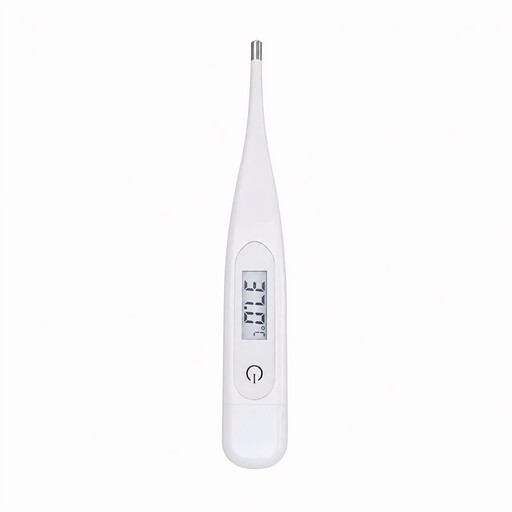
Why it suits this profile: This pen-style model is easy to operate, compact and designed for home use by the whole family.
The product information states the measurement range, resolution and margins of error rather than making only a general claim about speed. The model contains no mercury.
0.1 °C display resolution, °C/°F conversion, audible alert and pen-shaped design.
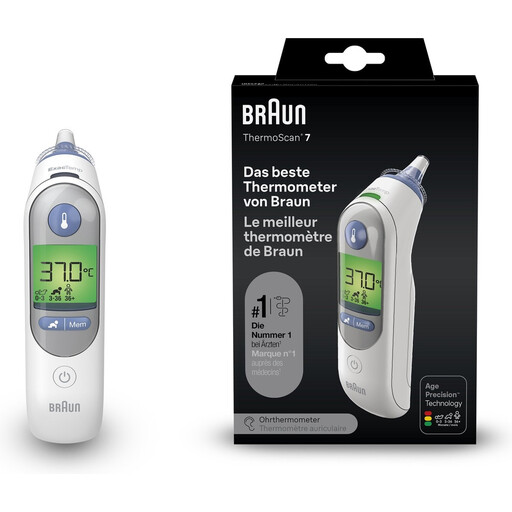
Why it suits this profile: Ideal for families who value ear readings, age settings and guidance for correct positioning.
The ExacTemp indicator uses light and sound to show when the positioning is stable. However, always use a clean hygiene cap.
Age settings, colour-coded display, pre-warmed tip, memory for 9 readings and storage case.
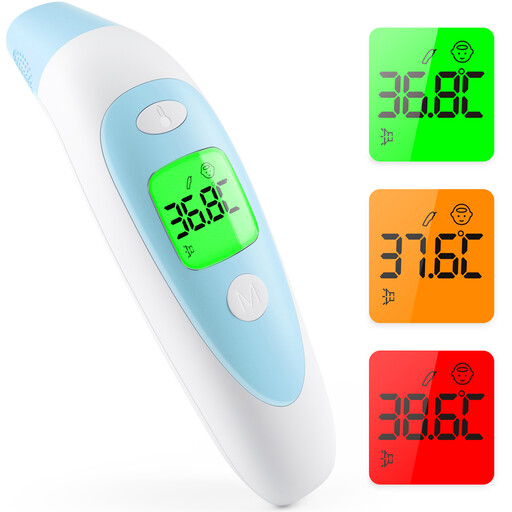
Why it suits this profile: A practical choice for households that want to combine ear, forehead and object measurements in a single device.
The three modes make the areas of application clear. The probe is fully enclosed and, according to the product information, can be cleaned without a disposable filter.
Ear, forehead and object modes, memory for 32 readings, colour indication and silent mode.
We have put together a complete, up-to-date list of products that fully meet these strict selection criteria and the applicable European safety regulations.
A temperature reading is a helpful tool, but it does not replace medical advice. If you are concerned about a baby, a persistently high temperature, drowsiness, breathing difficulties or other worrying symptoms, contact your GP or an appropriate healthcare professional.
This depends on the baby’s age, the measurement site and the instructions for use. An ear thermometer with a soft, pre-warmed tip can be practical, while a contactless forehead thermometer causes less disturbance during sleep. Always check that the specific model is suitable for the baby’s age.
Its lifespan depends on battery usage, storage, cleaning and sensor quality. Store the device in a dry place, avoid scratching the sensor and remove the batteries if the model will not be used for an extended period. Replace the device if it is damaged or repeatedly produces illogical readings.
With a pen-style model, you will generally only need batteries. An ear thermometer may also use disposable hygiene caps. A contactless thermometer may therefore have lower running costs, but it requires extra care with distance, surroundings and sensor maintenance. Check these points before choosing based solely on the purchase price.
