
Vandaag of morgen in huis

Kwaliteit gegarandeerd

Welkomstaanbiedingen ontgrendelen: GRATIS bezorging | Tot 80% korting | Gratis 30 dagen JoyPlus-proefperiode
Download de app
By: Joybuy Product Recommendation OfficerDate: July 14, 2026
Over-tighten a bolt and strip the threads, or leave it too loose and compromise safety. For anyone who seriously works on a car, motorcycle, or bicycle, this is a familiar dilemma. The traditional mechanical torque wrench with its 'click' is a step in the right direction, but for those who demand true certainty and precision, there's a modern alternative: the digital torque wrench.
An electronic torque wrench not only provides an exact reading on a display but also gives clear signals when the correct torque is reached. This prevents guesswork and costly mistakes. In this article, we'll help you make the right choice by highlighting the most important features and showcasing several popular models.
Before you make a choice, it's important to know which specifications matter. Here are a few key points to consider.
The drive size (the square head where the socket fits) determines what type of job the wrench is suited for. The most common sizes are:
Choose the size that matches the jobs you perform most often. A professional torque wrench set often includes multiple sizes.
The entire purpose of a torque wrench is precision. A good digital torque wrench has an accuracy rating of ±2% to ±3%. This is significantly more accurate than many mechanical versions, which can lose their calibration over time.
Another advantage is the alert system. Whereas a mechanical wrench only provides a 'click', a torque wrench with a display often offers a triple alarm system:
This combination ensures you won't miss the signal, even in a noisy workshop or a poorly lit area.
Modern digital torque wrenches often offer extra features that make the job easier.
Based on product specifications and functionality, we have selected a few models that stand out for various applications.

Why It Stands Out This model is specifically designed for precision work. According to the manufacturer, Movecrab, it combines a triple alarm system (light, sound, and vibration) with a high accuracy of ±2%. The bright display and the ability to switch between four units (N.m, in.lb, ft.lb, kg.cm) make it a flexible tool.
Advantages
Who Is It For? Ideal for bicycle mechanics, motorcycle enthusiasts, and DIYers working on carbon components or small, sensitive nuts and bolts where a low and exact torque is crucial.
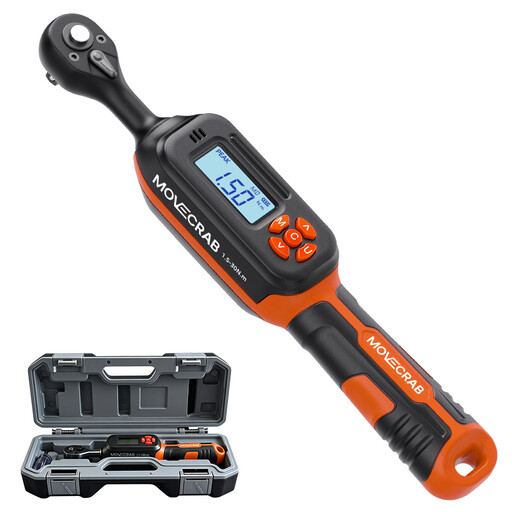
Why It Stands Out This 3/8" torque wrench is the all-rounder for most jobs on cars and motorcycles. Its torque range of 4.2 to 85 N.m covers a wide array of applications. Like the 1/4" version, this model features Movecrab's signature triple alarm system and an accuracy of ±2% (clockwise).
Advantages
Who Is It For? The serious DIYer or professional mechanic looking for a reliable and versatile electronic torque wrench for the majority of vehicle maintenance tasks.
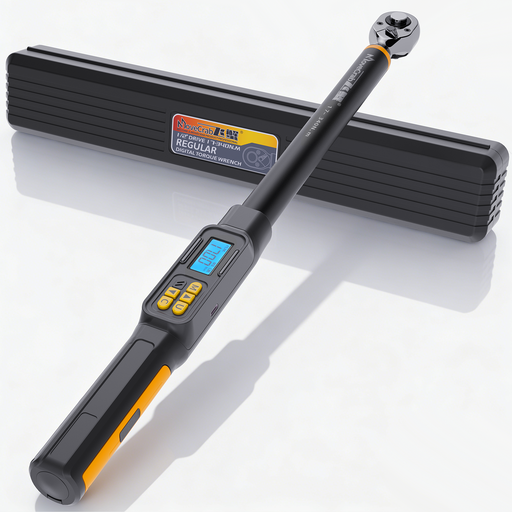
Why It Stands Out For heavy-duty work, there's this 1/2" powerhouse. With an impressive range up to 340 N.m, this wrench is suitable for the most demanding jobs, like tightening wheel nuts, subframes, and suspension components. Here too, Movecrab's signature features are present, such as the triple alarm and memory presets.
Advantages
Who Is It For? The auto mechanic or demanding hobbyist who regularly works with bolts requiring high and specific torque settings. This is an excellent choice as a primary car torque wrench.
The models above are a selection based on their specifications for particular applications. If this isn't exactly what you're looking for, or if you want to explore the range further, check out our full assortment on the car torque wrenches category page.
1. What is the main difference between a digital and a mechanical torque wrench? The biggest difference is the feedback and precision. A mechanical wrench gives a 'click' when the torque is reached, which can be missed in a noisy environment. A digital torque wrench provides visual (display, LED), audible (beep), and sometimes tactile (vibration) feedback. Furthermore, you can read the exact value on the display, which eliminates guesswork during setup.
2. How often does a digital torque wrench need to be calibrated? Most digital torque wrenches come pre-calibrated. For professional and intensive use, it is recommended to have the calibration checked annually or after a certain number of cycles (e.g., 5,000). For the average DIYer, this is needed less frequently, unless the tool has been dropped or is showing visibly incorrect readings.
3. Can I also use a digital torque wrench to loosen bolts? Although the ratchet head is often bidirectional, a torque wrench's measurement function is almost always designed only for tightening (usually clockwise). Never use a torque wrench as a regular ratchet or breaker bar to loosen stuck bolts with high force. This can damage the sensitive internal sensor and permanently affect the tool's accuracy. To loosen bolts, use a standard ratchet or a breaker bar.
