
Vandaag of morgen in huis

Kwaliteit gegarandeerd

Welkomstaanbiedingen ontgrendelen: GRATIS bezorging | Tot 80% korting | Gratis 30 dagen JoyPlus-proefperiode
Download de app
A digital torque wrench for bikes helps you tighten bolts to the torque specified by the manufacturer. This matters for components such as stems, seatposts, brake callipers, crank parts and carbon components. The correct torque reading is just as important when using a torque wrench on a motorbike or car.
Even so, many DIY enthusiasts buy a model that isn’t suited to the jobs they need to do. The most common pitfalls are:
First, check the specified torque for the components you’re working on. A digital torque wrench for bikes needs to handle low settings accurately. The MoveCrab model with a range of 1.5 to 30 Nm, for example, is designed for lighter applications such as bicycles and certain motorbike components.
For cars, motorbikes and heavier-duty fasteners, a wider range may be more useful. A 3/8-inch torque wrench with a range of 4.2 to 85 Nm is suited to different applications from a 1/2-inch model with a range of 6.8 to 135 Nm.
According to MoveCrab’s product information, the models mentioned have an accuracy of ±2%. Treat this as a stated product specification. For critical professional work, always check the documentation supplied with the tool, its calibration data and any local maintenance requirements.
The drive needs to match your sockets:
An adapter can change the drive size, but it won’t change the wrench’s measuring range. Always check that the combination of wrench, adapter and socket is suitable for the job.
A torque wrench with an LED display shows the current reading clearly. Also check how the wrench alerts you when it reaches the set torque. A torque wrench with an audible warning can be useful when you can’t keep looking at the display.
Some electronic torque wrenches combine a visual LED indicator with a beep and vibration. According to MoveCrab’s product description, the models in question have all three alerts. This can help you avoid overtightening, but you should still apply force steadily and stop as soon as you reach the target torque.
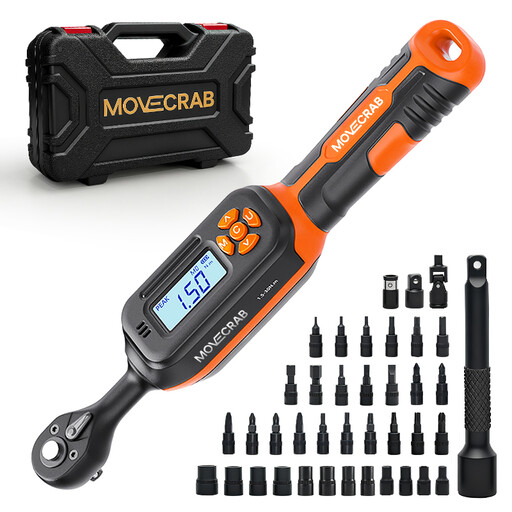
Why it suits this user: The compact 1/4-inch model combines a low torque range with sockets and bits for regular bicycle maintenance and smaller jobs.
Its measuring range is clearly aimed at lighter fasteners, so you won’t automatically end up with a heavy-duty model for bicycle maintenance.
According to the product information: 1.5-30 Nm range, LED display, four measurement units, 10 preset settings and a 40-piece set.
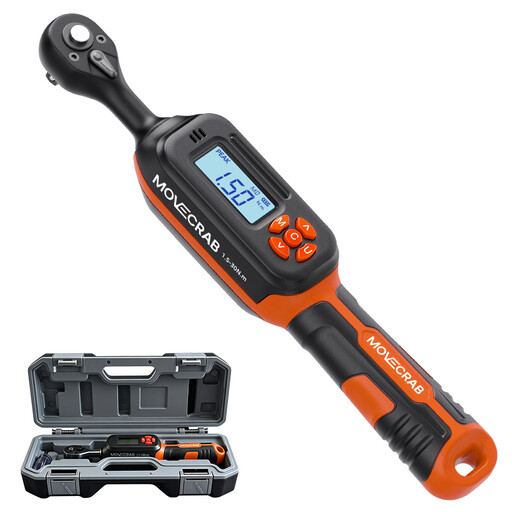
Why it suits this user: The 3/8-inch size is a practical middle ground for people who maintain bicycles, motorbikes and certain car components.
As well as an LED display, the product information mentions sound, light and vibration alerts. That means you don’t have to rely on just one type of warning.
According to MoveCrab: a range of 4.2-85 Nm, stated accuracy of ±2%, 10 preset values and storage for up to 500 readings.
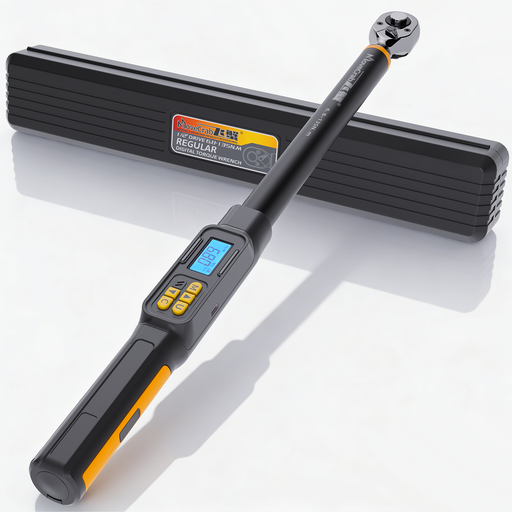
Why it suits this user: Its higher range is suited to heavier work on motorbikes and cars, where a small bicycle torque wrench won’t be up to the job.
The 1/2-inch drive and range up to 135 Nm make its intended uses clearer than those of a compact bicycle torque wrench.
According to the product description: LED display, sound and vibration alerts, four units, 10 preset settings and stated accuracy of ±2%.
We’ve put together a complete, up-to-date list of products that meet these strict selection criteria and the current European safety requirements.
For many bicycle jobs, a 1/4-inch torque wrench with a low measuring range is a good choice. Always check the specified values for your components. Carbon components may have a specific torque requirement, so follow the manufacturer’s documentation.
Not necessarily. A digital torque wrench displays the reading electronically and may offer extra alerts. Its actual accuracy depends on the product specification, calibration, storage and use. A stated figure such as ±2% should therefore be understood as a manufacturer’s or seller’s specification, not a universal guarantee.
Its lifespan depends on the load, moisture, storage and maintenance. Don’t exceed the maximum range, drop the wrench or store it somewhere damp. Check the batteries, display and alerts before use. If you use it regularly for professional work, periodic checks in line with the manufacturer’s instructions are advisable.
