
Vandaag of morgen in huis

Kwaliteit gegarandeerd

Welkomstaanbiedingen ontgrendelen: GRATIS bezorging | Tot 80% korting | Gratis 30 dagen JoyPlus-proefperiode
Download de app
A digital thermometer seems simple: take a reading, check the display and you’re done. Yet many people buy a model that does not suit the way they intend to use it. A forehead thermometer, for example, is handy when checking a sleeping child, but works differently from a contact thermometer. And a meat thermometer is not suitable for measuring body temperature.
So don’t just look for words such as “fast” or “accurate”. Above all, check the measuring method, intended use, cleaning requirements and available features. Below, we’ve listed the key points to consider, along with practical product choices for different households.
An infrared thermometer can display a reading within one second, but the result also depends on the distance, positioning and ambient temperature. Sweat, hair, direct sunlight or a cold room can affect a forehead reading. Always follow the instructions and, if in doubt, take another reading in the same way.
A traditional probe thermometer may require more preparation, but for some users it can be more practical as a consistent measuring method. So focus on consistent use, not just the speed mentioned in the product title.
Babies, children and adults may have different measuring instructions. An ear thermometer requires correct positioning in the ear. A contactless forehead thermometer requires a specific distance instead. With young babies, it is important to follow the manufacturer’s instructions carefully.
Temperature readings are not a diagnosis. Use a thermometer for monitoring, and contact your GP if you have ongoing concerns or notice unusual symptoms.
Some models measure body temperature, objects, milk, bath water or food. This is convenient, but check that the different modes are clearly separated. A food thermometer or meat thermometer is designed for cooking, not for taking body temperature. Conversely, a body thermometer is not designed for hot pans, ovens or naked flames.
First, decide what you will use the thermometer for:
Also check whether a model measures body temperature only or additionally has an object mode. This can be useful for measuring milk or bath water, for example, but it does not replace a separate cooking thermometer for high temperatures.
A display showing one decimal place might display 37.2 °C instead of just 37 °C. This is resolution, not a guarantee that the reading will always be exact. Also pay attention to the measuring range and stated margin of error.
For example, the product information for the Treesmile T11 states a display range of 32.0 to 42.9 °C and a resolution of 0.1 °C. According to the product specification, the stated margin of error varies depending on the temperature range. This is more informative than simply using the phrase “high accuracy”.
Different values are relevant for cooking thermometers. According to the product description, the Typhur InstaProbe Core has a range of -58 °F to 572 °F, a response time of 0.5 seconds and a stated accuracy of ±0.5 °F. If you cook in the Netherlands, it is best to check whether the display supports Celsius.
A thermometer for home use should be easy to clean. Consider the following:
An IP67 rating means that, according to the specified protection class, a product is dust-tight and can withstand temporary immersion. This does not mean that every part can be left underwater for long periods. The product information for the Typhur InstaProbe Core states that the probe can be cleaned, while the main casing should not be immersed.
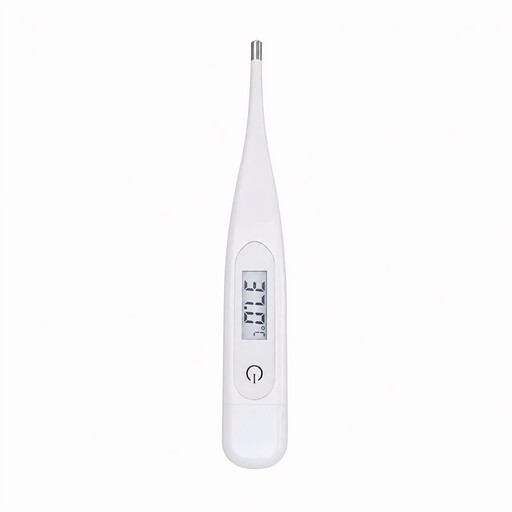
Why it suits this profile: This pen-style model is compact, runs on a single LR41 battery and offers a simple solution for taking body temperature every day.
The product specification gives a specific measuring range, 0.1 °C resolution and a mercury-free design, rather than making only general claims about speed.
Compact pen-style design, °C/°F switching and an audible signal after the reading.
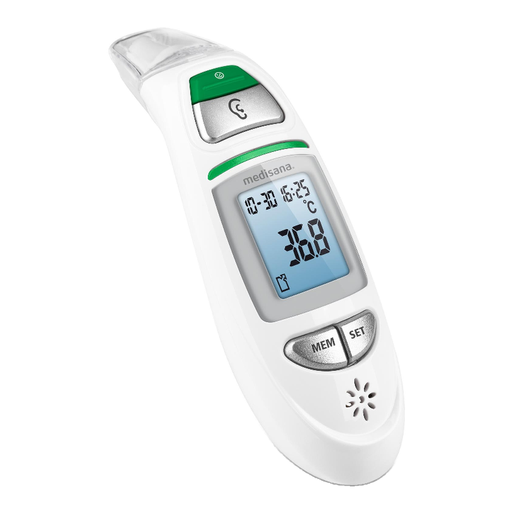
Why it suits this profile: Contactless forehead readings are practical when you want to check a sleeping child without inserting a probe.
The instructions specify keeping the correct distance, using clean, dry skin and avoiding direct sunlight.
Memory function, digital display and use without direct skin contact.
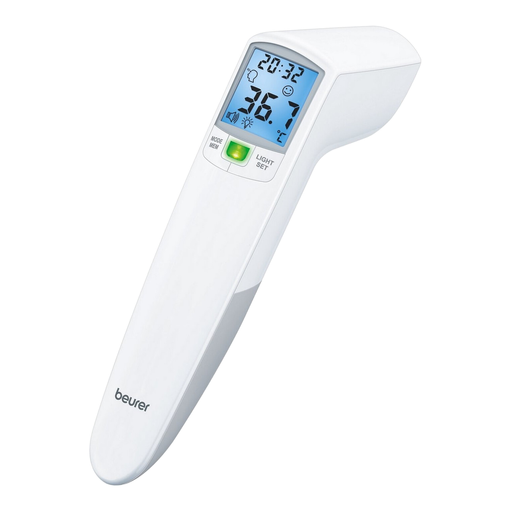
Why it suits this profile: This model combines contactless readings with object and ambient temperature measurements, plus ample memory for households that want to review previous readings.
The product information specifies a distance of 4–6 cm, making the correct measuring position clearer than on models without distance guidance.
60 memory slots, colour indication and measurement of body, object and ambient temperatures.
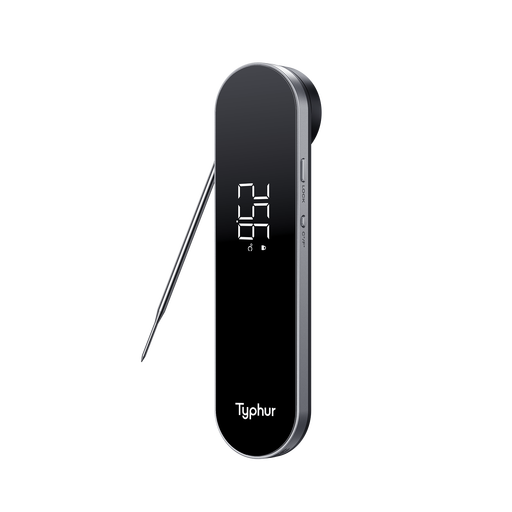
Why it suits this profile: For barbecuing, grilling, smoking and professional kitchens, a fast food thermometer with a clear display and wide temperature range is highly practical.
The product is clearly described as a meat thermometer and, according to the product specification, has IP67 protection. The main casing must still be cleaned in accordance with the care instructions.
According to the product description, a display that is readable in sunlight, a 0.5-second response time and a range of up to 572 °F.
We’ve put together a complete, up-to-date list of products that fully meet these strict selection criteria and the applicable European safety regulations.
For a reliable comparison, always take readings under similar conditions:
When using an ear thermometer, use a clean protective cap if specified by the manufacturer. With a meat thermometer, clean the probe after use and do not touch the hot probe directly.
A contactless forehead thermometer can be practical when checking a sleeping baby, as no direct contact is required. An ear thermometer may also be suitable if the instructions permit its use for the relevant age group. Always check the measuring instructions and do not use the reading as a substitute for medical advice.
Its lifespan depends on battery use, storage, cleaning and the durability of the sensor. Keep the device dry, avoid dropping it and remove the batteries if you will not be using it for an extended period. A water-resistant cooking thermometer may be easier to clean, but the limits of its stated protection class still apply.
For basic models, the main ongoing costs are batteries and any protective caps. Contactless models generally do not use disposable accessories, while some ear thermometers use hygienic lens caps. Meat thermometers usually need no additional consumables apart from batteries. So don’t just check the purchase price; also check what is included in the package.
