
Vandaag of morgen in huis

Kwaliteit gegarandeerd

Welkomstaanbiedingen ontgrendelen: GRATIS bezorging | Tot 80% korting | Gratis 30 dagen JoyPlus-proefperiode
Download de app
A digital thermometer may seem straightforward, but the range varies considerably. A forehead thermometer works differently from an ear thermometer, while a meat thermometer is not suitable for measuring body temperature. If you only look for terms such as “fast” or “professional”, you could end up buying a device that is not right for use at home.
Pay particular attention to the measuring method, the specified conditions of use and maintenance requirements. Below, you’ll find out which features matter and which models are suitable for different situations.
An infrared thermometer can display a result within a second, but the reading depends on factors including distance, positioning and ambient temperature. A sweaty forehead, direct sunlight or a cold room can affect the measurement. Always check:
If in doubt, follow the instructions to take another reading, rather than relying solely on a colour indicator or beep.
A fever thermometer is designed for a limited temperature range around body temperature. A meat thermometer or kitchen thermometer, on the other hand, has a metal probe and a much wider range, for example for use in an oven, barbecue, confectionery or hot drinks.
Only use a device for the purpose described by the manufacturer. An object mode on a body thermometer is not automatically equivalent to a food thermometer with a long probe.
Memory, Bluetooth, age settings, silent mode and colour coding can be useful, but not everyone needs them. Start by checking the basics:
For families with a baby or child, a contactless forehead thermometer can be convenient at night. An ear thermometer requires correct positioning and often one hygiene cover per reading. A pen-style model with a flexible tip measures via the mouth, armpit or rectum, depending on the instructions.
For cooking, an insertion probe, temperature range and cable length are more important than a colour-coded display. A model with two probes can be useful when you want to monitor the core temperature and the temperature inside the oven or barbecue at the same time.
Compare speed based on the official product specifications. The Braun PRT1000CE, for example, states that it takes a reading from approximately 8 seconds, while the product information explains that the actual time may vary depending on the person and measuring method. A kitchen model may have a different range, such as 0 to 250 °C or 0 to 300 °C.
A fast thermometer is particularly useful if you take readings frequently or do not want to leave a dish out of the oven for long. However, speed does not replace correct positioning.
A contactless sensor limits direct contact, but the device itself still needs to be kept clean. Compatible protective covers are important for ear thermometers. With kitchen thermometers, the probe should be cleaned after every use without immersing the main unit, unless the instructions specifically state that this is safe.
For a cooking thermometer, look for stainless steel or a food-safe probe, a heat-resistant cable and a safe handle. Also check whether the casing is water-resistant and which parts may or may not be rinsed under the tap.
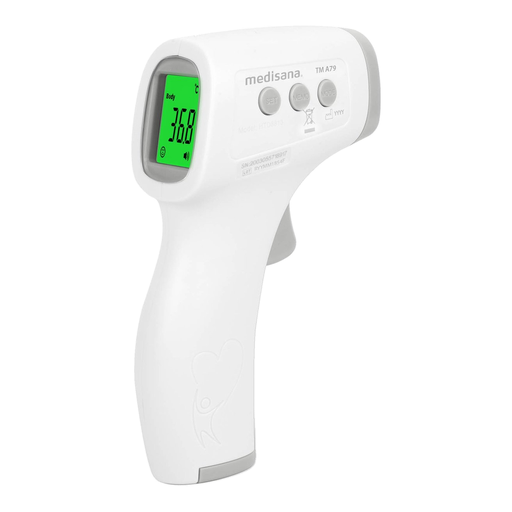
Why it suits this profile: This compact model uses contactless infrared measurement and has a large display. That makes it suitable for simple use at home or on the go.
The product description clearly states the contactless measuring method, memory function and one-button operation. This means there are fewer separate features to configure.
Contactless infrared measurement, memory function, large display and a weight of 170 grams according to the product specifications.
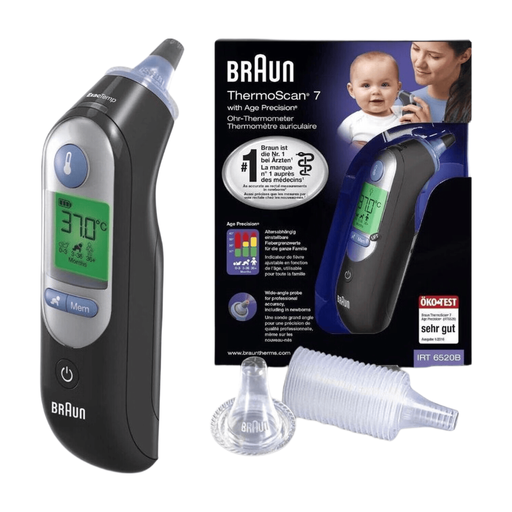
Why it suits this profile: This model is aimed at families looking for an ear thermometer with age settings, positioning guidance and hygienic protective covers.
According to the product information, the ExacTemp indicator helps ensure stable positioning. The included protective covers also make maintenance more straightforward.
Age settings, colour-coded display, pre-warmed measuring tip, memory for previous readings and night light.
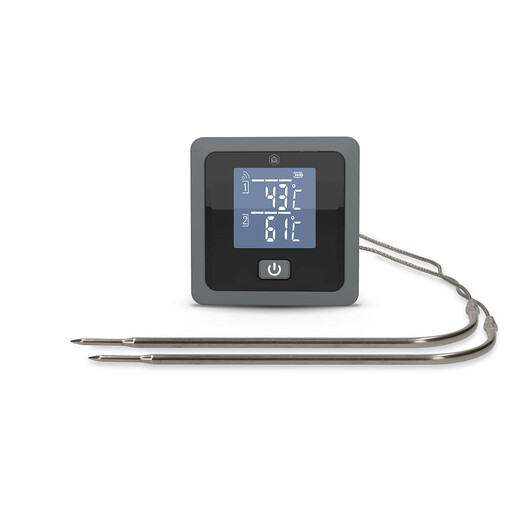
Why it suits this profile: For barbecue enthusiasts and home cooks, this model offers two probes, Bluetooth and notifications via the Nedis SmartLife app.
It is clearly described as a food thermometer and has a range of 0 to 300 °C. This prevents it from being confused with a body thermometer.
Two probes, temperature range up to 300 °C, timer, Bluetooth range up to 20 metres, plus buzzer and push notifications according to the product specifications.
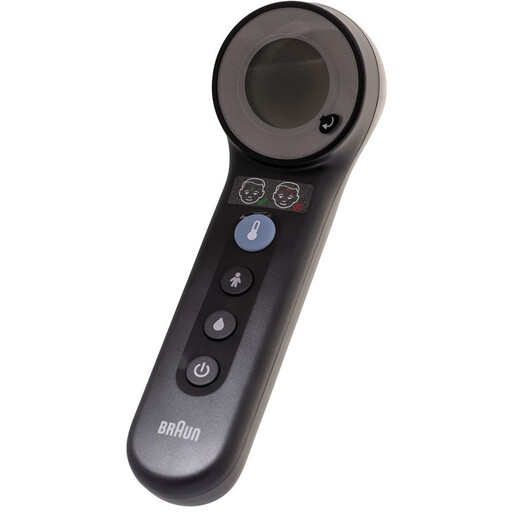
Why it suits this profile: This model supports both contactless and contact forehead measurements and, according to the product information, is intended for babies, children and adults.
The choice between touch and no-touch measurement makes this model more flexible than a thermometer with only one measuring method. Always check the correct positioning in the instructions.
Touch and no-touch measurement, Age Precision function and suitability for babies, children and adults according to the product description.
We’ve put together a complete, up-to-date list of products that fully meet these strict selection criteria and the applicable European safety regulations.
A thermometer is intended to measure temperature and is not a substitute for professional medical advice. If you have concerns about a reading or persistent symptoms, contact your GP.
Its lifespan depends on battery use, cleaning and storage. A sensor can become less reliable due to dirt, scratches, moisture or being dropped. Store the device according to the manual and regularly check that the display and measuring function are working normally.
In addition to the purchase price, batteries and, for some ear thermometers, disposable protective covers can affect running costs. A contactless forehead thermometer generally does not require covers, while a model with two probes may use more batteries.
This depends on the child’s age, the recommended measuring site and the manufacturer’s instructions. A forehead thermometer can take contactless readings, while an ear thermometer often has positioning guidance and protective covers. Choose a model with clear instructions and do not use the reading as a substitute for medical advice.
