
Vandaag of morgen in huis

Kwaliteit gegarandeerd

Welkomstaanbiedingen ontgrendelen: GRATIS bezorging | Tot 80% korting | Gratis 30 dagen JoyPlus-proefperiode
Download de app
A digital thermometer is a staple in many Dutch homes and first-aid kits. However, choosing the right model isn’t always straightforward. A fever thermometer should be quick to use, comfortable to handle and suited to the person and the way you take their temperature. For example, taking a baby’s temperature from their forehead while they’re asleep calls for different features from a simple thermometer for adults.
Marketing claims can also be confusing. Below, we cover the main pitfalls, technical points and some popular options, based on verifiable product specifications.
Many models promise a reading in one second. That’s convenient, but the measuring distance, body position, skin condition and placement can all affect the result. Sweat, hair, a cold room or coming in from outside can affect a forehead reading.
So always check:
An infrared thermometer is especially useful when you need to take a quick, contactless reading. Follow the instructions and take another reading if the result is unexpected.
A product description might use terms such as “medical grade”, “clinically tested” or “validated”. On their own, these don’t tell you how the device will perform in your situation. According to a brand’s own information, a product may have undergone certain studies, certifications or testing procedures. That doesn’t guarantee that every reading will be the same in all circumstances.
Look for specific information such as:
Use a thermometer at home as a guide. A reading is not a substitute for medical advice.
A fever alert, colour display, memory function and silent mode can all be useful. For example, you can use a baby thermometer with silent mode without waking a sleeping child. A model with 35 memory slots is handy if you want to track temperature changes over several readings.
But more features don’t automatically make a thermometer the better choice. Check whether batteries, hygiene caps, a storage case or other accessories are included. An ear thermometer may need disposable filters, which affects the cost of use.
A forehead thermometer is usually contactless and quick to use with babies and children. An ear thermometer measures in the ear canal and needs to be positioned steadily. A traditional pen-shaped digital thermometer may be suitable for oral, underarm or rectal readings, depending on the instructions.
If you want to cover several situations at home, a 3-in-1 thermometer could be a good option. Check that the modes are clearly differentiated: body temperature is not the same as the temperature of milk, bath water or a room.
A large LCD or LED display is easy to read for adults and older people. A colour change or a thermometer with a fever alert can help you identify a reading quickly, but treat the colour as additional information. Also look for a thermometer with silent mode or a vibration function for use at night.
A smooth ABS casing is easy to wipe clean, but no electronic model should be fully submerged in water. Check which parts can be cleaned and what to use. Also look out for:
Keep small parts and batteries from a baby thermometer out of children’s reach.
The selection below is based on the listed measuring modes, memory capacity, controls, accessories and intended use. Claims about accuracy or clinical support are included only where stated by the manufacturer and should be interpreted in line with the instructions.
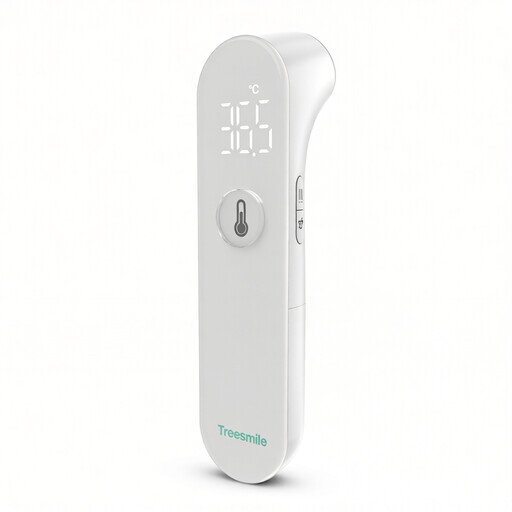
Why it suits this profile: This model combines forehead and object measurements in one compact device. It’s a good fit for households looking for a straightforward digital thermometer for everyday use and travel.
The product information lists the measuring modes, 35 memory slots, silent mode and automatic shut-off. This makes its practical features clear from the outset.
Forehead and object modes, large LED display, 35 memory slots, silent operation and two AAA batteries included.
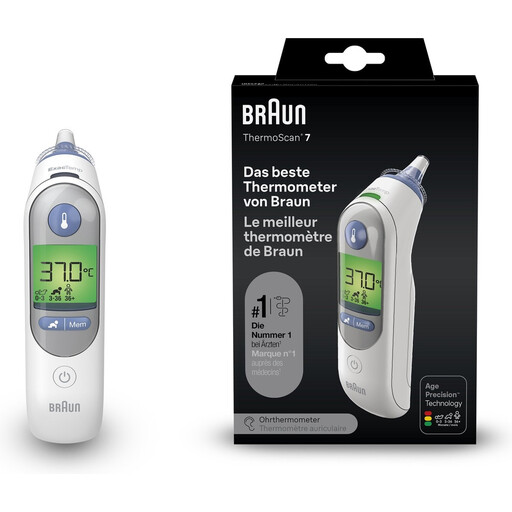
Why it suits this profile: An ear thermometer with age settings and positioning guidance is a good fit for families who prefer taking readings in the ear and value a consistent method.
The specifications mention a pre-warmed probe tip, ExacTemp positioning guidance and hygiene caps. This makes the required technique and accessories clear.
Age settings, colour-coded display, memory for 9 readings, backlit display and 21 hygiene caps included.
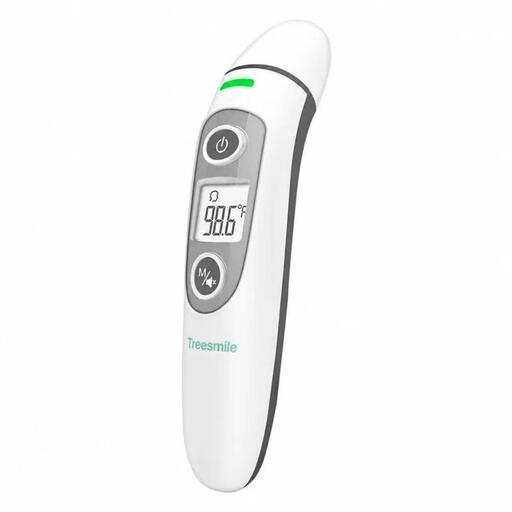
Why it suits this profile: This 3-in-1 model is designed for households that want to take ear, forehead and object temperature readings with one device, including at night or while out and about.
The three separate measuring modes, silent mode and 35 memory slots are clearly listed in the product specifications. Just make sure you select the right mode for each reading.
Ear, forehead and object modes, LCD display with colour backlighting, Celsius/Fahrenheit selection and automatic shut-off.
We’ve put together a complete, up-to-date list of products that meet these strict selection criteria and the applicable European safety requirements.
First, let the thermometer and the person whose temperature you’re taking reach the same room temperature. Make sure their forehead is dry and clear of hair, blankets and sweat. Hold the device at the distance specified in the instructions, and keep still while taking the reading. If the result is unexpected, you can take another reading using the same method.
Its lifespan depends on battery use, cleaning, storage and the condition of the sensor. The display or battery may develop problems before the casing does. Replace the batteries in good time, store the device somewhere dry and don’t use sharp objects on the measuring lens. Check the model if readings vary noticeably.
As well as the purchase price, you may need to factor in batteries, hygiene caps and any replacement accessories. A pen-shaped medical thermometer for home use often takes a small button cell. An infrared thermometer usually runs on AAA batteries. An ear thermometer may need disposable filters. So check what’s included in the pack and which accessories are recommended before you order.
