
Vandaag of morgen in huis

Kwaliteit gegarandeerd

Welkomstaanbiedingen ontgrendelen: GRATIS bezorging | Tot 80% korting | Gratis 30 dagen JoyPlus-proefperiode
Download de app
A digital thermometer is a staple in many British households. Yet the choice is less straightforward than it seems. Do you want a simple fever thermometer for occasional use, a contactless forehead thermometer for a sleeping baby, or an ear thermometer for the whole family?
Marketing copy often emphasises a reading in one second or a “clinically proven” result. That doesn’t always tell you enough about everyday use. The measurement site, the correct distance and how you clean the device all have a significant impact on the outcome.
An infrared thermometer can display a value quickly, but speed alone says nothing about reliability. With a forehead thermometer, sweat, cold outdoor air, direct sunlight or an incorrect measuring distance can affect the result. A classic digital body thermometer usually takes longer, but works on a different measurement principle.
Always check:
Green, yellow and red screen colours are handy for quickly interpreting a value. They do not replace a medical assessment. With models that have age settings, thresholds can also differ by age group. According to the product information from Braun, Age Precision adjusts the colour coding to the selected age category.
So use a fever indication as a guide. Also look at other symptoms and, if in doubt, follow the advice of a GP or other healthcare professional.
A thermometer for babies, children and adults may have multiple modes, but the instructions for use remain key. With an ear thermometer, placement is important. With a contactless thermometer, the distance must be correct. A pen model can be suitable for oral, rectal or axillary use, but hygiene and separate usage agreements within the family are then extra important.
First, choose your use case:
A screen that displays 0.1 °C shows a fine reading increment. That does not automatically mean the measurement is accurate to 0.1 °C. So check the stated margin of error or accuracy information and read the conditions under which it applies.
The Treesmile T11, for example, states a display in steps of 0.1 °C and different margins of error depending on the temperature range. Such details are more useful than just the term “accurate”.
A fast temperature reading is handy at night or on the go. Memory storage helps you look back at previous values, but for important readings also note the date, time and measurement site.
Also look out for:
The statutory warranty in the EU is separate from any additional manufacturer warranties. Always check the current product information and the manufacturer’s instructions.
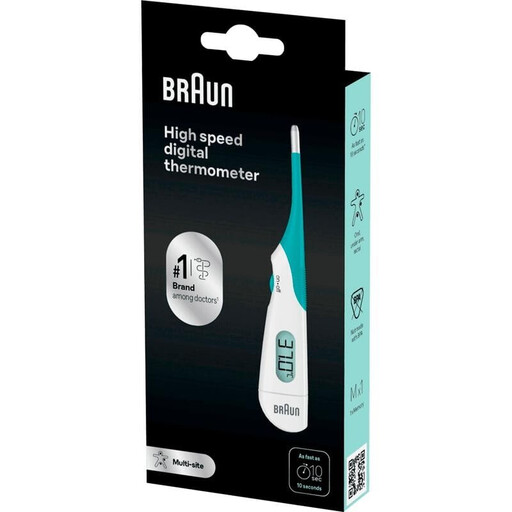
Why this fits the profile: This pen model is a straightforward choice for anyone looking for a digital body thermometer without complicated settings. According to the product information, it is suitable for oral, rectal and axillary measurements.
The measurement method and flexible tip are clearly described. The stated measurement time of around 8 seconds comes with the note that results may vary per person and measurement method.
Flexible tip, memory for the last reading, battery and storage cap included.
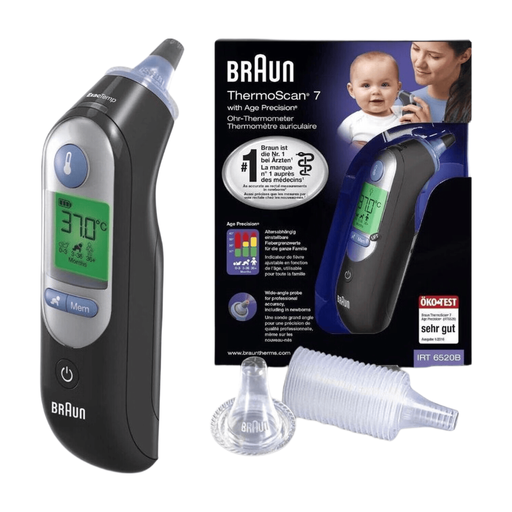
Why this fits the profile: A family that measures regularly may value age settings, a backlit display and support with placement in the ear.
The ExacTemp indicator lights up and sounds when placement is stable, according to the product description. Use a clean hygiene cap with every reading.
Age categories, colour-coded display, pre-warmed tip and included hygiene caps.
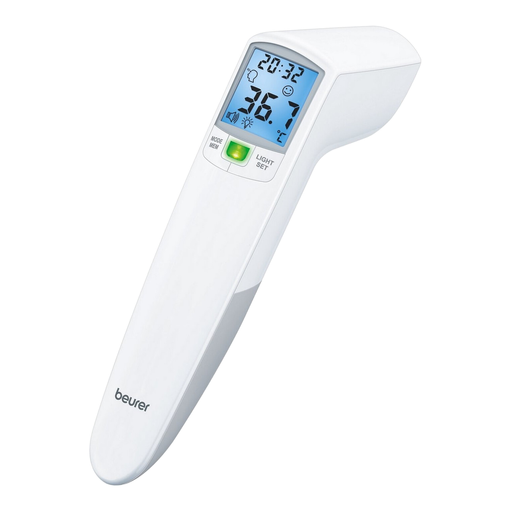
Why this fits the profile: This model suits households that want contactless measuring and the ability to look back at previous readings, for example with multiple family members.
The recommended distance of 4–6 cm is clearly stated. The distance guidance helps prevent you from measuring too far from the forehead.
Contactless measurement, 60 memory slots, object and ambient temperature and included batteries.
We’ve put together a full, up-to-date list of products that fully meet these strict selection criteria and current European safety regulations.
A digital thermometer gives an indication of body temperature and does not replace a diagnosis. If you have a persistent fever, severe symptoms or any doubt, contact a healthcare professional.
That depends on use, battery type, storage and maintenance. Electronic components have no fixed universal lifespan. Replace the device when the display becomes unclear, the battery drains quickly, the sensor is damaged or readings differ inexplicably. If in doubt, follow the manufacturer’s instructions.
With most models, the running costs are limited to batteries. An ear thermometer may also require hygiene caps. A contactless forehead thermometer usually doesn’t need disposable caps, but does require a clean sensor and correct storage. Check before purchase what is included in the packaging and which accessories you may need later.
Many forehead thermometers are described by their product information as suitable for babies, children and adults. However, the measurement results can be affected by distance, environment and skin condition. Use the device exactly as per the instructions and seek professional advice if the baby’s temperature or condition causes concern.
