
Vandaag of morgen in huis

Kwaliteit gegarandeerd

Welkomstaanbiedingen ontgrendelen: GRATIS bezorging | Tot 80% korting | Gratis 30 dagen JoyPlus-proefperiode
Download de app
A digital thermometer should be simple to use: take a reading, check it and clean the device. Yet many people buy a model that doesn’t suit their family’s needs. A non-contact forehead thermometer, for example, is handy when you need to take a reading from a sleeping child, but you need to use it at the right distance and make sure their forehead is still. An ear thermometer can take a quick reading, but how you position it in the ear affects the result.
As a Joybuy Product Recommendation Officer, I filter through the key product specifications and use cases, so you can focus less on marketing terms and more on information you can verify.
A manufacturer may state that a reading takes one second. This tells you mainly how quickly the device works; it doesn’t mean every reading will be accurate in every situation. Movement, sweat, hair, draughts and using the wrong distance can all affect the result.
So check:
A thermometer with a fever alarm may display a colour, beep or show a warning when it reaches a set limit. This is useful as a quick indication, but it is no substitute for a medical assessment. The significance of a temperature depends on factors including where it was taken, the person’s age and the circumstances.
Also check whether you can turn off the alarm. A thermometer with a silent mode is useful when you want to take your baby’s or child’s temperature at night without making a noise.
A 3-in-1 model may measure body temperature, milk, bath water, food or room temperature. This can be useful, but check that the object mode is actually listed in the product specifications. A standard pen-style fever thermometer is often enough if you only need to measure body temperature.
An infrared thermometer takes a reading without direct contact. This makes a forehead thermometer suitable for quick checks, and it can be a hygienic choice for families. Be sure to keep to the recommended distance and clean the sensor regularly.
An ear thermometer takes a reading in the ear and can be quick to use, but correct positioning is important. Some models use disposable filters or ear tips. These improve hygiene, but add an ongoing cost.
A traditional pen-style thermometer works through contact and usually costs less to buy. According to the product information, the Treesmile T11 has a resolution of 0,1 °C, a measurement range of 32,0 °C to 42,9 °C and a replaceable LR41 button cell.
Choose a clear display if several family members will be using the device. A colour indicator can make readings easier to interpret, while a memory function stores previous readings. The models in this selection offer different memory capacities, from the most recent reading to 60 stored readings.
Also check:
A CE marking on a medical device indicates that the manufacturer declares it meets the applicable European requirements. Also check the instructions, manufacturer details and information about the responsible party in the EU. A CE marking does not guarantee that every reading will be the same in all circumstances.
Use the thermometer according to the instructions. Readings are intended as a guide and do not replace a diagnosis or advice from a doctor. If you’re concerned about a temperature or other symptoms, it’s a good idea to contact a healthcare professional.
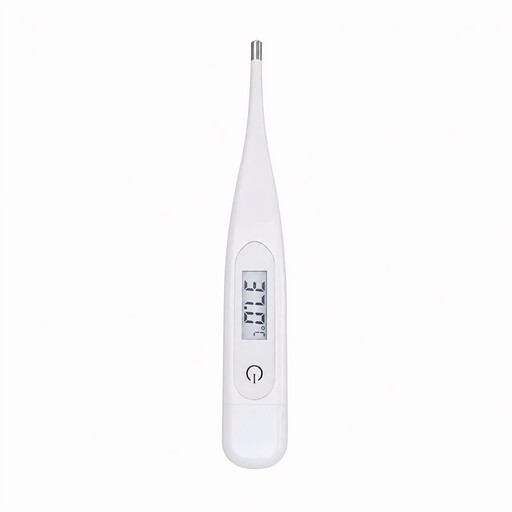
Why it suits this need: This pen-style, mercury-free fever thermometer is ideal for families looking for a simple way to measure body temperature without infrared features.
There’s no unnecessary object mode or complicated settings. The display shows the temperature to 0,1 °C, and a beep signals when the reading is complete.
Mercury-free design, °C/°F conversion and a compact size for use at home or on the go.
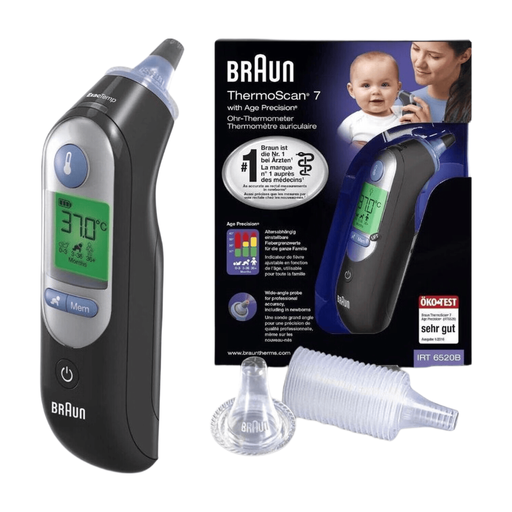
Why it suits this need: This model is designed for families who want an ear thermometer with age settings, memory and a positioning aid.
According to the product information, the ExacTemp indicator helps with positioning. The model also uses hygiene caps for each reading.
Age settings, colour-coded display, backlit screen and storage for nine readings.
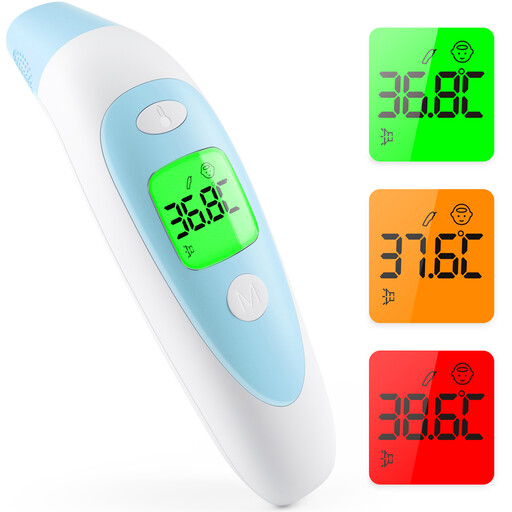
Why it suits this need: The 3-in-1 design suits families who want one device that works as a forehead thermometer, an ear thermometer and a thermometer for milk and bath water.
Silent mode prevents noise during night-time readings. The product information also lists 32 memory slots and a closable, fully enclosed measuring probe.
Ear, forehead and object modes, fever alarm, °C/°F conversion and a storage case.
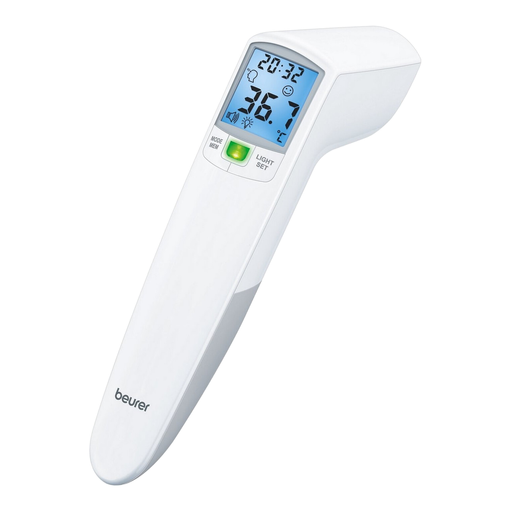
Why it suits this need: This is a non-contact thermometer for families who want to measure body temperature, surface temperature and room temperature with one device.
The product information clearly states a distance of 4–6 cm. This gives you a practical guide and helps avoid taking a reading from an arbitrary distance.
60 memory slots, colour indicator, large blue display and object mode for items such as bottles or bath water.
We’ve put together a complete, up-to-date list of products that meet these strict selection criteria and the applicable European safety requirements.
First, read the instructions to find out the recommended distance. Make sure the forehead is dry and clear of hair, and keep both the head and device still while taking a reading. If in doubt, take several readings in the same place. Don’t compare readings taken using different methods without taking the context into account.
Its lifespan depends on the battery type, storage, cleaning and how often you use it. Keep the device dry, replace the batteries according to the instructions and avoid scratching the sensor. If you use an ear thermometer, remember to factor in the supply of hygiene caps too.
As well as the purchase price, you may need to factor in batteries, disposable filters and any extra accessories. Non-contact forehead thermometers and pen-style thermometers generally don’t use disposable caps. Check what’s included with each model and which parts may need replacing later.
