
Vandaag of morgen in huis

Kwaliteit gegarandeerd

Welkomstaanbiedingen ontgrendelen: GRATIS bezorging | Tot 80% korting | Gratis 30 dagen JoyPlus-proefperiode
Download de app
A digital thermometer is a useful addition to many households, but not every model suits every situation. Parents often want to take a sleeping child’s temperature quickly, while adults may simply be looking for an easy-to-use thermometer for the medicine cabinet. The wrong choice can lead to unclear readings, unnecessary accessories or a thermometer that barely gets used after a few weeks.
An infrared thermometer can display a reading in about one second. That’s handy, but a quick reading isn’t automatically right for every situation. The distance from the forehead, sweat, hair, draughts and differences in ambient temperature can all affect the result.
So don’t just look for claims such as “instant results”. Check:
A red screen, beep or vibration makes a temperature reading easier to spot. It isn’t a diagnosis, though. Thresholds and colour codes vary between devices and may depend on age or measurement method.
A thermometer with a fever alert is mainly a useful way to flag a reading. If you’re unsure, symptoms persist or your baby is unwell, follow the instructions and contact your GP or another healthcare professional.
Some models measure forehead, ear and object temperatures. Others are designed only for forehead use or have a flexible probe for oral, underarm or rectal measurements. An object mode for milk, bath water or room temperature is not the same as a body temperature measurement.
Check that the features suit how you’ll use the thermometer at home. A multifunctional model isn’t automatically more practical if you only want to take someone’s temperature occasionally.
A forehead thermometer or contactless thermometer is handy for sleeping children and when you want to take a hygienic reading without placing a probe on the skin. An ear thermometer needs to be positioned carefully, but it can be a good choice for families with children.
A pen-style model, such as a basic fever thermometer, is usually slower but may suit people who prefer a traditional method of taking a temperature. Always check that the product is designed for the measurement site you want to use.
A display showing readings to 0.1 °C gives more detail than one that increases in half-degree steps. That doesn’t automatically mean every reading is exact. Check the stated margin of error and temperature range too.
For example, the Treesmile T11 states a margin of error of around ±0.1 °C within 37.0–39.0 °C, with a larger margin outside that range. Details like these are more useful than a general claim of “high precision”.
For families, a large display, silent mode, automatic shut-off and a memory function are useful features. A memory for 32 or 35 readings can help you look back at previous results. If you take repeated readings, make a note of the date, time and measurement site too.
Also check:
Check the product information and manual for a CE mark or other registration. A product listing may mention certification, but don’t present a brand’s claim as independently verified performance.
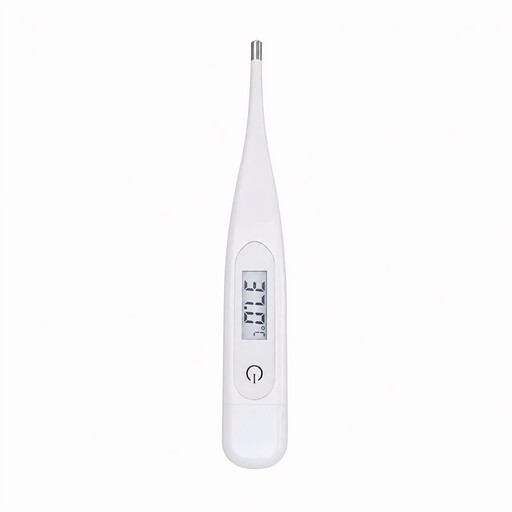
Why it suits this user: This pen-style model is straightforward and suits anyone looking for a simple thermometer for home use without multiple measurement modes.
The product information specifies a clear range of 32,0–42,9 °C, a resolution of 0,1 °C and an explicit margin of error for each temperature range.
Mercury-free design, °C/°F switch and a compact size for the medicine cabinet or your travel bag.
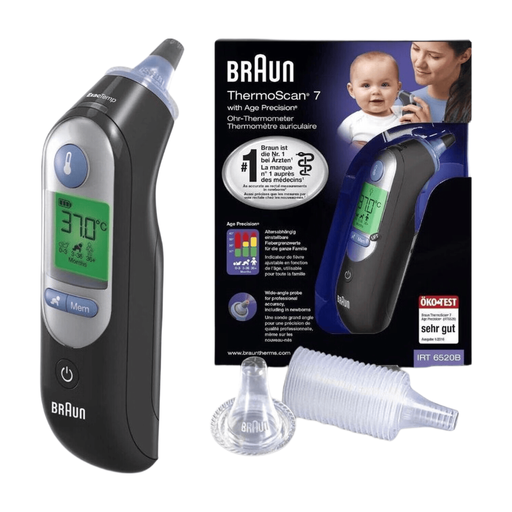
Why it suits this user: A good fit for families who are choosing an ear thermometer with age settings and positioning guidance.
According to the product description, the ExacTemp indicator helps you position the thermometer steadily. Always use a clean hygiene cap.
Age settings, colour-coded display, pre-warmed measuring tip and memory for 9 readings.
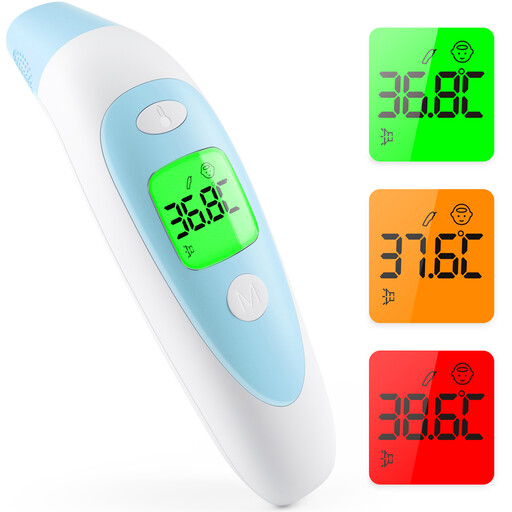
Why it suits this user: A practical choice for families who want to measure body temperature as well as the temperature of objects such as milk or bath water.
The three separate modes make it clear what the device is designed for. The product listing also mentions a silent mode and a sealed probe that can be cleaned with a cloth.
Forehead, ear and object modes, memory for 32 readings, fever alert and a choice of sound or silent operation.
We’ve put together a complete, up-to-date list of products that meet these strict selection criteria and the applicable European safety regulations.
For consistent readings, it’s important to follow the same steps each time:
Don’t use an ear or forehead thermometer in a way that isn’t described in the manual. A product for measuring body temperature is not a substitute for medical advice.
Its lifespan depends on battery use, cleaning, storage and how often you use it. Replace the batteries when the device indicates that they’re low. If the manual recommends it, remove them before storing the thermometer for a long time. A damaged sensor, unreadable display or unexplained variations in readings are all reasons to stop using the device.
A contactless thermometer can be handy for a sleeping baby, as you usually won’t need to touch them. Follow the recommended distance and measurement conditions carefully. If you get an unusual reading or are concerned about your baby’s condition, it’s important to speak to a healthcare professional.
As well as the purchase price, the main ongoing costs are batteries and any disposable covers. Forehead models that don’t use disposable covers generally have fewer consumable parts. Ear thermometers may need hygiene caps. Check what’s included in the box and which accessories you’ll need to replace later.
