
Vandaag of morgen in huis

Kwaliteit gegarandeerd

Welkomstaanbiedingen ontgrendelen: GRATIS bezorging | Tot 80% korting | Gratis 30 dagen JoyPlus-proefperiode
Download de app
A digital thermometer should be simple to use: take a reading, check the result and know what to do next. Yet models vary widely in their measuring methods, ease of use and accessories. With babies and children in particular, a restless reading can quickly lead to uncertainty.
When comparing a digital thermometer, don’t focus only on claims such as “clinically tested”, “professional” or “extra accurate”. These claims are only useful when it’s clear who is making them and under what conditions they apply. Some brands state that certain models have been tested for accuracy, but results still depend on positioning, room temperature and following the instructions.
A forehead or infrared thermometer can display a result in about a second. That’s convenient, but speed doesn’t automatically say anything about the quality of the reading. Sweat, hair, direct sunlight, a cold room or holding the thermometer at the wrong distance can all affect the result.
So check whether:
A body temperature thermometer isn’t automatically suitable for milk, food or bathwater. Some models have a separate object mode for these purposes. Use this mode only for surfaces or liquids, not as a substitute for measuring body temperature.
A model with ear, forehead and object modes can be useful for a family, but more functions also mean you need to select the right mode.
A CE mark shows that the manufacturer declares the product meets applicable European requirements. It isn’t a general guarantee that every reading will be accurate in all circumstances. Also check the manufacturer’s details, the EU responsible person, the instructions, battery requirements and cleaning guidance.
For a medical thermometer for home use, clear warnings and traceable product information matter more than a long list of marketing claims.
An ear thermometer takes a reading in the ear and needs to be positioned correctly. Some models use disposable hygiene caps. These can help with hygiene, but they do mean ongoing costs.
A forehead thermometer or contactless thermometer is handy when measuring sleeping children or when you want to avoid direct skin contact. The conditions during the reading are especially important. If needed, let the thermometer and the person being measured adjust to the same room temperature first.
A pen-style model uses a probe and should be used at a suitable measuring site, as described in the instructions. This type is often easy to operate and has a resolution of 0.1 °C, but requires more care with hygiene and positioning.
A thermometer with a fever alarm may use a sound, colour code or on-screen warning. This can make readings easier to interpret, but the alarm threshold and age settings vary by model.
A thermometer with silent mode is useful when you’re taking a baby’s temperature at night. Check whether silent mode only switches off the sound or also uses a vibration signal. A memory function that stores, for example, 9, 32, 35 or 60 readings can help you compare results, but it’s best to note the date, time and measuring method too.
Check whether the probe is easy to clean and whether the device must not be immersed in water. Also consider the battery type:
The product’s lifespan varies depending on use and storage. Keep the thermometer dry, avoid scratching the sensor and remove the batteries during long periods of storage if the instructions recommend doing so.
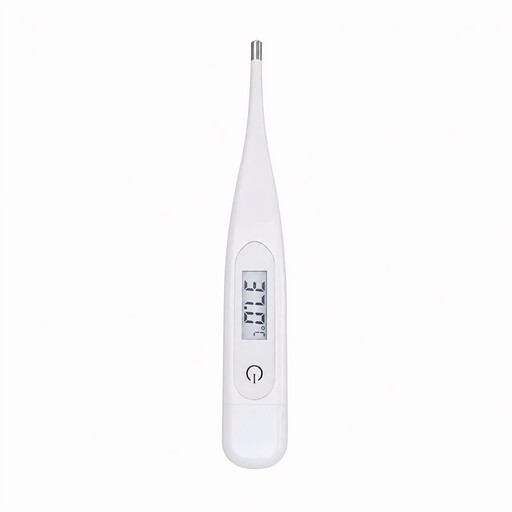
Why it suits this profile: This pen-style model is a good choice if you’re looking for a simple fever thermometer for your medicine cabinet, without extra measuring modes.
The product information states a range of 32.0 to 42.9 °C, a clear measurement resolution and an audible signal when the reading is complete.
Mercury-free pen-style design, readings to 0.1 °C and a switch between °C and °F.
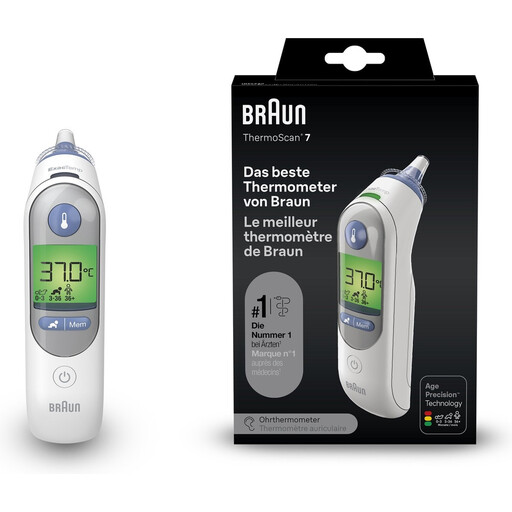
Why it suits this profile: An option for families who want an ear thermometer with age settings and hygiene caps.
The stated age settings and ExacTemp positioning aid make it clearer how to take a reading. Use a clean hygiene cap for every reading.
Ear measurement, colour-coded display, pre-warmed tip and memory for 9 readings.
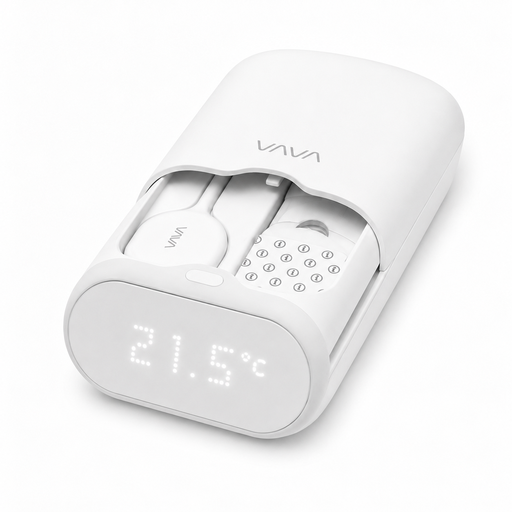
Why it suits this profile: This model is designed for carers who want to monitor a baby for longer without taking separate readings each time.
The separate display and remote alerts mean you’re less likely to need to wake a sleeping baby each time. Check the skin regularly and follow the instructions for the sensor patch.
Up to 24 hours of sensor use, a range of up to 15 metres, and sound and light alerts without an app.
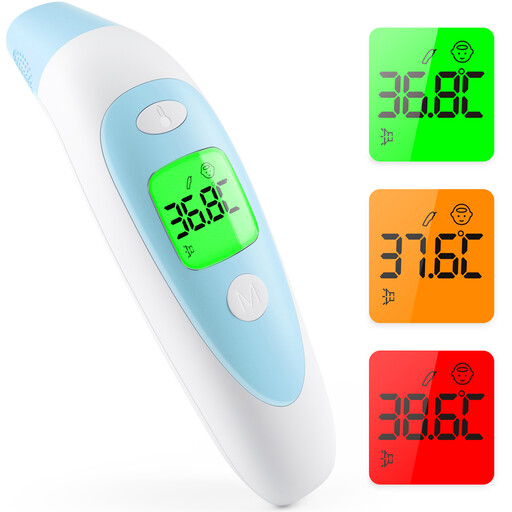
Why it suits this profile: The ear, forehead and object modes make this a good fit for households that want one device for family temperature checks and, for example, measuring milk or bathwater.
The separate modes help prevent an object reading from being used accidentally as a body temperature reading. The product information also mentions a silent mode and a sealed probe for easier cleaning.
32 memory slots, °C/°F selection, a fever alarm and, according to the product description, measurements of body, milk, food and ambient temperature.
We’ve put together a full, up-to-date list of products that meet these strict selection criteria and the applicable European safety requirements.
Read the instructions first and use the correct measuring mode. Make sure the forehead is clean and dry, and hold the thermometer at the recommended distance. If you’re unsure, you can take several readings in the same place. A thermometer isn’t a substitute for medical advice; if you’re concerned about a baby’s condition, contact your GP or another healthcare professional.
That depends on battery use, storage, cleaning and how easily the sensor can be damaged. The display may still work even if a damaged or dirty sensor is giving less reliable results. Keep the device dry, clean it as directed and check regularly for leaking batteries.
Not always. A contactless thermometer usually uses standard AAA batteries and doesn’t need disposable probe covers. An ear thermometer, on the other hand, may use extra hygiene caps. So compare not only the purchase price, but also the batteries, accessories and how you plan to use the device at home.
