
Vandaag of morgen in huis

Kwaliteit gegarandeerd

Welkomstaanbiedingen ontgrendelen: GRATIS bezorging | Tot 80% korting | Gratis 30 dagen JoyPlus-proefperiode
Download de app
A digital thermometer should work quickly, be easy to read and suit the way you take measurements at home. However, not every model is suitable for every situation. A forehead thermometer is useful when measuring a sleeping baby, while a traditional fever thermometer with a flexible tip uses a different measuring method.
A manufacturer may claim a one-second reading, but the actual result also depends on positioning, ambient temperature and the instructions for use. With an infrared thermometer, sweat, hair, direct sunlight or an incorrect distance can affect the reading.
So do not just check the claimed speed. Also consider:
A red screen, audible alert or vibration function is a practical warning. It is not a medical diagnosis. The threshold for an elevated temperature can also vary depending on age and measuring method. According to information provided by Braun, Age Precision technology takes age settings into account; you should regard this as an aid when interpreting the reading, not as a replacement for medical advice.
An ear thermometer may require disposable lens filters. A contactless thermometer usually does not, but its sensor still needs to be cleaned regularly. With a traditional baby thermometer, it is important to clean the flexible tip after use according to the instructions.
When comparing models, look out for:
A thermometer for children and adults can offer different measuring locations:
A baby thermometer should above all suit the child’s age, the chosen measuring location and the child’s tolerance. If you are unsure about a reading or someone feels unwell, contact your GP or another healthcare professional.
A fast temperature reading is useful at night, but speed alone does not tell you everything about how practical a thermometer is. A memory function can help you review previous readings. Check how many measurements can be stored: in the models available, this ranges from a few readings to dozens.
A thermometer with a fever alert may use colours, beeps, a vibration function or a silent mode. Silent mode is useful when measuring a sleeping child. Check whether the alert can be adjusted and whether the colour coding is clearly explained in the instructions.
Read the instructions before taking your first measurement. Allow a contactless thermometer to acclimatise if it has been brought in from a cold bag or a warm car. When taking a forehead reading, the forehead often needs to be free from sweat, hair, hats and warming or cooling materials.
Store the device in a dry place and out of the reach of young children. Batteries must not be disposed of with household waste. A CE marking may indicate that a product is being offered on the European market as a medical device, but also check the manufacturer, the responsible party and the supplied user information.
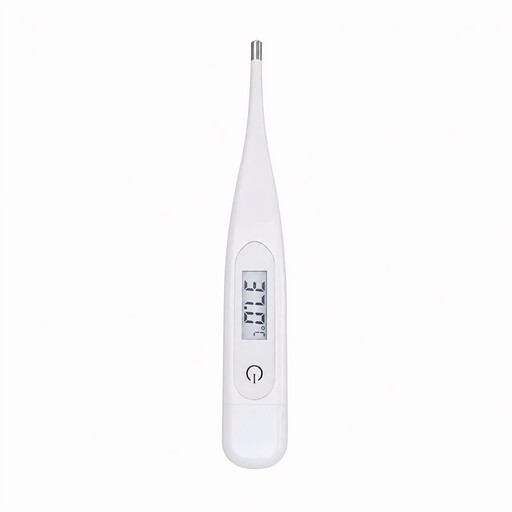
Why it suits this profile: A straightforward pen-shaped fever thermometer for families mainly looking for a compact medical thermometer for use at home.
The product description states a resolution of 0.1 °C, an audible signal and a mercury-free design. No disposable filters are required.
Readings to 0.1 °C; switches between °C and °F; compact size for use at home and on the go.
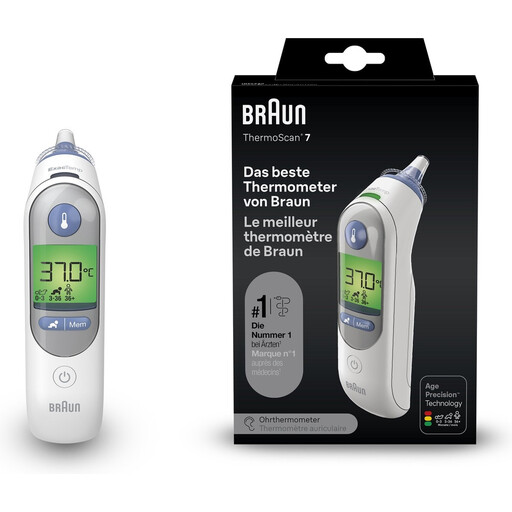
Why it suits this profile: For households wanting an ear thermometer with age settings, positioning guidance and accessories.
The product description mentions age settings, an ExacTemp indicator for positioning and hygiene caps included in the box. This makes use and maintenance more clearly defined.
Age groups from 0–3 months to adults; illuminated display; memory for 9 readings; 21 lens filters included.
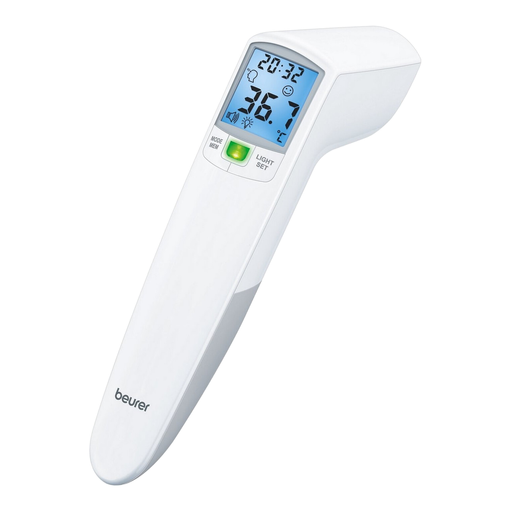
Why it suits this profile: A contactless thermometer for families who regularly want to measure body, object and ambient temperatures.
The product information states a measuring distance of 4–6 cm and an indicator for the correct distance. This helps ensure consistent use, provided you follow the instructions.
60 memory positions; measures body, surface and ambient temperature; colour coding; storage bag and batteries included.
We have put together a complete, up-to-date list of products that fully meet these strict selection criteria and the applicable European safety regulations.
There is no fixed replacement date for every digital thermometer. Replace the device when the display, sensor, casing or readings no longer seem reliable. Also check the battery regularly and follow the maintenance instructions. If a thermometer is dropped, gets wet or becomes damaged, do not continue using it without checking that it works properly.
A contactless forehead thermometer can be practical for a baby because you do not need to touch the child. The result still depends on the distance, surroundings and correct positioning. If in doubt, take another reading according to the instructions and contact a healthcare professional if you have concerns about the child’s health.
In addition to the purchase price, batteries, lens filters and any accessories may add to the cost. A pen-shaped fever thermometer generally uses a small battery and does not require lens filters. An ear thermometer, on the other hand, may need disposable caps. So compare the contents of the packaging and the recurring costs before you buy.
