
Vandaag of morgen in huis

Kwaliteit gegarandeerd

Welkomstaanbiedingen ontgrendelen: GRATIS bezorging | Tot 80% korting | Gratis 30 dagen JoyPlus-proefperiode
Download de app
A digital thermometer is a staple in many households, but the differences between models are often greater than the packaging suggests. A contactless forehead thermometer works differently from a traditional fever thermometer, while an ear thermometer depends on being positioned correctly.
If you only focus on phrases such as “super-fast” or “clinical accuracy”, you could end up buying a device that is difficult to use in practice. Below, we cover the main pitfalls, specifications and product choices for measuring body temperature in babies, children and adults.
A manufacturer may quote a measurement time of one second, but the result also depends on the measurement method, surroundings and positioning. With an infrared thermometer, sweat, hair, draughts or direct sunlight can affect the reading. With a traditional thermometer, the measurement site — armpit, mouth or rectum — can produce different results.
So do not just check the speed. Also look at:
A thermometer for babies, children and adults should be easy to position correctly. An ear thermometer can work quickly, but it requires the right angle and sometimes disposable covers. A forehead thermometer is hygienic and convenient for use with a sleeping child, but it requires a clean, dry forehead and a consistent distance.
A model with several modes may seem convenient, but check that the instructions clearly explain when to use ear, forehead or object mode. Object mode is intended for items such as milk, bathwater or a surface, and is not the same as a body temperature measurement.
Green, yellow and red screen colours make a result easy to read at a glance. However, they do not replace an assessment of the situation. According to Braun’s own research, Age Precision technology is designed to link temperature interpretation to age. This is product information from the brand, not a general medical rule.
Always look at the measured value, the selected age setting and the instructions. If you are unsure or symptoms persist, it is advisable to contact your GP or another healthcare professional.
A fever thermometer with a flexible tip measures temperature in the armpit, mouth or rectum. This type is relatively straightforward and often suitable as a thermometer for home use. Pay attention to hygiene: clean the tip according to the instructions and, where possible, use a separate thermometer for each measurement site.
A contactless thermometer or forehead thermometer uses infrared sensors. This avoids contact and can be convenient when measuring babies and sleeping children. Check the measurement distance and allow the thermometer and the person to acclimatise to the same room temperature as instructed.
An ear thermometer measures infrared radiation inside the ear. A wide, pre-warmed tip and a positioning signal can make it easier to use. Accurate positioning is particularly important for young children. Use any hygiene covers as instructed.
A display with 0.1 °C resolution shows temperature differences down to one tenth of a degree, but that does not automatically mean that the actual measurement error is only 0.1 °C. Look in the specifications for the stated margin of error, measurement range and the conditions under which those values apply.
A CE marking indicates conformity with applicable European product regulations; it is not a ranking and, on its own, does not prove that a thermometer will give the same result for every user. Also check the manufacturer, EU responsible person, instructions and warnings.
For families, a large display, memory function, silent mode and automatic switch-off are practical features. Silent mode prevents noise during a night-time measurement. A memory function helps you find previous readings, but when measuring repeatedly, also record the date, time and measurement site.
Also look out for:
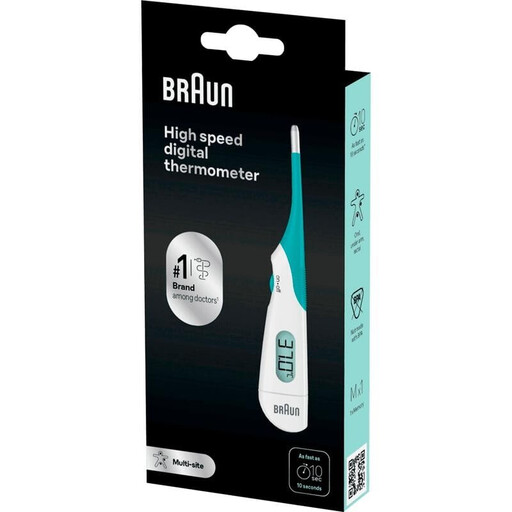
Why it suits this profile: This pen-style thermometer has a flexible tip, memory for the last reading and, according to the product description, is suitable for measurements in the mouth, armpit or rectum.
The measurement method is clearly specified and no distance sensor is required. The stated measurement time of within 8 seconds is, according to Braun, an internal test result; the manufacturer notes that results may vary.
Flexible tip, three measurement sites, memory function, battery and storage pouch included.
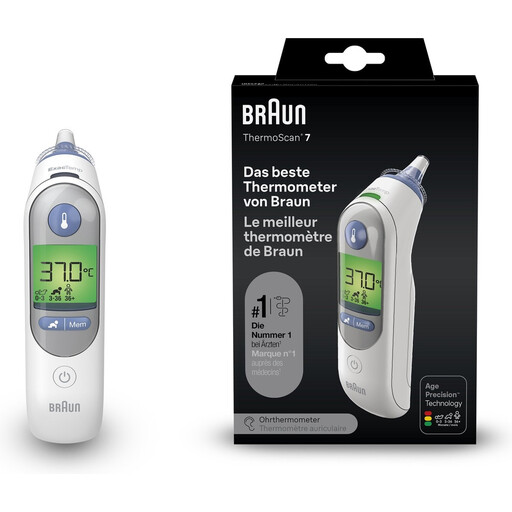
Why it suits this profile: A family that takes regular readings gets an ear thermometer with age settings, an illuminated display, positioning guidance and storage for nine readings.
According to the product description, the ExacTemp function provides visual and audible confirmation when positioning the thermometer. A clean hygiene cover is required for every measurement, so ongoing accessory costs are an important factor to consider.
Age settings, pre-warmed tip, 21 filters included, protective case and memory for nine readings.
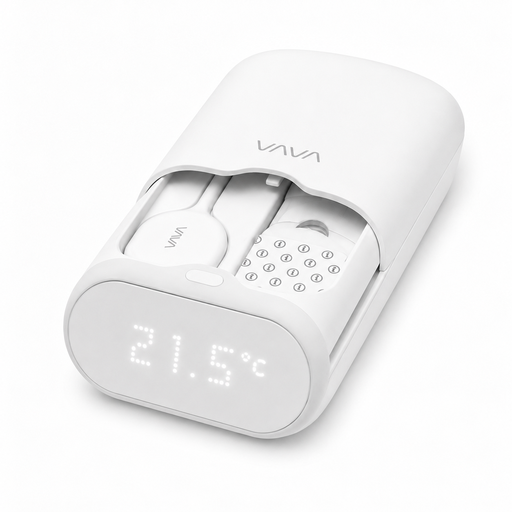
Why it suits this profile: This system is designed for continuous monitoring of a baby, with a separate LED display, a wireless range of up to 15 metres and audible and visual alerts.
This product is not an ordinary quick-scan thermometer but a monitoring system. The safety information warns that you must not rely solely on readings or alarms and should check the skin regularly.
Up to 24 hours of sensor use, separate receiver, remote alerts and no app required according to the product description.
We have put together a complete, up-to-date list of products that fully meet these strict selection criteria and the applicable European safety regulations.
A reading is a useful tool for monitoring changes. If you get an unusual result, you can repeat the measurement according to the instructions. Also consider the person’s condition and contact a healthcare professional if you have any concerns.
This depends on battery use, storage, cleaning and how well the sensor functions. Store the device somewhere dry and dust-free, avoid dropping it and remove the batteries if the model will not be used for an extended period. Replace a thermometer if the display, casing or sensor is damaged, or if readings vary significantly without an obvious reason.
A forehead thermometer can be practical for use with a sleeping baby because contact is often unnecessary. However, follow the manufacturer’s age restrictions, measurement distance and positioning instructions. The product information for some models also states situations in which additional measurements or consultation with a doctor may be needed. Never use a thermometer as a substitute for medical assessment.
With a contactless thermometer, you will generally only need batteries. An ear thermometer may involve additional costs for disposable covers. Check what is included in the packaging and whether accessories are available to buy later. With intensive use, a model without disposable covers may be more practical, provided the instructions allow it.
