
Vandaag of morgen in huis

Kwaliteit gegarandeerd

Welkomstaanbiedingen ontgrendelen: GRATIS bezorging | Tot 80% korting | Gratis 30 dagen JoyPlus-proefperiode
Download de app
A digital thermometer might seem like a straightforward purchase – until you have to choose between a forehead thermometer, ear thermometer, non-contact thermometer or a classic model with a flexible tip. Terms like “infrared”, “fever alarm” and “clinical accuracy” don’t tell you enough on their own. The measurement method, conditions of use and instructions all play a part in whether a reading is actually useful.
For families, parents with babies and adults, the practical fit is what really matters. Do you want to take a temperature at night without waking anyone up? Then a non-contact infrared thermometer or an ear thermometer makes sense. Are you looking for one device that can measure body temperature, milk and bath water? Then you’ll need a model with an object mode.
A display that shows a value within one second is convenient. But it doesn’t automatically mean every reading is comparable in all conditions. With an infrared thermometer, distance, sweat, hair, direct sunlight and temperature differences in the room can all have an effect.
So check the following:
A red screen, audible signal or vibration function can help you quickly recognise a reading. However, the threshold values and colour coding vary from device to device and sometimes depending on the age setting you’ve selected. So treat a thermometer with a fever alarm as a reading aid, not a substitute for medical advice.
According to the product descriptions of some brands, such as Braun and Beurer, age-related or colour-coded guidance is used. Always check the instruction manual and assess any reading alongside any symptoms. If you’re worried about a baby, child or adult, contact your GP.
A thermometer designed for body temperature isn’t automatically suitable for food, drink or bath water. For that, the product must explicitly state an object or surface mode. A kitchen thermometer also works differently from a fever thermometer and isn’t intended for body temperature.
A forehead thermometer usually measures non‑contact using infrared. This is practical with sleeping children and can be hygienic when the device is cleaned properly. An ear thermometer measures inside the ear and requires correct positioning. Some models use disposable lens caps; these increase ongoing costs and need to be replaced after each use.
A pen‑style model with a probe is often simpler in design. This type can be suitable for oral, armpit or rectal measurement, depending on the instructions. Pay attention to the recommended cleaning method and use per person.
A memory function is useful when you want to compare several readings. Don’t just look at whether it has one – check how many readings it stores. The Beurer FT100, for example, offers 60 memory slots, while other models store 9, 32 or 35 readings.
For evening use, an illuminated display, silent mode and vibration function are practical. A large display can also help older users or those with poor eyesight.
Check what type of battery is needed and whether it’s included. Also look out for automatic shut‑off, a protective cap and how the sensor should be cleaned. An infrared model should generally not be submerged. With an ear thermometer, hygiene caps may be required.
A CE mark or mention of medical certification is relevant product information, but also check the manufacturer, the responsible party in Europe, the instruction manual and the warranty terms. Keep batteries and small accessories out of reach of children.
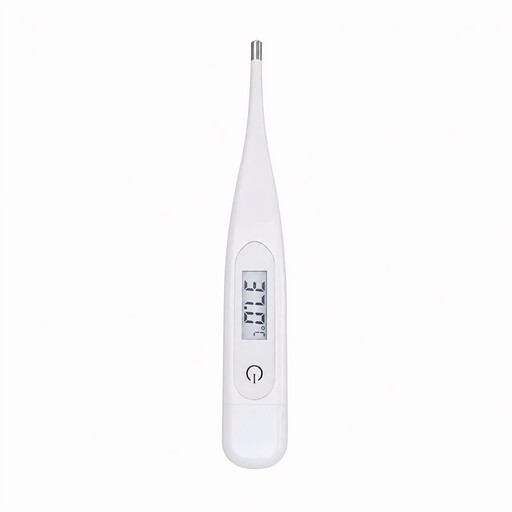
Why it fits this profile: This pen‑style model offers simple operation, a compact size and a display with 0.1 °C increments. According to the product description, it’s mercury‑free and suitable for whole‑family home use.
The product description doesn’t mention any unnecessary object mode or complicated app. This keeps the controls straightforward for anyone who just wants to measure body temperature.
Mercury‑free design, switchable between °C and °F, and a compact pen shape.
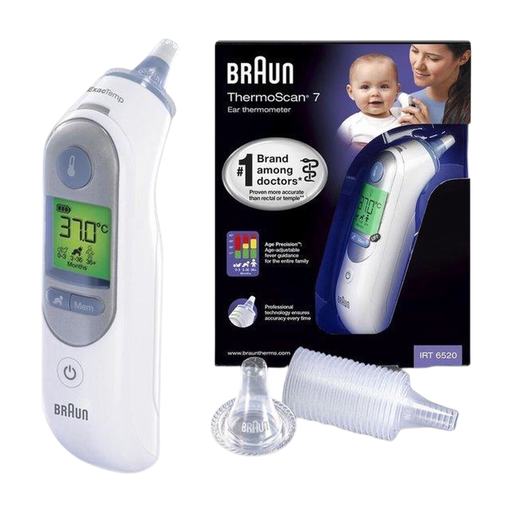
Why it fits this profile: According to the product information, this ear thermometer features Age Precision, a pre‑warmed tip and ExacTemp positioning assistance. Batteries, a protective case and lens caps are included.
The positioning indicator helps you place the device correctly. Bear in mind the ongoing cost of replacement hygiene caps.
Age settings, colour‑coded display, memory for previous readings and a pre‑warmed measurement tip.
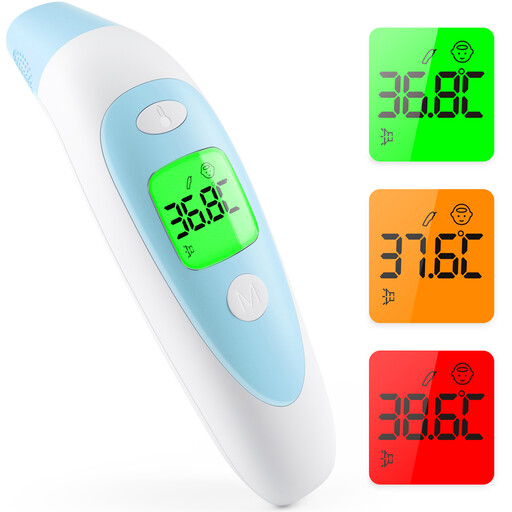
Why it fits this profile: According to the product description, this 3‑in‑1 model has a forehead, ear and object mode. This means it can be used for body temperature, milk, food and surfaces.
The different measurement modes are clearly stated. Just make sure you select the correct mode before use, because an object measurement is not the same as a body measurement.
Stores 32 readings, silent mode, fever alarm and switchable between °C and °F.
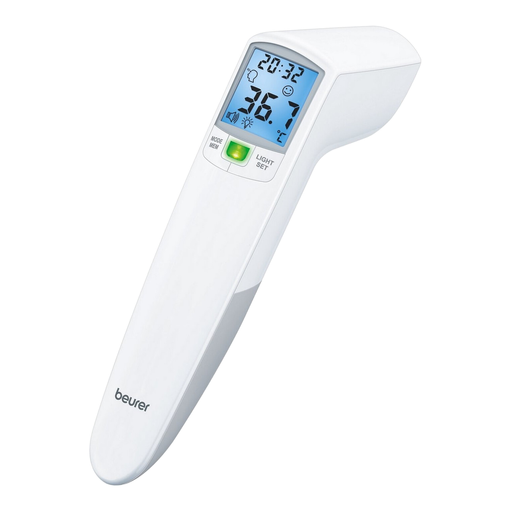
Why it fits this profile: According to the product information, the Beurer FT100 is a non‑contact thermometer for the forehead, surfaces and ambient temperature. Automatic measurement starts at a stated distance of 4 to 6 cm.
The recommended measuring distance is clearly stated. This helps you avoid holding the thermometer too close to or too far from the forehead.
60 memory slots, colour indication, illuminated display and measurement of object and ambient temperature.
We’ve put together a full, up‑to‑date list of products that fully meet these strict selection criteria and current European safety regulations.
Make sure the forehead is clean and dry, and follow the distance stated in the instruction manual. Keep the device and the head still during the measurement. Avoid taking a reading immediately after exercise, a hot shower or being in direct sunlight. If in doubt, you can take several readings at the same spot, following the manufacturer’s instructions.
The lifespan depends on battery use, storage, cleaning and the quality of the sensor. Store the device in a dry place, avoid dropping it and replace the batteries as directed. Spare batteries, lens caps or a protective case can add to ongoing costs. A model with automatic shut‑off can help reduce battery consumption.
Only if the product description explicitly mentions an object or surface mode. A kitchen thermometer such as the WMF Profi Plus or the Nedis SmartLife Meat Thermometer is designed for food and drinks, not for body temperature. If you need it for both purposes, choose a model that clearly supports the relevant measurement modes and clean the sensor according to the instruction manual.
