
Vandaag of morgen in huis

Kwaliteit gegarandeerd

Welkomstaanbiedingen ontgrendelen: GRATIS bezorging | Tot 80% korting | Gratis 30 dagen JoyPlus-proefperiode
Download de app
A digital thermometer may seem like a straightforward purchase, but the main differences between models lie in the measurement method, operating speed and hygiene requirements. Choosing the wrong model can be inconvenient in practice: a forehead thermometer that only works accurately at the correct distance, an ear thermometer that requires disposable probe covers, or a kitchen thermometer that is not suitable for measuring body temperature.
This guide helps you choose a digital body thermometer, baby thermometer, fever thermometer or kitchen thermometer based on verifiable product specifications.
Brands sometimes claim a measurement time of one second. According to the product descriptions of some models, actual speed can vary depending on the person, measurement method, distance and positioning. The Braun PRT1000CE, for example, states that readings are available within eight seconds, while the manufacturer’s internal results ranged from 8.4 to 14.1 seconds.
So do not look only for “fast”. Also check:
A forehead thermometer or contactless thermometer is convenient when measuring sleeping babies and young children. However, direct sunlight, a damp forehead, cold outdoor air or an incorrect measurement distance can affect the reading. The Medisana TM 750, for example, states that the forehead must be clean and dry and that measurements in direct sunlight should be avoided.
An ear thermometer requires a different technique. The Braun ThermoScan 7 uses a positioning signal and a pre-warmed tip. With this type of thermometer, clean hygiene covers are essential.
A medical thermometer for measuring body temperature is not the same as a meat thermometer. An infrared thermometer with a range of up to 800 °C is designed for surfaces, ovens or barbecues and is explicitly not intended for use on people. Do not use a kitchen thermometer as a fever thermometer unless the manufacturer clearly states that it is suitable for this purpose.
First, determine what you need the thermometer for:
A model with multiple modes can be useful, but check that each mode is clearly described. More features do not automatically mean that the device is equally suitable for every application.
For body temperature, you will often see a display resolution of 0.1 °C. This means that the screen can show, for example, 37.2 °C; it does not guarantee that every reading will correspond exactly to 0.1 °C when compared with a medical reference measurement.
For food, the measurement range is particularly relevant. According to its product specifications, the Melissa Meat Thermometer measures from 0 to 250 °C. The Nedis SmartLife Meat Thermometer has two probes, a range of 0 to 300 °C and a timer function. For pizza ovens, grills and cold surfaces, a Tilswall model with a stated range of -50 to 800 °C may be more practical. According to its product name and description, this model is not intended for human use.
Check whether the probe can be removed and how the device should be cleaned. Many thermometers are not waterproof. The WMF Profi Plus, for example, must be cleaned by hand and is not dishwasher-safe. With ear thermometers, disposable covers can create additional running costs.
Also pay attention to batteries, storage and small components. Keep batteries, probes and covers out of reach of young children, and always follow the instructions.
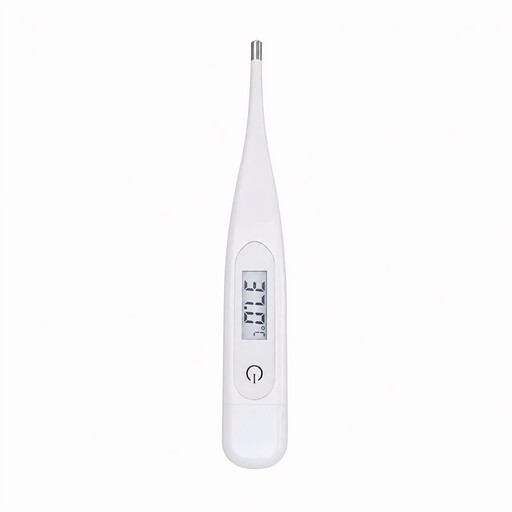
Why it suits this profile: This pen-style model is designed for straightforward body temperature measurements for the whole family, without additional modes or complicated controls.
The 32.0 to 42.9 °C measurement range is aligned with body temperature. It is not a food thermometer, keeping its intended use clear.
Readings in 0.1 °C increments, °C/°F switching, audible signal and mercury-free design.
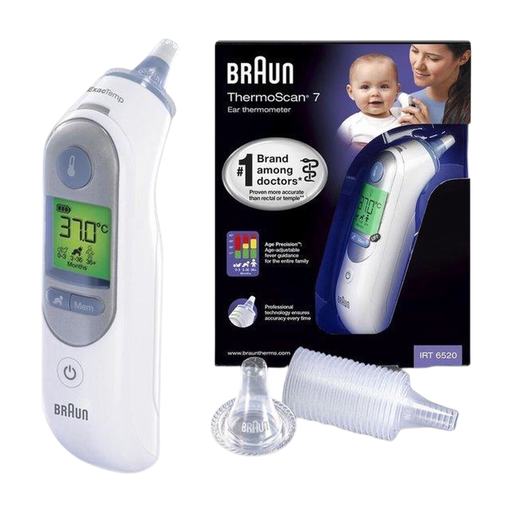
Why it suits this profile: Suitable for families looking for an ear thermometer with age settings, memory and positioning guidance.
The ExacTemp indicator helps with positioning. A new, clean hygiene cover is required for each measurement, making these recurring costs clear in advance.
Age settings, pre-warmed tip, nine memory slots and 21 hygiene covers included.
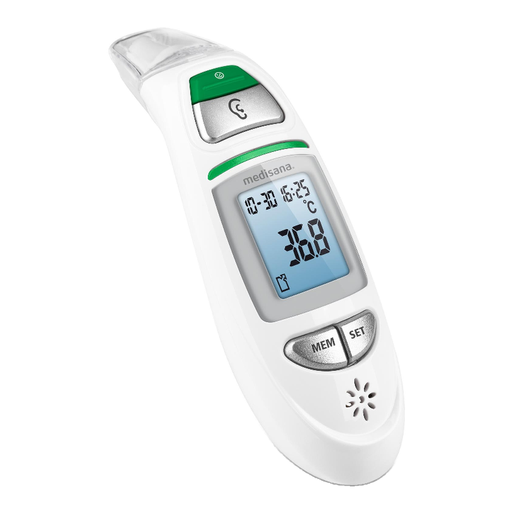
Why it suits this profile: A contactless forehead thermometer is practical when you want to disturb a sleeping child as little as possible.
The instructions specify the correct distance, a dry forehead and the need to avoid direct sunlight. This makes the operating conditions clear.
Contactless infrared measurement, memory function and a display with resolution to one decimal place.
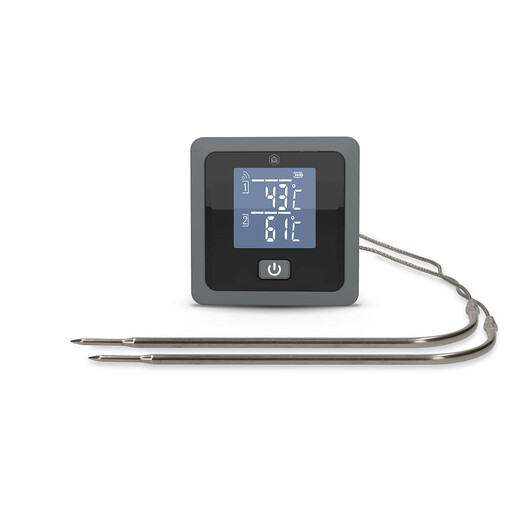
Why it suits this profile: Ideal for home cooks, barbecue enthusiasts and anyone monitoring multiple preparations at the same time.
The two probes measure simultaneously and the app can send notifications. However, check in advance whether you want to use Bluetooth and the Nedis SmartLife app.
Measurement range from 0 to 300 °C, two probes, 1.20-metre cable, timer and Bluetooth notifications.
We have compiled a complete, up-to-date list of products that fully meet these strict selection criteria and the applicable European safety regulations.
Its lifespan depends on usage, battery type, storage and maintenance. Clean the sensor according to the instructions, keep moisture away and do not drop the device. With a kitchen thermometer, the probe is particularly vulnerable. Replace the batteries when the display becomes dimmer or readings appear inconsistent.
In addition to the purchase price, factor in batteries, hygiene covers and, where applicable, replacement probes. A pen-style model with a single button cell generally has different running costs from an ear thermometer with disposable covers. Also check whether batteries are included; some kitchen models do not include AAA batteries.
Read the instructions first and, if required, allow the device to reach room temperature. Maintain the specified distance, measure on a clean and dry forehead, and avoid direct sunlight or draughts. If a reading seems unusual, take another measurement where the instructions permit this. A thermometer provides a reading to support your assessment and does not replace professional medical advice.
