
Vandaag of morgen in huis

Kwaliteit gegarandeerd

Welkomstaanbiedingen ontgrendelen: GRATIS bezorging | Tot 80% korting | Gratis 30 dagen JoyPlus-proefperiode
Download de app
A digital thermometer may seem like a simple purchase, until you have to choose between a fever thermometer, ear thermometer, forehead thermometer or infrared thermometer. A low price says little about ease of use, and a long list of features does not automatically make a device suitable for your family.
The key question is therefore not which thermometer has the most features, but which measuring method suits the user and the situation. You should also consider hygiene, the instructions for use and the conditions in which you take the measurement.
Not every infrared thermometer is designed for people. A model with a range of, for example, -50 °C to 800 °C is useful for cooking, barbecues or technical applications, but is not suitable as a fever thermometer. Always check that the product is explicitly intended for body temperature.
A thermometer for food, surfaces or room temperature is not an alternative to a thermometer for babies, children and adults.
The reading can be affected by sweat, hair, a cold environment, recent exercise, eating or drinking. With a non-contact thermometer, the distance from the forehead also matters. An ear thermometer must be positioned correctly, while a pen-style body thermometer should be used according to the instructions.
An accurate thermometer therefore requires not only good sensors, but also consistent use. If in doubt, repeat the measurement according to the manufacturer's instructions.
A fever alert, colour display, memory function and silent mode can be useful. However, they are less important if the controls are unclear, the batteries run out quickly or the measuring point is not suitable for the user.
You should also consider marketing claims. According to a brand's own research, certain accuracy or usage claims may apply under specific conditions. Do not automatically treat this information as a guarantee for every home situation.
An ear thermometer measures temperature in the ear and is particularly practical when you need a quick reading. Correct positioning is important for young children. According to the product description, some Braun models use Age Precision, which takes the selected age group into account when displaying the colour indicator. This can make the reading easier, but always follow the instructions for use.
A forehead thermometer or non-contact thermometer is useful when you do not want to touch someone, for example while they are asleep. The conditions surrounding the measurement are especially important in this case. The forehead should be clean and dry, and the device must be held at the prescribed distance.
A pen-style digital thermometer is usually simpler and often has fewer settings. This can be a practical choice for a medicine cabinet or when travelling.
Look at:
A resolution of 0.1 °C means that the display shows values in these increments. It does not automatically mean that every measurement is taken with a maximum margin of error of 0.1 °C. Therefore, check the technical specifications and the instructions.
Disposable covers or lens filters are relevant for an ear thermometer. Follow the product instructions and use a clean cover for each measurement when required. The advantage of non-contact models is that no direct skin contact is needed, but the sensor must still be kept clean.
Also check the recommended cleaning method. Many models must not be immersed in water. An alcohol wipe or soft cloth may be suitable, but follow the manufacturer's instructions.
A CE marking shows that the manufacturer declares that the product complies with applicable European product requirements. It is not a general guarantee that a thermometer will produce the same reading in all circumstances. Also check whether the product is described as a medical device, who the manufacturer or European responsible person is, and whether instructions are available in Dutch.
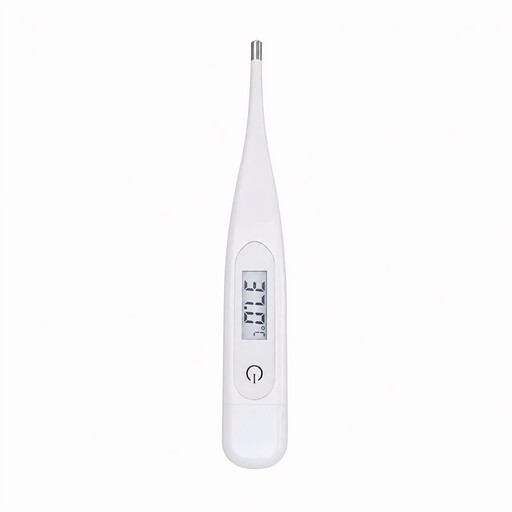
Why it suits this profile: This pen-style fever thermometer is compact, runs on an LR41 battery and is designed for simple use by the whole family.
The product description states a clear body-temperature measuring range, a display in 0.1 °C increments and a mercury-free design. There are no unnecessary modes to make operation more complicated.
Pen-style design, °C/°F switch, audible alert and a stated margin of error across different temperature ranges.
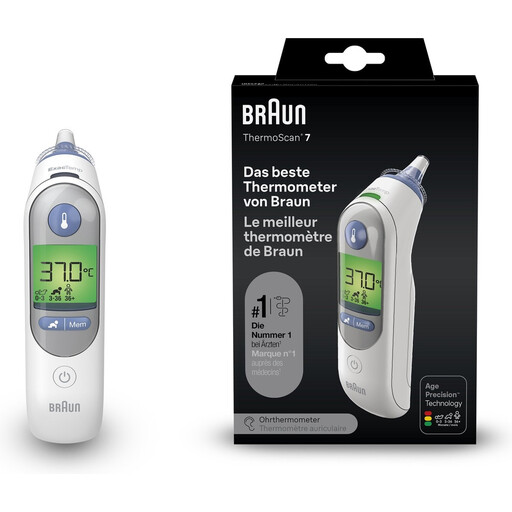
Why it suits this profile: This model is designed for families who want an ear thermometer with age settings, memory and positioning support.
The product description mentions a pre-warmed tip, ExacTemp positioning guidance and hygiene covers. This clearly takes positioning and hygienic use into account.
Age groups of 0–3 months, 3–36 months and over 36 months; colour-coded display; memory for 9 readings.
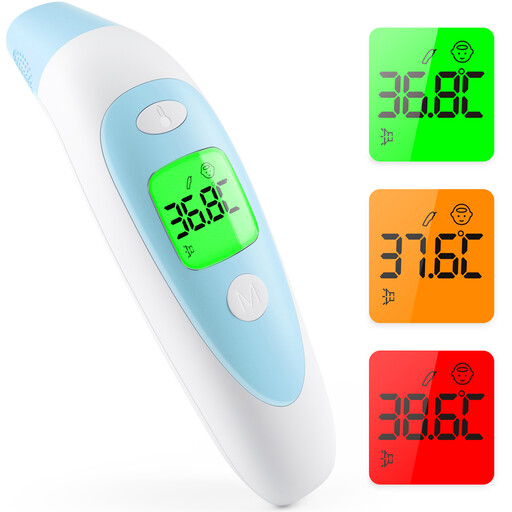
Why it suits this profile: The 3-in-1 design is suitable for users who want to measure not only body temperature, but also objects such as milk, food or a room.
The different modes are clearly labelled: ear, forehead and objects. However, check the instructions for each mode, as the measuring conditions may differ.
32 memory slots, colour indicator, fever alert according to the product description and a silent mode for use at night.
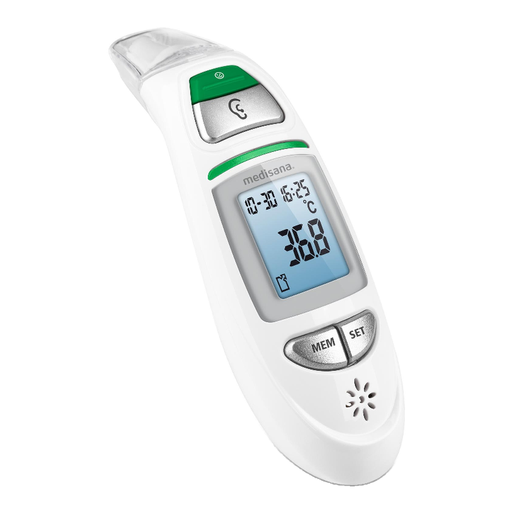
Why it suits this profile: This non-contact thermometer is practical for families who want to take quick measurements without skin contact and review previous readings.
The product information clearly states that the model is intended for forehead measurements and not internal measurements. It also warns against direct sunlight and liquids.
Non-contact infrared measurement, memory function, digital display to one decimal place and suitability for babies, children and adults according to the product description.
We have put together a complete, up-to-date list of products that fully meet these strict selection criteria and the applicable European safety requirements.
A thermometer provides information to support home monitoring. It does not replace a medical assessment. If you are concerned about a temperature or other symptoms, contact your GP or another healthcare professional.
This depends on the battery type, storage, cleaning and frequency of use. A simple pen thermometer can last a long time when stored in a dry, clean place. For models with disposable covers, the covers are consumables. Replace the batteries as soon as the device indicates that they are low or when readings appear irregular.
In addition to the purchase price, batteries, hygiene covers and any protective sleeves can affect the running costs. A non-contact forehead thermometer generally does not require a disposable cover, while some ear thermometers require a clean lens filter for each measurement. Therefore, check the contents of the packaging and the price of accessories.
An ear thermometer can provide a quick reading, but requires precise positioning. A forehead thermometer is non-contact and useful for children who are asleep, but is more sensitive to distance, sweat and ambient conditions. Choose the method you can apply consistently according to the instructions.
