
Vandaag of morgen in huis

Kwaliteit gegarandeerd

Welkomstaanbiedingen ontgrendelen: GRATIS bezorging | Tot 80% korting | Gratis 30 dagen JoyPlus-proefperiode
Download de app
A digital thermometer should be simple to use: take a reading, check it and clean the device. But models can vary considerably in how they measure, how easy they are to use and what accessories they include. A non-contact forehead thermometer works differently from an ear thermometer or pen-style model. Features such as a fever alert, silent mode and memory are not equally useful for every household.
So don’t focus only on a low price or words such as “medical” and “clinical”. Check the specifications and instructions, and think about how you plan to use the thermometer.
An infrared thermometer may display a reading in around one second, according to the product description. That’s useful when you’re taking a reading from a sleeping baby or a restless child, but the result can also depend on the distance, where you take the reading and the ambient temperature. Sweat, hair, draughts or direct sunlight can affect readings from a forehead thermometer.
A quick reading is therefore mainly about convenience. Always follow the manufacturer’s instructions, and if you’re unsure, take another reading in the same way.
A red screen or audible alert means the set threshold has been reached. It is not a diagnosis. Thresholds can vary depending on age, where you take the reading and the device. Some brands state in their product information that colour codes are intended to help interpret the reading, not replace medical advice.
So consider both the temperature and how the person is feeling. If you’re concerned about a baby, child or older person, or symptoms persist, contact a doctor.
A digital thermometer with an object mode can also measure milk, bath water, food or room temperature. That doesn’t automatically mean every mode is suitable for taking a body temperature. Check that you’re using the correct setting, and remember that measuring a surface is different from taking a body temperature.
Don’t buy a toy as a substitute for a proper thermometer, either. A toy doctor’s kit with a toy thermometer is for role play, not for measuring body temperature.
Pay particular attention to age settings for babies and young children. A thermometer with age-specific colour indicators can make readings easier to interpret, but always follow the instructions.
A display with 0.1 °C resolution shows temperature differences to one decimal place. This is not the same as an accuracy of 0.1 °C. Check the stated accuracy for each measuring range. For example, the Treesmile T11 lists an error margin that varies depending on the temperature range.
A CE mark may indicate that, according to the manufacturer, a product meets relevant European requirements. Also check that there is clear information about the manufacturer, the responsible party in the EU, conditions of use and cleaning.
Useful features for everyday use include:
An ear thermometer that uses disposable caps requires you to keep a supply of accessories. A closed probe or non-contact sensor is often easier to clean, but you should usually avoid immersing the device in water either way.
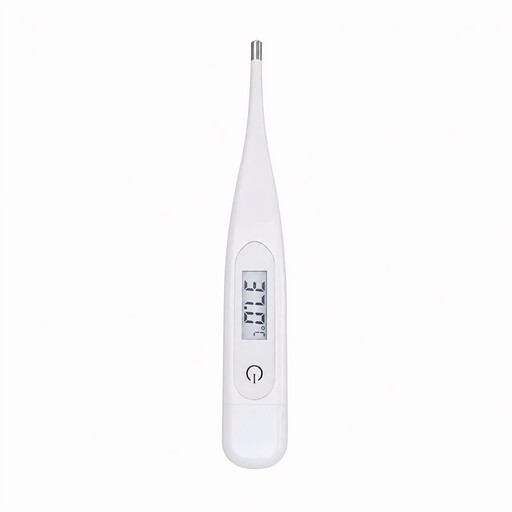
Why it suits this type of buyer: This pen-style model is a good choice if you’re looking for a simple thermometer for children and adults to keep in the medicine cabinet or a travel bag.
The specifications list a range of 32,0 to 42,9 °C, a resolution of 0,1 °C and a mercury-free design. There are no infrared or object modes that could be set incorrectly.
Pen-style design, °C/°F switch and an audible reading signal. According to the product information, the model runs on one LR41 battery.
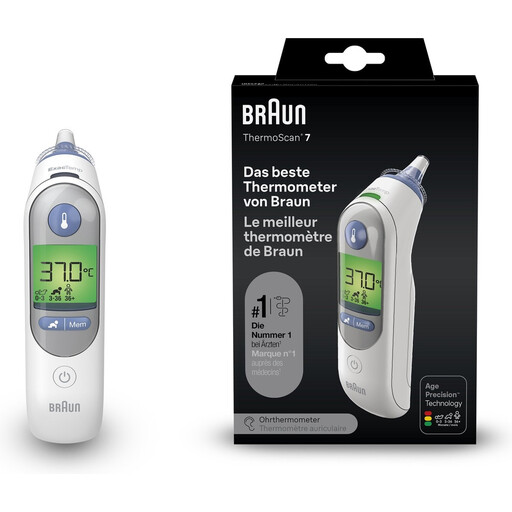
Why it suits this type of buyer: This ear thermometer is designed for families who value a consistent measuring method, age settings and hygienic accessories.
The product information lists three age groups, a positioning indicator and disposable hygiene caps. These features make readings easier to interpret and help keep use hygienic.
Age Precision settings, ExacTemp positioning guidance, backlit display and memory for 9 readings.
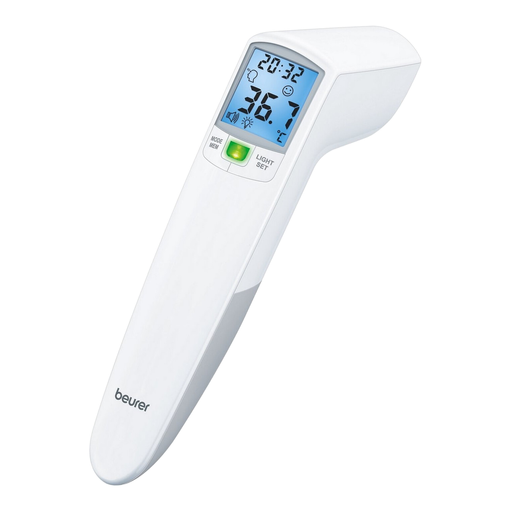
Why it suits this type of buyer: This non-contact model is handy for families who want to check body temperature, milk, bath water and room temperature with one device.
The product description specifies a measuring distance of 4–6 cm and includes a distance indicator. This helps you avoid taking readings from an arbitrary distance, although correct use according to the instructions is still essential.
60 memory slots, object and room temperature modes, colour indicator and a large backlit display.
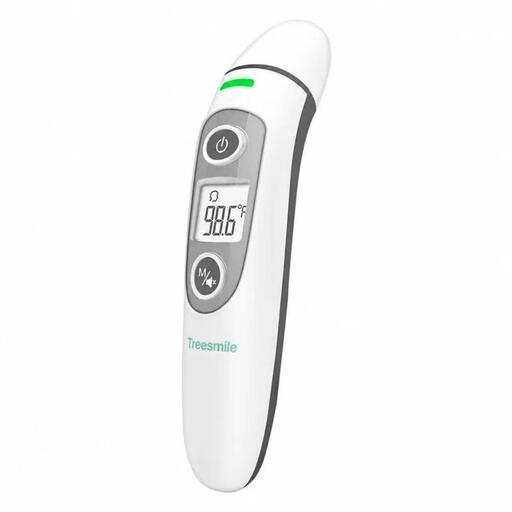
Why it suits this type of buyer: With ear, forehead and object modes, this thermometer suits households that want to switch quickly between taking family members’ temperatures and everyday use.
The different modes are clearly listed in the product specifications. Silent mode also means a reading won’t make unnecessary noise at night.
35 memory slots, three measuring modes, °C/°F switch and two AAA batteries included, according to the product information.
We’ve put together a complete, up-to-date list of products that meet these strict selection criteria and the applicable European safety requirements.
Use a soft, dry cloth or the cleaning product recommended in the instructions. Don’t touch the infrared sensor with sharp objects or immerse the device in water. Make sure the forehead is clean and dry before taking a reading.
Its lifespan depends on battery use, storage, cleaning and how delicate the sensor is. Keep the device dry, replace the batteries in good time and check for damage before use. If a thermometer continues to show unusual readings, have it checked or replace it according to the instructions.
As well as the purchase price, the main ongoing costs are batteries and any disposable ear caps. A pen-style model often uses one small battery. An infrared model usually runs on AAA batteries. Hygiene caps can add to the ongoing cost of an ear thermometer. So check what’s included in the box and whether accessories are available to buy later.
