
Vandaag of morgen in huis

Kwaliteit gegarandeerd

Welkomstaanbiedingen ontgrendelen: GRATIS bezorging | Tot 80% korting | Gratis 30 dagen JoyPlus-proefperiode
Download de app
A digital thermometer is part of the basic kit in many Dutch households. Yet the differences between models are about more than just price. A fever thermometer for a baby works differently from a simple pen model for adults. A forehead or ear thermometer also requires a consistent technique and correct placement.
If you rely solely on claims such as “reading in one second” or “high accuracy”, you could end up with a device that’s less practical in everyday use. So pay particular attention to the following pitfalls.
An infrared thermometer can display a value within seconds, but the result also depends on distance, the spot on the forehead and the ambient temperature. Sweat, hair, direct sunlight or a cold room can affect the reading. Always check the manufacturer’s instructions.
A contactless thermometer is especially handy when you don’t want to wake a sleeping child. A pen-style model used under the arm, orally or rectally requires more direct contact, but typically involves fewer positioning steps.
Babies, children and adults don’t always share the same preference for how to take a temperature. An ear thermometer must be positioned correctly in the ear. With a forehead thermometer, measuring distance is key. A flexible tip can make a classic fever thermometer more comfortable to use, but hygiene and cleaning remain essential.
Also check whether the product is suitable for the user’s age. For very young babies, or if you’re unsure about a reading, follow the instructions and, if needed, contact a healthcare professional.
A colour code, beep or vibration makes a result easier to interpret, but it doesn’t provide a full assessment of someone’s condition. Manufacturers may also use different thresholds and algorithms. So treat an alarm as a home fever-measurement aid, not a diagnosis.
Start by choosing between:
A thermometer with multiple modes sounds versatile, but check that the controls are clear. A dedicated button or obvious mode selection reduces the risk of accidentally using the wrong setting.
A display with 0.1 °C resolution shows small differences, but that doesn’t automatically mean the actual reading is accurate to 0.1 °C every time. Also check the stated measuring range and margin of error. For example, the Treesmile T11 specifies a range of 32.0 °C to 42.9 °C. The stated deviation varies by temperature range.
With infrared models, operating conditions matter even more. Keep to the distance given in the manual, and if needed, allow both device and user to acclimatise to the same environment.
Note the battery type and any accessories you’ll need later. According to the product information, the Braun ThermoScan 7 IRT6520 comes with 21 hygiene caps. Using a new cap for each reading can support hygiene, but it does mean ongoing costs.
With other models, clean the sensor with a soft cloth or a suitable alcohol wipe, as per the instructions. Do not immerse a digital thermometer in water unless the manufacturer explicitly states it is safe. Keep batteries and small parts out of the reach of children.
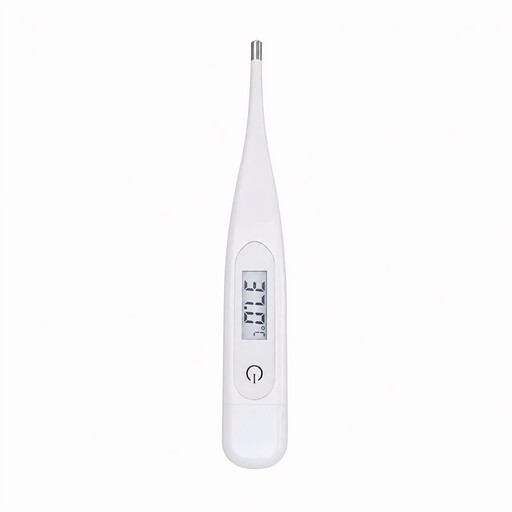
Why this fits the profile: A compact pen-style model for anyone looking for a simple thermometer for children and adults, for the medicine cabinet or for travel.
The product information lists the measuring method, range, resolution and an audible signal. That way, you know exactly what you’re getting.
0.1 °C readout, switch between °C and °F, mercury-free design and pen shape.
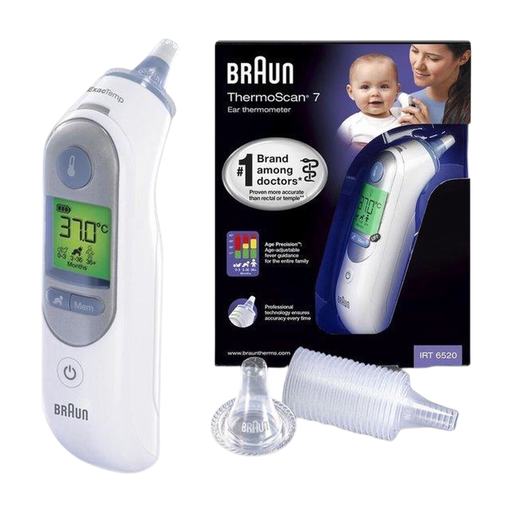
Why this fits the profile: For families who want an ear thermometer with age settings, positioning aid and included hygiene caps.
According to the product description, the ExacTemp indicator helps verify correct placement. The included caps make the hygiene guidance practical.
Age settings, pre-warmed tip, memory for readings and 21 hygiene caps, according to the product information.
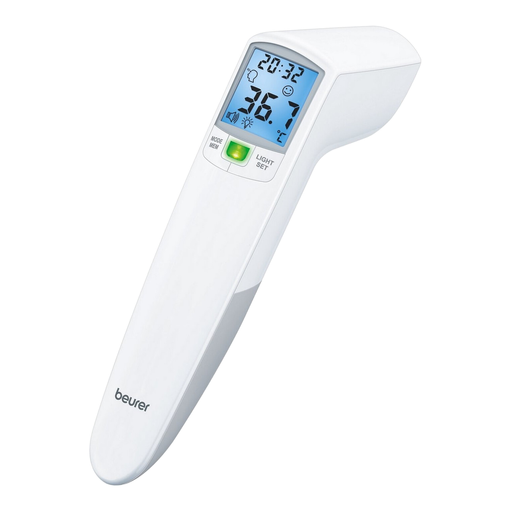
Why this fits the profile: Handy for families, older people and travellers who want contactless measurements and the ability to review previous readings.
The correct measuring distance of 4–6 cm is stated in the product information. That helps with more consistent use than aiming randomly.
60 memory slots, measurement of body, object and ambient temperature, and colour-coded signals.
A thermometer provides a reading. If you’re worried about a high or unusual temperature, or someone clearly feels unwell, seek medical advice.
We’ve compiled a complete, up-to-date list of products that fully meet these strict selection criteria and current European safety regulations.
Service life depends on battery use, cleaning, storage and the quality of the sensor. Replace batteries as soon as the device indicates and store the thermometer dry and protected. A statutory guarantee period doesn’t mean a device is automatically worn out afterwards; check the terms and the instructions for use.
Beyond the purchase price, batteries, hygiene caps and cleaning materials may add to the cost. A pen model usually uses one small battery. An ear thermometer with disposable caps can incur higher ongoing costs if used frequently. So compare what’s in the box and the price of replacement accessories.
A contactless forehead thermometer can be practical with a sleeping baby because no direct contact is needed. However, the reliability of the reading depends on correct distance, conditions and operation. Always follow the manufacturer’s age and safety guidance, and seek professional advice if in doubt.
