
Vandaag of morgen in huis

Kwaliteit gegarandeerd

Welkomstaanbiedingen ontgrendelen: GRATIS bezorging | Tot 80% korting | Gratis 30 dagen JoyPlus-proefperiode
Download de app
A digital scale might seem straightforward, but the options vary enormously. A kitchen scale for flour and coffee has different requirements to a bathroom scale for daily weighing. If you only look at a low price or a large number of features, you could end up with a device that’s awkward to measure, runs out of battery quickly, or simply doesn’t suit your everyday use.
In this guide, you’ll discover which specifications really matter, which marketing claims to take with a pinch of salt, and which digital scales are best suited to different situations.
A reading like 0.05 kg or 0.1 g sounds impressive, but where you place the scale has a big impact on the measurement. A bathroom scale on carpet or an uneven tiled floor can show different values than on a hard, level surface. With a kitchen scale, a wobbly worktop, an overly heavy bowl, or a nearly flat battery can all affect the reading.
So don’t just look at the smallest increment. Also check the maximum capacity, the recommended surface, and the usage instructions.
A scale with Bluetooth, an app, or a nutritional database can be handy if you want to track your data. But for daily weighing in the bathroom or measuring out ingredients, such connectivity isn’t essential. Pay attention to which app is required, what data is stored, and whether the scale remains usable without a smartphone.
When it comes to body composition analysis, bear in mind: according to the product information, some models use BIA technology to estimate body fat, muscle mass, and water content. These are estimates for general monitoring, not a medical diagnosis. So a large number of displayed measurements doesn’t automatically mean every value is equally useful for everyone.
Glass is easy to clean, but it shouldn’t be dropped or subjected to hard knocks. An LCD display is usually easy to read, while an LED or TFT screen can show additional information. Also check whether batteries are included. With some models they’re supplied, with others you’ll need to buy AAA or CR2032 batteries yourself.
Choose a scale based on how you’ll use it:
The tare function resets the display to zero after you’ve placed a bowl on the scale. That saves you from having to do mental arithmetic and lets you weigh multiple ingredients one after another. For British recipes, grams and millilitres are important; if you use international recipes, you might also need ounces or pounds.
Always place a digital scale on a hard, level, and dry surface. Don’t exceed the maximum capacity. A glass platform isn’t automatically waterproof: spills and submersion can damage the electronics. Don’t use a bathroom scale with wet feet, and stop using it immediately if the glass is cracked.
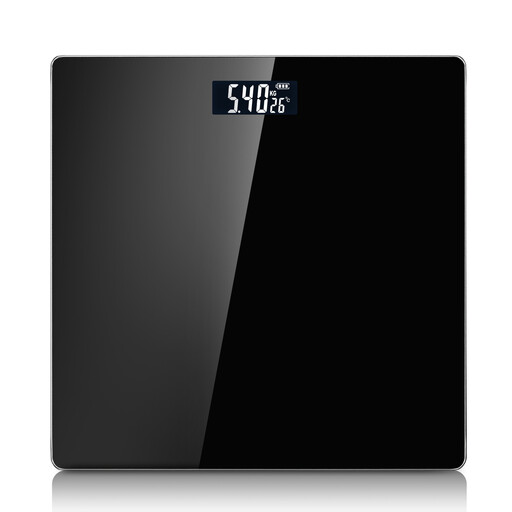
Why this fits the profile: This bathroom scale is designed for simple daily weighing without an app or complicated setup. The LCD display shows kg and lb, and the battery power makes placement in the bathroom or bedroom flexible.
The specifications state a capacity of 180 kg, an increment of 0.05 kg, and a clear LCD display. There are no unnecessary app features.
4 mm tempered glass, auto shut-off, and operation with 2 AAA batteries; batteries are not included.

Why this fits the profile: For coffee enthusiasts who want to track both weight and time during pour-over brewing, this model offers a focused set of features without becoming a bulky kitchen appliance.
The product specifications list 0.1 g increments, a timer, and a physical on/off button. This means all relevant functions are available directly on the device.
Capacity up to 2,000 g, USB-C rechargeable battery, auto shut-off, and a silicone protective mat included.
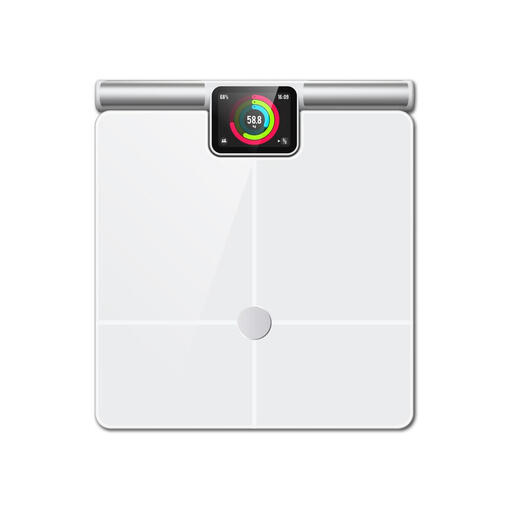
Why this fits the profile: This model is designed for users who want to view multiple body measurements in an app alongside their weight. According to the product information, it supports Wi-Fi and Bluetooth and features a TFT colour display.
The capacity of 180 kg and increments of 0.05 kg up to 100 kg and 0.1 kg from 100 kg are clearly stated. The additional measurements are presented as general monitoring, not as a medical assessment.
8 electrodes, dual-frequency BIA according to the product description, 3.36-inch TFT screen, and support for Bluetooth 5.1 and 2.4 GHz Wi-Fi.
We’ve put together a full, up-to-date list of products that fully meet these strict selection criteria and comply with current European safety regulations.
Accuracy depends on the model, the increment, the surface, and the conditions. A kitchen scale with 1 g increments is suitable for most recipes. A bathroom scale with 0.05 kg increments shows smaller differences, but that doesn’t mean every reading will be exactly the same under all conditions.
For cooking and baking, a kitchen scale with a tare function, LCD display, and at least 5 kg capacity is practical. For body weight, a bathroom scale with a sturdy platform, auto shut-off, and a capacity that suits the user is usually sufficient. Only choose a smart scale when app synchronisation and extra data genuinely add value.
The running costs mainly consist of batteries or electricity for charging. Models with AAA or coin cell batteries are ready to use straight away, but will need replacing over time. A rechargeable coffee scale doesn’t require disposable batteries during normal use, but does need to be charged regularly via USB-C. Always check at the time of purchase whether batteries are included.
