
Cook making a long-steamed pudding
Wants to set the full cooking time in one go, then check that the pudding is cooked. Good Food’s example recipe calls for 2½ hours of steaming.


For a long steaming time, you need a timer that can count down the full duration in one go; the 2½-hour example recipe is too long for a timer with a range of up to 99 minutes and 59 seconds. A long single countdown is a good fit if you plan water checks separately, while multiple timers running at the same time are useful if those checks or other dishes need their own alarms too. Also check that you’ll be able to notice the alarm where you’re cooking, and whether the batteries are included.
Wants to set the full cooking time in one go, then check that the pudding is cooked. Good Food’s example recipe calls for 2½ hours of steaming.
Wants to keep track of other cooking tasks or scheduled checks separately while the pudding steams. OXO says its Triple Task Kitchen Timer can run three countdowns at the same time.
Wants to be able to notice the alarm and place the timer somewhere visible or within reach. TFA Dostmann says certain models have audible or visual alerts and can be positioned in different ways.
Good Food’s example recipe calls for 2½ hours of steaming and says to top up with boiling water if the water level gets too low. Other recipes may need a different steaming time, so choose a timer range that suits your recipe.
Best for: Setting the full steaming time in one go.
Keep in mind: Plan water checks separately; an end alarm won’t check the water level for you.
Best for: When the pudding, water checks and other dishes each need their own countdown.
Keep in mind: Check how many timers can genuinely run at once; saved times aren’t the same as simultaneous countdowns.
Best for: Timing shorter cooking steps or interim checks.
Keep in mind: Check the maximum hours and minutes if you also want to use it for a long steaming time.
| What to consider | What should you check? | Who is this most important for? |
|---|---|---|
| Long enough countdown | Check the exact model’s maximum hours and minutes, then compare this with your recipe time. | I want to set the full steaming time in one go without restarting halfway through; around 31% of consumers say a sufficiently long countdown is their main requirement. |
| Water checks | Work out how you’ll schedule checks and whether you need a separate timer running at the same time. | I want to remember to check the water level and top it up with boiling water if needed; around 25% of consumers prioritise these interim checks. |
| Multiple dishes | Check how many countdowns can run at once; saved settings don’t count as additional active timers. | I’m preparing more than one dish at a time and want to know which alarm belongs to which dish; around 19% of consumers say timing multiple dishes is their main timer requirement. |
| Noticeable alarm | Check the sound settings, visual alerts and placement options; a visual alert is only helpful if the timer is somewhere you can see it. | I want to notice the end signal where I’ll be during the meal; around 13% of consumers choose a timer mainly based on how easy its alarm is to hear or see. |
| Placement and power | Check whether the timer has a magnet, stand or hanging loop, and which type of battery it needs. | I want to place or hang the timer easily and have the right batteries to hand before I start cooking; around 12% of consumers prioritise placement and power. |
A timer with a maximum of 99 minutes and 59 seconds can’t track the example steaming time of 2½ hours in one uninterrupted countdown.
Check the exact model’s maximum hours and minutes, then compare this with the time in your recipe.
A timer that can save settings doesn’t necessarily have multiple countdowns running at the same time.
Choose a timer with multiple simultaneous countdowns if the pudding, water checks and side dishes each need their own alarm.
Batteries aren’t included with some of the models mentioned; a visual alert is only useful if you can see the timer.
Before the meal, check the battery type, whether batteries are included, the placement options and the alarm setting for the exact model.
Remember that you may need to buy batteries separately.
The 99HOURS 38.2049.02 and 38.2051.02 models are designed for long countdowns.
The Good Grips Triple Task Kitchen Timer 11303700 is designed for anyone who wants to time several cooking tasks separately.
These product picks are suitable for timing shorter cooking steps or interim checks; neither can track the 2½-hour example recipe time in one uninterrupted countdown.
 No image available
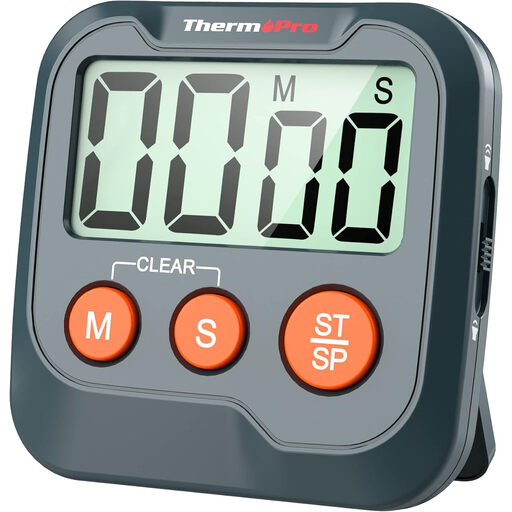
Useful for shorter cooking steps or interim checks, but its range is too short for the example steaming time of 2½ hours in one countdown.
The product name gives a maximum countdown of 99 minutes and 59 seconds and adjustable volume. The product description mentions an LCD display, magnet, stand and hanging option.
 No image available
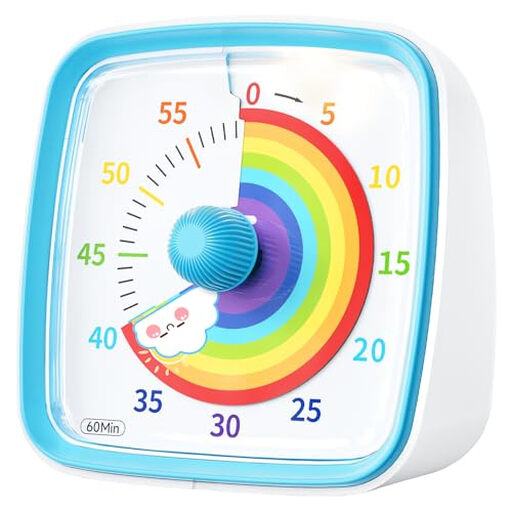
Could suit shorter cooking tasks where you want to follow progress visually, but it can’t time the example steaming time of 2½ hours in one countdown.
The product name gives a maximum countdown of 60 minutes and a silent countdown function. The product description mentions a visual progress display and a light signal when the countdown ends.
Check that a visual end signal suits the place where you’re cooking.
Not for the full steaming time in one uninterrupted countdown: Good Food’s example recipe calls for 2½ hours. Choose a timer with a maximum range that covers this time, or use another way to keep track.
No. Good Food’s example recipe says to top up with boiling water if the water level gets too low. Plan those checks separately; a timer doesn’t measure the water level.
No, saved times aren’t the same as simultaneous countdowns. Check how many timers can run at once if you want separate alarms for the pudding, checks and other dishes.
It varies by model. Check the battery type and whether batteries are included; the TFA Dostmann models mentioned don’t include two AAA batteries.
Follow the recipe you’re using. In Good Food’s example, the 2½-hour steaming time starts once the pan has come to the boil, the lid is on and the heat has been turned down. The recipe recommends checking that the pudding is cooked with a skewer at the end.