What should you look for?
First, compare the maximum uninterrupted countdown with the time in your recipe. Then consider whether you want to keep track of other cooking tasks separately and which type of alarm suits the timer’s location.
| What to consider |
What should you check? |
Who is this important for? |
| Full steaming time |
Check the maximum countdown and whether the timer lets you set hours and minutes or only minutes and seconds. |
If I want to keep track of my pudding for the full recipe time without resetting the timer, I need one with a sufficient range. Around 36% of consumers say covering the full steaming time is their top priority. |
| Separate cooking tasks |
Look specifically for two independent countdowns; saved times don’t automatically mean two timers can run at once. |
If I also want to time another dish or check alongside the pudding, I want to be able to track the times separately. Around 29% of consumers prioritise timing separate cooking tasks. |
| An alarm you can notice |
Compare the sound settings and any light alert with where you plan to put the timer during dinner. |
If I move between the kitchen and my guests, I want an alert I’ll notice where I’ve placed the timer. Around 21% of consumers say an easy-to-notice alarm is their top priority. |
| Controls and batteries |
Check how to set the timer, where you can place it and which batteries are included with the version you’ve chosen. |
If I want to set a timer quickly while cooking and avoid extra purchases, I check the controls and what’s included. Around 14% of consumers prioritise easy controls and the required batteries. |
Joybuy products
These Joybuy products are digital timers for general cooking tasks. If you need one uninterrupted countdown of 2½ hours, check the range of the version you choose.
 No image available
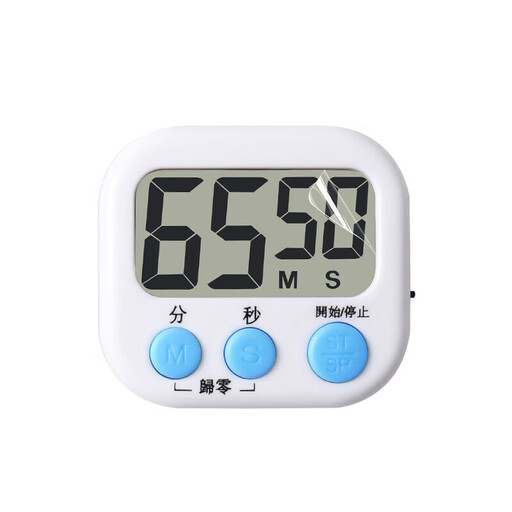
BJ Small White Digital Timer
The product description mentions countdowns and cooking times. Check whether the range covers the full steaming time in your recipe.
Digital display and large, easy-to-press buttons, according to the product description.
View at Joybuy
 No image available
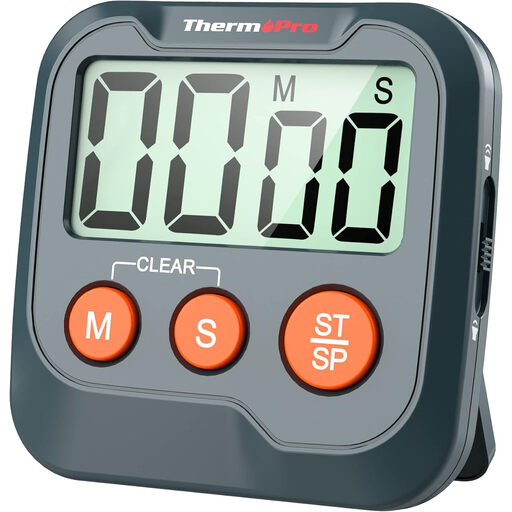
Digital Interval Timer with Stopwatch, 99 Min. 59 Sec.
This timer may suit shorter cooking tasks; its maximum countdown is shorter than the example steaming time of 2½ hours.
Maximum countdown: 99 min. 59 sec. The description mentions adjustable volume and a magnet, stand or hanging option for placement.
View at Joybuy
Frequently asked questions
How do I set the timer for a steamed pudding?
Follow the steaming time in your recipe and start the countdown when the recipe tells you to. In one Good Food example recipe, the pudding steams for 2½ hours; top up with boiling water if needed and check whether it’s cooked according to the recipe. A timer can’t tell you whether the pudding is cooked.
Can I use an advance warning to time a water check?
Not necessarily: an advance warning doesn’t mean there’s a second independent countdown. For model 38.2049.02, TFA Dostmann describes a warning before the set time ends. For separately scheduled tasks, use a timer that’s designed for them, and keep an eye on the water level yourself.
What should I look for in a battery-powered timer?
Check that you’ll be able to see the display or notice the alarm from where you plan to put it, and follow the instructions for the exact model. TFA Dostmann says that model 38.2049.02 takes two AAA batteries, which aren’t included. In the Netherlands, take used batteries to a collection point; don’t put them in your general waste, as advised by the Dutch government.
What are my rights when buying a kitchen timer online?
When you buy online, you usually have a 14-day cooling-off period, according to the Dutch government. Check which terms and exceptions apply to your purchase. You’re also entitled to a product that works as it should. There’s no fixed statutory guarantee period in the Netherlands; contact the seller if there’s a fault.
How do I dispose of an old digital kitchen timer or used batteries?
Take loose used batteries to a battery collection point and dispose of a discarded timer as electrical equipment. The Dutch government provides information about recycling batteries and used household appliances; don’t put batteries in the bin.


