What should you look for in a digital kitchen timer?
First, decide which stage of your recipe you want to time. Then check that the timer’s range and alarm suit that stage and your kitchen.
| What to consider |
What should you check? |
Who is this important for? |
| Short steaming time |
Check that you can set and read the time easily, and that the maximum range covers your recipe. |
If I’m making one small pudding, I want to set and keep track of the steaming time without extra steps. Around 36% of consumers are mainly concerned with being able to time a short cooking process easily. |
| Longer cooking time |
Compare the stage you want to time with the timer’s maximum range; check whether it can count down hours and minutes if your recipe requires it. |
If my recipe has a longer stage, I don’t want to have to reset the timer partway through. Around 29% of consumers are mainly concerned with having a range that covers their recipe. |
| Alarm |
Check whether you can adjust the volume and whether there’s a light or vibration alert; a light only helps if the timer is in view. |
If a fixed beep doesn’t suit my needs, I want an alert I can notice and tolerate. Around 21% of consumers are mainly concerned with the type of alarm. |
| Placement and batteries |
Check that the timer’s fixing works where you want to put it, and find out which type of battery it needs and whether they’re included. |
In a small kitchen, I want to know where the timer can go and whether I’ll need to buy batteries before using it. Around 14% of consumers are mainly concerned with placement and batteries. |
Digital timers at Joybuy
These digital timers are suited to anyone who wants to time a short steaming stage or choose an alarm that works for their kitchen.
 No image available
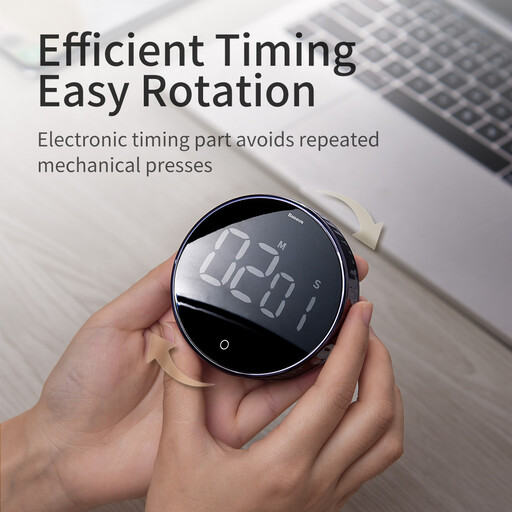
Baseus HEYO rotating countdown timer, black
A good choice if you want a countdown timer with a selection of alarm settings for a short cooking time.
The Joybuy product description lists a range of up to 99 minutes and 55 seconds, quiet, soft and loud alarm settings, and power from 3 AAA batteries. Check whether the batteries are included with this version.
View at Joybuy
 No image available
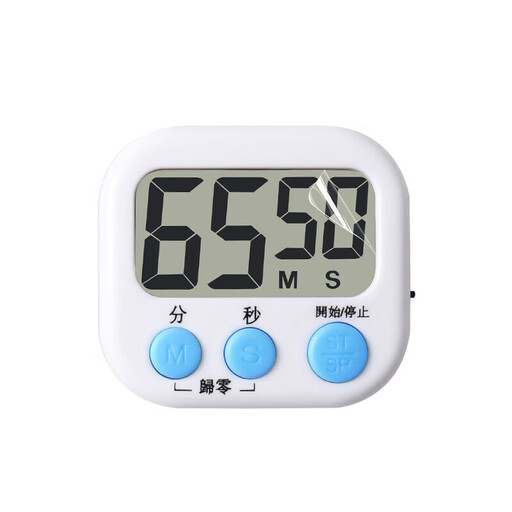
BJ digital timer, white
A good choice if you’re looking for a simple digital timer to count down a short cooking or baking time.
The Joybuy product description mentions a digital display, countdown function and compact, portable design.
View at Joybuy
Frequently asked questions
Can I simply set 15 minutes for every individual pudding?
No, use the timing in your own recipe. Rutger Bakt recommends steaming small moulds for around 15 minutes, but the shape, size and cooking method can vary from recipe to recipe. Use the timer as a reminder, not as a way to check whether the pudding is cooked.
Where should I put the timer while the pudding is steaming?
Put the timer somewhere you can see its display or notice its alarm, and follow the instructions for your model. A magnet only works on a suitable metal surface. Keep the timer away from water and direct heat, and keep an eye on the pan too so it doesn’t boil dry.
Do I need to buy batteries separately, and what should I do with used batteries?
It depends on the model: HEMA lists one AAA/LR03 battery, which isn’t included, while Brabantia says the batteries are included with the Tasty+ model reviewed. The Dutch government says used batteries mustn’t go in the bin; dispose of them separately.
What are my rights if a timer I bought online turns out to be faulty?
If a product isn’t of satisfactory quality, you may be covered by the statutory guarantee. ACM ConsuWijzer says that under the law, the seller must put right a product that breaks too soon during normal use, free of charge. Online purchases also generally come with a cancellation period, which ACM ConsuWijzer says ends 14 days after delivery; exceptions may apply.
What product safety rules apply to digital timers in the Netherlands?
The Dutch Ondernemersplein says that businesses placing electrical or electronic appliances on the market must ensure their products comply with the relevant European rules. This alone doesn’t confirm whether a specific model on sale meets all the applicable requirements.


