
Pudding maker with a long steaming time
You want to set the full recipe time in one go, then check separately whether the pudding is cooked. The Good Food recipe we consulted specifies 2½ hours of steaming.


For a recipe that needs 2½ hours of steaming, you need a timer that can handle that duration in one uninterrupted countdown; a maximum of 99 minutes and 59 seconds won’t be long enough. Good Food specifies 2½ hours for the recipe we consulted. If you also want a separate reminder for another kitchen task, check whether the timer can run multiple timers at once: saved times are not the same as simultaneous countdowns.
You want to set the full recipe time in one go, then check separately whether the pudding is cooked. The Good Food recipe we consulted specifies 2½ hours of steaming.
You want to time another kitchen task or a planned check separately from the pudding. Check whether the timer supports multiple simultaneous countdowns.
You want a timer that’s easy to set and read. Check that its maximum range suits your recipe and whether the battery is included.
Start by checking the maximum uninterrupted countdown time, then consider whether you need a separate alert for another task. Good Food specifies 2½ hours of steaming for the pudding recipe we consulted, making the timer’s range a key factor in your choice.
| What to consider | What should you check? | Who is this important for? |
|---|---|---|
| Full steaming time | Compare the maximum uninterrupted countdown time with your recipe; check whether you can set hours. | If I want to time the full steaming time without resetting the timer part-way through, I’ll choose one with a suitable range. Around 36% of consumers prioritise one long countdown. |
| Separate reminders | Check how many countdowns can run at once; a memory function doesn’t automatically mean there’s a second timer. | If I want to keep track of the pudding and another kitchen task separately, I don’t want to confuse their alerts. Around 29% of consumers prioritise separate reminders. |
| Noticeable alert | Check whether the volume is adjustable and whether there’s a visual alert; think about where you’ll put the timer. | If I’m not looking at the screen all the time, I want an alert that suits where I’ll be while the pudding steams. Around 21% of consumers choose mainly based on how noticeable the alarm is. |
| Controls and battery | Check how to set the time and which type of battery it needs; see whether one is included. | If I want to get the timer ready quickly, I’ll look for easy-to-use controls and check which battery it needs. Around 14% of consumers focus most on this. |
A timer with a maximum of 99 minutes and 59 seconds won’t cover the 2½ hours in the Good Food recipe we consulted in one go.
Before choosing a timer, compare its maximum range with the steaming time in your own recipe.
For a longer cooking time, you may need to reset it while you’re cooking.
According to TFA, the 99HOURS has three saved times but only one active timer. OXO describes the Triple Timer as having three separate timers.
If you want to time the pudding and other kitchen tasks separately, check exactly how many countdowns can run at once.
A timer tells you when the set time is up, but it can’t replace checking whether the pudding is cooked. Good Food recommends testing the recipe with a skewer after steaming.
Follow the checking instructions in your recipe and, if needed, steam the pudding for longer before taking it out of the pan.
Good Food says to steam the pudding for another 15–20 minutes if the skewer comes out with wet batter on it.
The 99HOURS 38.2049.02 is designed for anyone looking for a long countdown and an adjustable pre-alarm.
The Triple Timer 11303700 is designed for anyone who wants to keep track of several kitchen tasks at once.
The Tasty+ with magnet is a digital timer with a rotating outer ring, designed for shorter intervals.
The digital magnetic kitchen timer 80841225 lets you set minutes and seconds.
The digital kitchen timer 6669-1 is designed for shorter intervals and has a stand and a magnetic attachment.
This selection includes digital timers for cooking and shorter cooking intervals. For a pudding recipe that needs 2½ hours of steaming, check whether your chosen model can cover the full time.
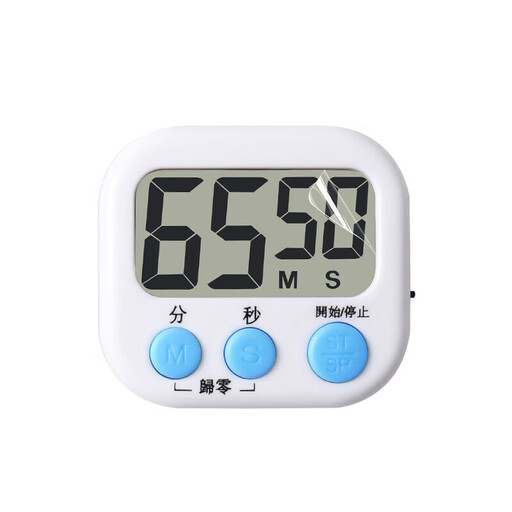 Image unavailable
According to the product description, this timer is designed for cooking and reminders; check whether its maximum countdown time suits your recipe.
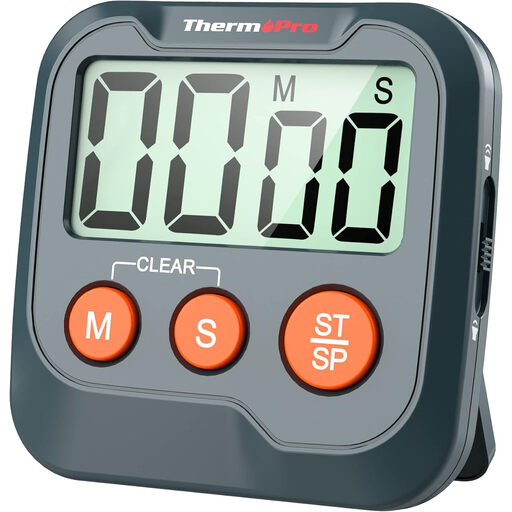 Image unavailable
This range suits cooking steps lasting up to 99 minutes and 59 seconds, but not a single countdown for the Good Food recipe that needs 2½ hours of steaming.
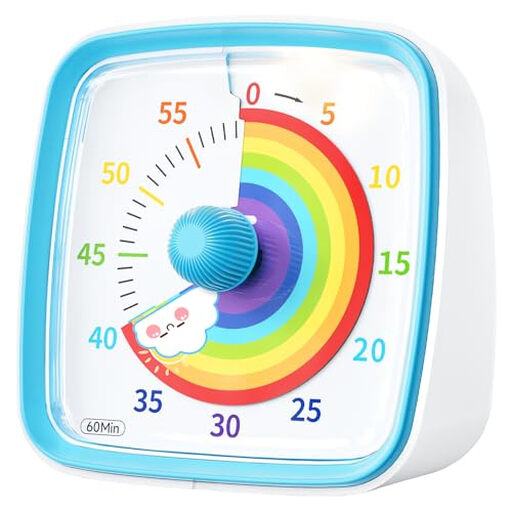 Image unavailable
The product name specifies a maximum of 60 minutes and a silent countdown. That’s not long enough to time the Good Food recipe requiring 2½ hours of steaming in one go.
Follow the steps in your own recipe; the alarm doesn’t prove that the pudding is cooked. In the Good Food recipe we consulted, steaming starts once the water is boiling and the heat has been turned down. After 2½ hours, you check the pudding with a skewer; if there’s wet batter, the recipe says to steam it for another 15–20 minutes and check again.
Keep an eye on the water level and top it up with boiling water if it gets too low, as instructed in the Good Food recipe we consulted. A timer can remind you to check at a set time, but it can’t measure the water level.
Check the battery type and whether one is included. The HEMA timer we looked at needs one AAA battery, while the TFA 99HOURS needs two AAA batteries; neither comes with batteries. Brabantia says the Tasty+ model we looked at includes a CR2032.
According to ACM ConsuWijzer, the retailer is responsible if a product doesn’t meet what you could reasonably expect. Depending on the circumstances, the retailer must put things right free of charge, for example by repairing or replacing the product, or refunding you. A commercial manufacturer’s warranty doesn’t replace your statutory rights.
Take battery-powered appliances to a collection point for electrical equipment. Used household batteries should go to a battery collection point, not in the bin. The Dutch Government also describes a take-back scheme for household equipment, where you can hand in an old item when buying a similar new one.