
If you often use the same cooking time
If you regularly cook a small batch of eggs in the same way, a memory function can make it easier to set the time again. TFA Dostmann lists this feature for model 38.2021.01.


If you usually cook one small batch at a time, a simple countdown timer is often all you need. If you tend to use the same cooking time, a memory function can make it quicker to set again. Choose an alarm that suits your kitchen and preferences, and only opt for multiple independent timers if you want to keep track of different finishing times at once. The Voedingscentrum uses cooking times for size M eggs as a guide when you start the timer as soon as the water boils; results may vary depending on egg size and cooking method.
If you regularly cook a small batch of eggs in the same way, a memory function can make it easier to set the time again. TFA Dostmann lists this feature for model 38.2021.01.
If you want to hear the alarm from elsewhere, or would prefer a quieter sound, compare the alarm settings on the exact model. HENDI lists quiet, moderate and loud alarm settings, as well as a visual signal, for model 582039.
If you’re cooking eggs or other dishes with different finishing times at once, independent countdown timers can come in handy. OXO describes the Triple Timer as having three timers with different beep patterns.
Choose this if: you cook one batch at a time and need a timer for a single finishing time. HENDI says the 271155 counts down from up to 99 min 59 s.
Worth noting: the product specifications for this model list a non-rechargeable AAA battery as included, but don’t mention a memory function.
Choose this if: you often use the same cooking time and want to set it again quickly. TFA Dostmann lists a memory function for model 38.2021.01.
Worth noting: you’ll still need to start the timer at the right moment and take the size of the egg into account.
Choose this if: you’re keeping track of dishes with different finishing times at once. The OXO Triple Timer is an example of a timer with three countdowns.
Worth noting: multiple countdowns are usually unnecessary for one small batch; check whether this model is available to you.
| What to consider | What should you check? | Who is this important for? |
|---|---|---|
| Repeating a cooking time | Check whether the exact model has a memory function and how to start the previous setting again. | If I often cook the same small batch, I want to be able to set my usual time again quickly. Around 36% of consumers say repeating a cooking time is their top priority when buying. |
| An alarm that suits your needs | Check whether the alarm volume can be adjusted and whether a visual signal is available. | If I’m not keeping a constant eye on the timer, I want to notice when it ends in a way that suits my kitchen. Around 29% of consumers say a suitable alarm is their main reason for buying. |
| Controls and positioning | Compare buttons with a rotary dial, how easy the display is to read, and how the timer can be attached where you plan to use it. | If I want to set and read the timer easily while cooking, I also consider where I can stand or hang it. Around 21% of consumers prioritise ease of use and positioning. |
| Different finishing times | Check how many independent timers there are and whether you can tell their signals apart. | If I’m keeping track of dishes with different finishing times at once, I want to be able to identify each countdown. Around 14% of consumers say multiple finishing times are their main reason for buying. |
A kitchen timer keeps track of time, but cooking time also depends on the size of the eggs and your cooking method. The Voedingscentrum’s timings are a guide for size M eggs when you start the timer as soon as the water boils.
Use these timings as a starting point and adjust them to suit your eggs and cooking method.
Listed features vary by model: TFA Dostmann lists a memory function for 38.2021.01, while HENDI lists alarm settings for 582039.
Compare the specifications for the exact model and the features that matter to you. Don’t assume it has a memory function or adjustable alarm just because it’s described as ‘digital’.
HENDI lists a non-rechargeable AAA battery as included with model 271155. When it runs out, you’ll need a replacement. The Dutch government advises that used batteries should not go in household waste.
Check the battery type before buying and whether a battery is included. Take used batteries to a suitable collection point separately.
Model 38.2021.01 is worth considering if a memory function and flexible positioning are important to you.
The digital models 271155 and 582039 offer different options: a simple countdown timer or a timer with specified alarm settings.
The Tasty+ kitchen timer is worth considering if you’re looking for a digital timer with a rotary dial and magnetic attachment.
The Triple Timer is an example of a timer for anyone who wants to keep track of several finishing times at once.
This selection includes digital timers for short countdowns and visual timekeeping, as well as mechanical kitchen timers for anyone looking for a non-digital option.
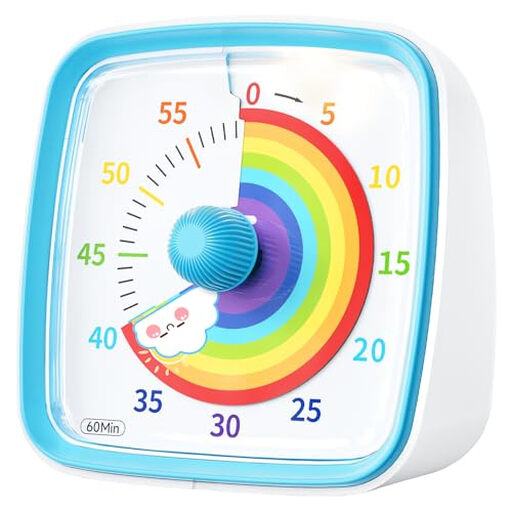 Image unavailable
A visual countdown may suit you if you want to keep track of the time remaining; according to the product information, the timer is silent and has no audible beeps.
The product name specifies a 60-minute countdown and a night light when the time is up. Don’t choose this model if you need an audible alarm.
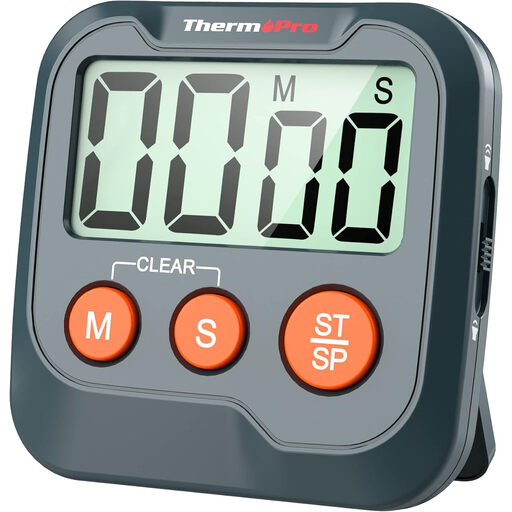 Image unavailable
A digital countdown timer for one dish at a time may suit you if you’re looking for a kitchen timer with adjustable volume.
The product name specifies a stopwatch, a countdown of up to 99 min 59 s and adjustable volume.
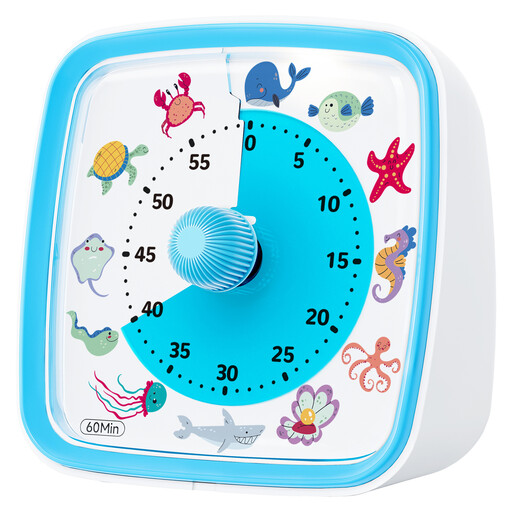 Image unavailable
The product name describes a visual timer for use in the kitchen, which may suit you if you prefer to keep track of time visually.
The name specifies a countdown of up to 60 minutes and silent operation. Check that the signal suits the way you cook.
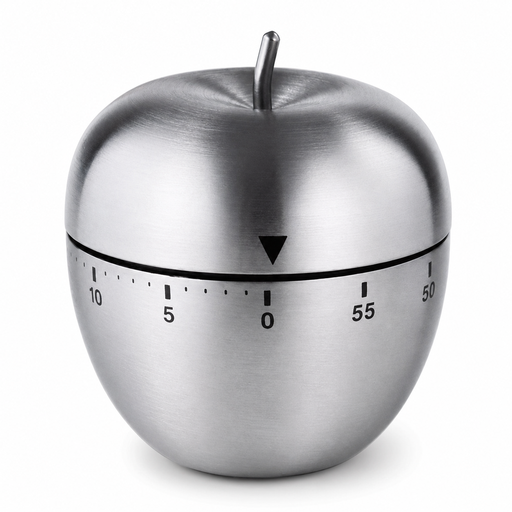 Image unavailable
This is a mechanical alternative, not a digital timer. The product name specifies battery-free operation and an audible alarm for cooking.
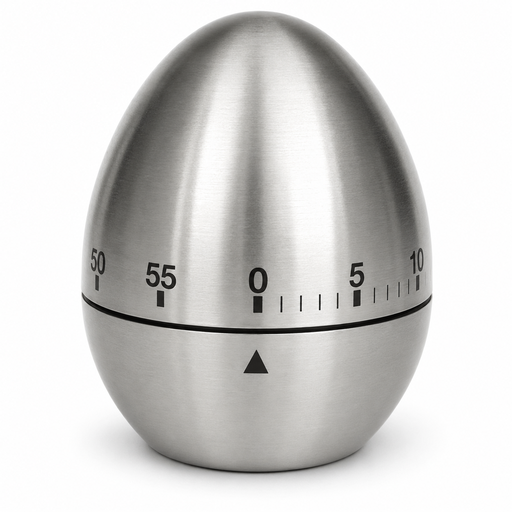 Image unavailable
This kitchen timer is mechanical, not digital; according to the product information, you set it by turning the dial.
The product name specifies battery-free operation and a non-slip base.
According to the Voedingscentrum’s cooking method, put the eggs in cold water and start the timer as soon as the water boils. For size M eggs, the Voedingscentrum recommends 5–6 minutes for soft-boiled, 7–8 minutes for medium-boiled and 9–10 minutes for hard-boiled eggs; smaller or larger eggs may need a different cooking time.
Remove the eggs from the pan or drain the water. The Voedingscentrum suggests cooling them under cold water as a way to stop the cooking process and make them easier to peel.
The Dutch government advises against putting used batteries in household waste; take them to a suitable collection point. A discarded battery-powered timer is classed as equipment that needs electricity or batteries and can be handed in through the relevant collection schemes.
In the Netherlands, consumer purchases are covered by a statutory guarantee, in addition to any guarantee from the seller or manufacturer. If the product doesn’t do what you could reasonably expect, the seller must offer a solution under the applicable conditions.
Not every kitchen timer automatically needs a CE marking. According to the European Commission, the marking is only required when specific harmonised EU rules apply to the product; a CE logo alone says nothing about how accurately the timer measures cooking time.